By Usman Aliyu
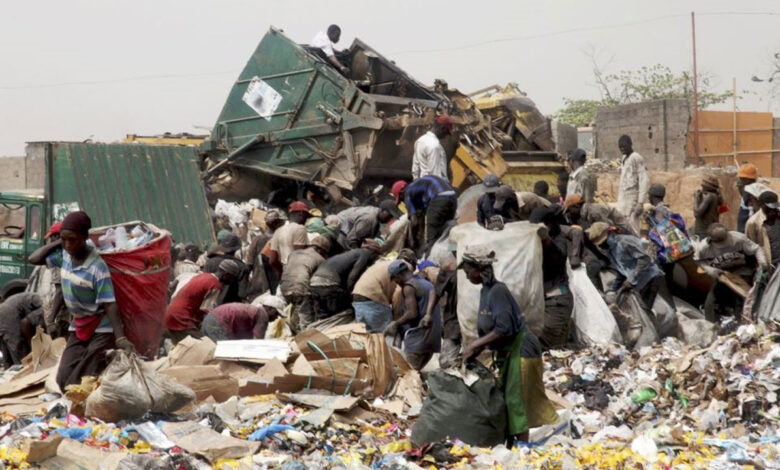
A new report has warned that African countries risk locking themselves into more than 4 billion dollars in costly waste-to-energy incineration projects that could undermine recycling, threaten livelihoods and worsen pollution.
The report, released on Thursday by the Global Alliance for Incinerator Alternatives (GAIA), was titled “Africa’s Waste Crisis Is Attracting the Wrong Solution.”
The study identified 15 incineration projects and proposals across 10 African countries, including Nigeria, with an estimated combined power-generation capacity of between 520 and 550 megawatts.
Of the projects tracked in 2026, the study said only one, the Reppie plant in Ethiopia, was operational, while two were under construction, and 12 remained at various stages of planning, approval, financing or proposal.
GAIA’s report argued that incineration was poorly suited to the composition of waste generated in many African cities.
This, the study said, could divert public resources from less costly, more inclusive approaches centred on waste prevention, composting, reuse and recycling.
“The real choice is not between incineration and dumping, but between incineration and investing in a comprehensive zero waste system,” the report said.
It noted that only 55 per cent of municipal solid waste generated across Africa was collected, while just four per cent was recycled, leaving many cities struggling with open dumping, burning and overstretched waste-management systems.
The report said governments facing pressure to address overflowing dumpsites were increasingly being presented with incineration as a dual-purpose solution capable of disposing of waste and generating electricity.
It, however, warned that the technology could create long-term financial obligations while generating air pollutants and toxic residues requiring further disposal.
According to the report, waste generated in many African cities contains high levels of organic matter and moisture, making it less suitable for combustion than the drier, more recyclable waste streams common in high-income countries.
It cited data indicating that more than 62.5 per cent of solid waste generated in East Africa was organic, arguing that composting and organic-material recovery were better suited to such waste.
The report also cited a United Nations Environment Programme assessment that found incineration particularly inappropriate for low- and middle-income countries.
This, it noted, was because the assessment found the incineration could be more expensive both as a waste-management method and as a means of generating electricity than available alternatives.
GAIA concluded that African countries could avoid replicating polluting waste-management models adopted elsewhere by investing in systems tailored to local waste composition and development needs. (NAN)