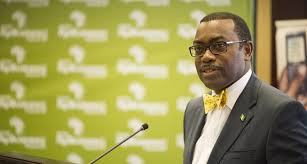
Nigeria is poised to record an extraordinary success on the international scene if Dr Adewunmi Adesina’s second tenure as president of the African Development bank meets the highest expectations. For this to occur it must be acknowledged that the result of the bruising contest for the headship of the bank recently has set the pace for that institution’s future development of Africa.
The basic elements of the Adesina programme were not the true issues that caused the major ruffles that arose during the contest, but it appears that Dr Adesina had crafted a vision of self-sufficiency in the selection of projects and policies for African nations that was not amenable to the liking of some donor partners. This serves to explain the frivolity of some of their protests against his actions and conduct in his first term in office.
In his second term he will have to be vigilant in his dealings with these forces. It will be necessary for him to reinforce the objectives which the bank’s projects are meant to achieve. It will become necessary that these objectives be regarded as fundamental principles of operational values and that regular consultations between regional bodies and the AfDB are enhanced.
It may be of paramount importance during Dr Adesina’s next tenure of office that the tendencies that he promoted during his first tenure are consolidated, prime among these are recapitalization of both projects and sub-regional holdings and they focus on projects that are energy-based and are agriculture in nature.
It will become imperative that projects to be supported by the bank have a clear set of achievable standards and goals that can be achieved in a timely manner. If these factors can be attained the ADB purpose in carrying all these tasks will serve to renew the dream of Africa self-sufficiency in a holistic manner which appears to have been the intention of the Adesina agenda right from the start.
An important aspect of the relationship between individual nations in Africa and the ADB in the new order will definitely be the extent to which projects are designed and implemented by beneficiary nations. It will be clear that advisory strictures will be provided by the bank but it will also be necessary for beneficiary nations to provide their own parameters for development of projects in working out these limitations, Dr Adesina extensive experience in national government will be a handy tool.
To this end dialogue between the beneficiary nation and the bank should take on a new and exciting formula. As a consequence of this, the new tenure should be mapped by increase consultations between member nations and the bank and improved monitoring and implementation. In that event the establishment of the agenda of renewal will become more realistic.
The challenges that were raised against Dr Adesina’s renewal of service indicate that there was resistance to the genuine renewal and independent actions in the operations of the bank being entertained by some of it’s partners that the board and the management were able to overcome this anomaly is a tribute to the effectiveness of Dr Adesina’s first tenure in office, however for his new tenure to be substantially successful it will be necessary for these projects to be consolidated.
Regional co-operations must be encouraged and when this occurs the Adesina’s legacy will be seen as a focal achievement for Africa’s economy since the era of independence. It is important that such landmark achievements can be identified and clearly defined. When this is possible, the renewal of African economic potential will AfDB President Dr Adesina become accessible to all the continent, leadership and management.
In order to consolidate the AfDB objectives of development as basic principles and growth for the entire continent the ideas that emerged as a consequence of Dr Adesina’s reaction to the challenges during the contest must be studied. He has been able to articulate values and practical methods of implementation of projects that worked effectively during his first tenure.
There is hardly any doubt that in justifying his reselection he will perform his tasks with additional vigour and commitment and endeavour to prove that his vision for the bank service will provide the motive for true economic renewal in Africa. If this is actually achieved during his tenure Dr Adesina will have upstaged his detractors in a manner that outstrips most of the news of African efforts to overcome contemporary challenges to self-sufficiency.
The mantra for the future of AFDB operations have already been coined by the Adesina’s strategy has integrated Africa and light up the continent. In the new order development projects will seek to be integrated across national borders and in the increased deficiency will be a major objective. Coordinated cooperations and strategies across regional agencies such as ECOWAS and East African communities and SADC should be encouraged by the bank. This will give rise to realistic programmes of integration.
The response of Dr Adesina that he faced in the contest have created a foundation on which this integration will rest and the future agenda of continental policies can be built.
Lindsay Barrett is a Jamaican born Nigerian public affairs analyst who specializes in West African issues.