Prior to the above unfortunate incident, there have been allegations of notoriety which the formation had gained from harassing young Nigerian male adults, especially those known to have imbibed the Malian culture of dressing (dreadlocks, sagging of trousers and drug abuse), forcefully taking and opening phones of young Nigerians, while on patrol duties.
These are in addition to various allegations of killings which have been closely linked to SARS and ultimately the Nigerian police.
As recent as February 2020 a Remo Stars Football Club player, Tiamiyu Kazeem, also known as Kaka, was killed, allegedly by officers attached to a plain-clothes Police outfit called Zonal Intervention Squad (ZIS), under the Zone 2 Command Headquarters in Lagos. His killing resurrected the call by Nigerians for the total scrapping of SARS and other plain-clothed outfits of the Police.
In 2005, the extrajudicial killings of 6 young people (five men and a young lady), popularly known as the Apo 6, aged between 20 and 25, drew massive condemnation against the police and again raised the call for total scrapping of SARs and total reformation of the Nigerian Police Force.
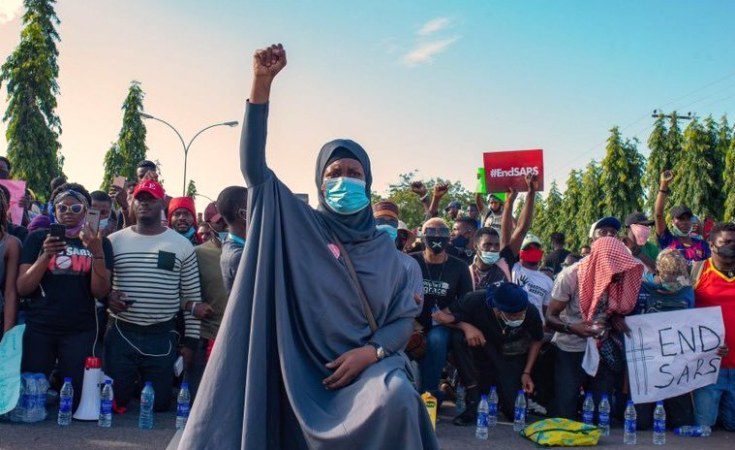
In 2018, the outcry against police brutality birthed a social media campaign, themed #EndSARS, led by Segun Awosanya and other activists protesting human rights abuses by the squad.
The campaign which became a huge success, led to the federal government, through the leadership of Vice President Yemi Osinbajo, who acted while President Muhammadu Buhari was on a working vacation outside Nigeria, to overhaul the Squad.
The Acting President directed the Police IG to ensure that any unit that will emerge from the overhaul be intelligence-driven, and restricted to the prevention and detection of crimes.
Consequently, SARS was renamed FSARS while SARS teams nationwide were to work under FSARS. The reordering was to ensure that FSARS operates as an intelligence-driven squad, restricted to the prevention and detection of Armed Robbery, kidnapping and the apprehension of offenders linked to the stated offences only. “The Federal Special Anti-Robbery Squad previously under the Force Criminal Intelligence and Investigations Department (FCIID) was to operate under the Department of Operations, Force Headquarters Abuja, with the Commissioner of Police (FSARS) being answerable to the Inspector General of Police through the Deputy Inspector
General of Police, Department of Operations,” a statement from Force Headquarters said.
History of SARS
SARS was one of the 14 units in the Force Criminal Investigation and Intelligence Department which was established to detain, investigate and prosecute people involved in crimes like armed robbery, kidnapping and other forms of crimes. The Squad was founded in 1992 by Simeon Danladi Midenda, a former police commissioner following the killing of Col. Rindam by police officers at a checkpoint in Lagos.
When news of killing reached Army Headquarters, soldiers were dispatched into the streets of Lagos in search of any police officer. The Nigerian Police withdrew from checkpoints and streets for two weeks following which crime rates increased abnormally. Thus, Police authorities formed SARS with only 15 officers operating in the shadows. Because the Police had already established three anti-robbery squads, Midenda needed to distinguish his squad from the already existing ones. He named his team SARS.
In 2009, after several years of operations the squad grew in number and strength. Due to the surge of internet fraudsters and cultism in universities, SARS operatives infiltrated the academia, made several successful arrests but in the process harassed innocent youths. Following several reports of human rights violation by members of the public, on August 7, 2015, the then IGP, Solomon Arase announced that it would be splitting SARS into two – Operational and Investigation Units to curtail cases of human rights violation.
In a document obtained exclusively by ThisNigeria, Arase found that the resort to lethal weapons as a first line of response by the Police was a major contributing factor to the SARS challenge. In line with his vow that no Nigerian citizen will suffer any act of injustice on account of actions or inactions of the Police, Arase evolved a new firearms holding policy which entailed the process of migrating from the use of lethal weapons to the use of Taser/ Stun guns (electro-muscular disruption technology).
Consequently, 1,012 stun guns were procured in the initial stage. The belief was that this landmark initiative would effectively reduce fatalities associated with police actions.
Also, Arase devised acquisition of medical assessment on armed Police personnel to establish their “medical and psychological state and suitability to handle firearms.”
According to the former IGP’s blueprint, emphasis was placed on intelligence-driven policing, which led to “FSARS being rebranded and retrained to meet up with international best practices.” Eighty-two of their personnel went for intensive training on operational techniques, but importantly on “interaction with members of the public.”
They were also to be re-kitted to differentiate them from other arms of the Force.
“That way, it would be easier to spot them from a distance. They were also to act and deployed based on credible intelligence provided by the Intelligence unit of the Police,” said the former IGP.
It is clear from ongoing protests across the country that the FSARS have been seen to be playing “judge and jury” in their dealings with Nigerians.

Going forward
As the calls and #EndSARS protests spread like wildfire last week, FPRO Mba said disbanding the Squad now will be difficult because of the ongoing fight against crimes in the country. He, however, assured that the NPF was currently reforming the operations of SARS nationwide to curtail the excesses of its operatives.
“What we need to do is to reform SARS and make them responsive, responsible and make them to work in accordance with laid down procedures. We need them to continue to respond to violent crimes. We need them to continue to respond to armed robberies. We need them to continue to respond to kidnappings.”
Popular musician, Naira Marley, agreed that the special arm of the Police should not be scrapped but reformed. “You talk about #EndSARS, you cannot end SARS but ask for reforms. Why do you want to end SARS? Are you an armed robber,” he asked his followers.
“I don’t think EndSars is the problem. It’s not about EndSars, what are you talking about EndSars? If you end SARS, the police are going to shoot or someone else with a gun is still going to shoot. You need to stop the shooting, it’s not about ending SARS. Like to be honest, there are actually a lot of SARS that are actually doing their work. Not all police are bad,” the artist said.
He further advised that those exhuming old videos of SARS harassment should desist from such act as it heats up the polity. Marley also urged the police to give an update on the SARS operatives that have been arrested and the families of the victims allegedly killed by SARS officers.
Some respondents told ThisNigeria that the live video chat the musician had with the police spokesman in which the police authority assured that it will henceforth deal with itinerant SARS officials, played a major role in calming the citizens.
Meanwhile, after a meeting with the IGP midnight of Friday October 9, 2020, President Muhammadu Buhari instructed the Police boss to “conclusively address the concerns of Nigerians” about police brutality.
He said: “Our determination to reform the police should never be in doubt. I am being briefed regularly on the reform efforts ongoing to end police brutality and unethical conduct, and ensure that the Police are fully accountable to the people,” the president tweeted late Friday night.
“The IG already has my firm instructions to conclusively address the concerns of Nigerians regarding these excesses and ensure erring personnel are brought to justice. I appeal for patience and calm, even as Nigerians freely exercise their right to peacefully make their views known.”
Barely 24 hours after the president’s instruction, IGPAdamu disbanded SARS in an announcement on Sunday October 11. But it remains to be seen whether this will end the Police brutality that enraged Nigerian youths, leading to the protests.