By Nathaniel Zacchaeus, Abuja
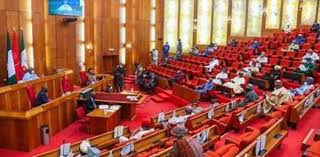
The Senate yesterday knocked the executive arm of the Federal Government over its poor funding of the capital components of the three national budgets running concurrently in the country.
The Chairman of the Senate Committee on Appropriation, Senator Solomon Adeola, expressed disappointment when the Minister of Finance, Mr Wale Edun, and the Accountant-General of the Federation, Dr Oluwatoyin Madein, appeared before the panel over the budget performances.
Adeola lamented the poor funding of the capital components of the budgets and urged the Coordinating Minister for the Economy to improve on it.
He said, “It is the capital component of the budgets that will showcase this government largely in terms of performances.
The capital components tend to showcase various projects that will be executed by this government and people can say, oh, the government is doing this, it’s doing that.
“That is why we are emphasising the performance of the 2024 budget capital component. The N1.84bn achieved out of a N9trn capital expenditure component is nothing to write home about. I would want you to please look towards this direction.”
Adeola urged the Minister to engage more with the MDAs because most of them were unaware of the current arrangement regarding funding of capital projects.
He said, “I tell you for free, some agencies will tell you that they have not been given any money for capital when we are fully aware that the process of payment of capital has changed.
“And I want you to do more engagement with the ministries and departments and agencies of the government.
“That shows a lot of engagement has to go on from time to time to bring it to their notice that you are no longer in charge of payment to contractors. I want you to please do a kind of continuous engagement. It will help so that everybody can come to terms that the system has changed.
“Everything about the method of payment, and method of business has changed. I would say that. Coming back to the NNPCL, we make it known that we have been assured of two million barrels.
“Long before now, we have been on 1.2 million barrels over this period. So, that shows that we now have a capacity of two million barrels. Why is it now the NNPCL is assuring us of two million barrels?”
The Senate panel chairman also hinted at plans by the red chamber to organise a public hearing on the NNPCL in which stakeholders in the oil and gas sector would be invited including the Finance Minister.
He said, “We will soon bring everyone in that industry, the NNPC, the upstream and downstream to the table because there are a lot of reports that we have concerning that which the Senate in no distant future will invite everybody.
“The Minister of Finance too might be invited to let us know what is happening in our oil and gas sector. They have promised to deliver on our refineries for the last couple of months, billions of dollars have been expended, and nothing to show for it.
“The local producers have not been encouraged, the local refineries have not been encouraged. No progress has been made in this direction. So all this and more is what we look into in the future.”
Adeola nevertheless commended the Minister for achieving 100 per cent funding of the 2023 supplementary budget.
He said, “We did the supplementary budget, which we have achieved 100 per cent release, which is highly commendable.
“It will not be out of place for you to have a periodic report on the implementation level of these agencies so that at least you can be guided on why transiting to the new method of payment as you can be guided.
“As for the main 2023 budget, we are lagging by over 50-something percent, I also strongly believe that we should work around the clock.”
*Minister explains delay in electric, CNG vehicles’ policy
The Finance Minister told the senators that the Federal Government had made progress in its ongoing forensic investigation into the N30trn ways and means.
He also said that the take-off of the electric and CNG vehicles has been held up by a spike in freight costs.
Edun pledged that his ministry would intensify efforts in monitoring the revenue-generating agencies to be up and about.
He equally said the debt service is up to date.
Edun said, “The procurement of electric and CNG buses and conversion kits, more importantly, has been held up by a spike in the freight costs.
“It’s just the ingenuity of one of the young men that is in that business that when I’ve got a bulk carrier that has a lower freight cost. Otherwise, the trade cost per bus became daunting and it made people just hold up to see whether this procurement was profitable for them.”
On debt payments, he said, “We have paid $700m in debt services for 420 national development agencies and others”
Speaking on the Ways and Means, he said, “We are also interrogating the N22.7trn that we met on the ground. We instituted a forensic audit to see the impact.
“We are also interrogating the revenues that are due to us from everybody because we need to. The view of the fact that ways and means are going down rather than up. So we are servicing all the debts.”
*Constitutes panel to probe NNPCL over hazardous petroleum products importation
Meanwhile, the Senate yesterday constituted an ad-hoc committee to probe the Nigerian National Petroleum (NNPCL) over the continued importation of hazardous petroleum products and dumping of substandard diesel into the country.
The upper chamber also appointed Leader of the Senate, Senator Opeyemi Bamidele, to lead 14 other distinguished senators to unravel the masterminds behind the illicit practice and transaction.
President of the Senate, Godswill Akpabio, set up the ad-hoc committee at the plenary yesterday after the Chairman of the Senate Committee on NDDC, Senator Asuquo Ekpenyong, moved a motion on the urgent need to probe the continued importation of hazardous petroleum products.
Reports had revealed that 12 diesel cargoes conveying a total of 660 kilotons of diesel, were exported by refineries to offshore Lomé, Togo for further distribution to West African markets, mainly Nigeria.
At the plenary yesterday, Akpabio lamented the danger of hazardous petroleum products, pointing out the need for the Senate to immediately investigate and unravel those behind the hazardous practice.
Consequently, the senate president appointed Bamidele to chair the 15-man committee; investigate the masterminds, and submit its report within three weeks.
Concerned about the reports, Ekpenyong observed the quality of the said diesel was below the Nigerian standard in terms of flash and Sulphur levels
He explained that the diesel “is priced below fair market value, which constitutes dumping on the World Trade Organisation (WTO) rules, which stipulates that countries are permitted to take measures to protect their local industries in the event of dumping.
He said, “The WTO also recognises the impact of dumping on domestic industries, and therefore stipulates tariff regimes, such as anti-dumping duties and import restrictions l measures to ensure that domestic producers are unfairly disadvantaged.”
He disclosed that even though the Nigerian Midstream and Downstream Petroleum Regulatory Authority (NMDPRA) recently revised the standards of diesel importation into Nigeria in line with the Petroleum Industry Act, 2021, it had been incapable of enforcing compliance with the standards.
He further explained that the ban on the importation of diesel would be beneficial to the Nigerian Petroleum Industry and indeed the entire nation and as such, NMDPRA should cease import licenses to address all concerns.
He however said if the situation is allowed to continue, the local production would have no option than to stop the commissioning of gasoline units and shut down refineries until the regulatory environment improves.
The Senate then set up an ad-hoc committee, to launch an investigation into the continued importation of hazardous petroleum products, and dumping of substandard diesel into Nigeria.
The upper legislative chamber is also planning to review the Petroleum Industry Act (PIA), noting that Nigeria has yet to attract significant investment since the Act’s implementation, while substandard petroleum products continue to flood the market.
During plenary which was presided over by the President of the Senate, Sen. Godswill Akpabio, the committee was given terms of reference to include, “Examining the pre-shipment and pre-discharge standard test parameters, adopted by the Nigerian Midstream and Downstream Regulatory Authority, to uncover loopholes, if any, exploited to get toxic cargoes into the country.
“Determining the level of compliance of the NPCL’s Direct Sale and Direct Purchase (DSDP) arrangements in line with the provisions of the Petroleum Industry Act, including the extent of transparency and accountability in the scheme.
“Beam legislative searchlight on the activities of the Petroleum Equalisation Fund, including payments made to transporters in the last 10 years.
“Enquire from the NPCL the state/ status of the 22 Depots built by the NNPC to eliminate road distribution of petroleum products.
“Engage with stakeholders within the oil and gas industry to identify possible gaps in regulating and strengthening the surveillance and monitoring structures in place to enable Nigeria to detect violations of best practice standards in the importation of products before they enter into domestic supply chains.
“Also engage with the NNPCL to understand the extent of its determination and timelines for the start-up of government-funded oil refineries.
“Investigate how institutions across the importation and distribution chain failed to conduct quality sampling, shipped in products without auditing, port validations by the Nigerian Customs Service; Department of Petroleum Resources (DPR); National Maritime Authority (NMA); and Standard Organisation of Nigeria (SON).”
The Senate gave the committee 21 days to conduct the investigation and submit a report.
Ekpenyong, while moving his motion, recalled how on June 16, 2024, 12 diesel cargoes, reportedly conveying a total of 660kt of diesel were exported by refineries to offshore Lome, Togo, for further distribution to West African markets, mainly Nigeria.
He told the Senate that the quality of the said diesel was below the Nigerian standard in terms of flash and Sulphur levels.
Ekpenyong added, “However, despite the substandard nature of the diesel, it still finds its way into the Nigerian markets, as a track on Mt ‘Kallos’, which arrived in Lome on the 16th of June, which immediately did ship-to-ship (STS) transfer to DV MT (Matric Triumph) and then proceeded to discharge into Matric Jetty in Warri on 21st June, 2024.
“Thereafter, another STS was made to DV MT ‘Matric Pride’, which then proceeded to discharge into Obat Oil terminal on 22nd June 2024.”
The lawmaker further said the diesel was priced below fair market value, which constituted dumping on the World Trade Organisation (WTO) rules.
According to him, the rules stipulate that “countries are permitted to take measures to protect their local industries in the event of dumping.
The WTO also recognises the impact of dumping on domestic industries, and therefore stipulates tariff regimes, such as anti-dumping duties and import restriction measures to ensure that domestic producers are not unfairly disadvantaged.”
Ekpenyong noted that even though the Nigerian Midstream and Downstream Petroleum Regulatory Authority (NMDPRA) had recently revised the standards of diesel importation into Nigeria in line with the Petroleum Industry Act, 2021, it was apparent that they were incapable of enforcing compliance with the standards.”
He deplored a situation where MDPRA persistently issued import licenses for diesel and jet, despite sufficient local production capacity.
The motion reads further, “Therefore, the best also option for protecting Nigerians and our local refineries against dumping is to place a total ban on the importation of diesel in so far as our local refineries can meet the Nigerian demands.
“The said ban on importation of diesel will be beneficial to the Nigerian petroleum Industry and indeed the entire nation, and as such, the MDPRA should cease to import licenses to address all concerns
“However, if the situation is allowed to continue, local production will have no option but to stop the commissioning of gasoline units and shutdown refineries until the regulatory environment improves.
“This is against the backdrop that local production has been able to sell 20kt of jet fuel in the last 3 months, relative to local demand of 180kt over the same period.
“Observes that the inability to inaugurate modular refineries as well as get existing refineries to be fully functional to discharge their functions to meet local demands for clean petroleum products would make Nigeria a dump site for dirty fuel.
“Concerned that importation of substandard diesel has both human and mechanical consequences, as toxic emissions from the diesel contribute to respiratory illnesses and other health issues as well as degrade engine life that would force consumers to deal with frequent vehicle and generator breakdowns with attendant higher maintenance costs.”
Speaking after the motion was passed, Akpabio observed that following the passage of the PIA, several local investors put their money in the oil and gas industry, but said they might be disappointed already, seeing that happenings in the industry didn’t encourage them.
He cited the case of the Dangote Group, which invested over $4bn to build a refinery in the country, but was being frustrated to the point of sourcing for crude outside the country.
Other members of the ad-hoc committee include Senator Adams Oshiomhole (Edo North), Senator Abdul Ningi (Bauchi Central), Senator Osita Izunazo (Imo West), Senator Ifeanyi Uba (Anambra South, Senator Diket Plang (Plateau Central), Senator Mohammed Monguno (Borno North), Senator Abdullah Yahaha (Kebbi North), Senator Olamilekan Solomon (Ogun West), Senator Khabeeb Mustapha (Jigawa South-west), Senator Shahabi Ya’u (Zamfara North) and Senator Tokunbo Abiru (Lagos East).