By Igho Akeregha, Seyi Odewale, Ben Ogbemudia, Cajetan Mmuta and Nathaniel Zacchaeus
Exactly two weeks after the National Assembly transmitted the clean copy of the amended Electoral Act Bill to the Presidency, Nigerians are in for another waiting game as President Muhammadu Buhari is yet to sign the bill into law.
The bill was sent to the President on November 19 2021 and was not assented to until it lapsed on December 19, 2021. He sent the bill back to the National Assembly for amendment a few days later before the lawmakers went on yuletide break.
However, on resumption from their recess, the lawmakers removed the vexatious portion of the bill and sent it back to the President for his assent on January 31. The President has yet to assent the bill. A bill sent to the president for assent can only last for 30 days for the President’s assent before it expires.
However, the President’s vacillation on the signing of the bill after the National Assembly had done the ‘needful’ to the bill and retransmitted it to the president for assent, has made some civil society groups and prominent Nigerians raise concerns about the perceived president’s body language to the bill.
On Thursday last week, the Senior Special Assistant to the President on National Assembly Matters (Senate), Senator Babajide Omoworare, said his principal would sign the 2010 Electoral Act (amended) Bill 2022 very soon.
He said Buhari had yet to sign the re-amended bill passed to him by the National Assembly on January 31, 2022, because he was still consulting with stakeholders and legal experts on the issue.
Although the President has 30 days grace after which the National Assembly could veto the bill, a foremost constitutional lawyer, Chief Mike Ozekhome, (SAN), said the nation’s constitution is clear on issues of delay of assent to any bill by the President.
According to him, Sections 4, 58, 59 of the Constitution give the legislative powers to the National Assembly to override any veto by the President.
He said: “Section 4 gives power to the National Assembly to make laws for the peace, order, and good governance of Nigeria. Sections 58 and 59, state that when the President vetoes a bill sent to him by the National Assembly, all hope is not lost.
“Those sections empower the National to override the President’s veto,” adding that the Interpretation Act, Laws of the Federation of Nigeria, 2004, also empowers the National Assembly to override the President’s veto.”
*Delay in assenting is for selfish agenda- Rafsanjani
However, a group, the Civil Society Legislative Advocacy Centre (CISLAC) alleged that it perceived the purported delay to the signing of the bill may again be due to the ‘Electronic Voting Clauses’ in the bill.
CISLAC Executive Director, Auwal Musa Rafsanjani said: “Firstly, we must commend the National Assembly for prompt and targeted legislative actions that addressed the concerns initially raised by the President and retransmission of the Bill for Presidential assent.
“If we observe critically the struggles and nature of controversies that dominated the passage of the Electoral Act (Amendment) Bill, especially at the Upper Chamber, we cannot help but conclude that transmission of the Bill has been embattled or delayed primarily for the Electronic Voting clauses.”
According to him, it is no more news that the Nigerian Civil Society groups in conjunction with the Independent National Electoral Commission (INEC) and other well-meaning stakeholders have over the years demanded a holistic amendment to the Electoral Act, to reflect the Electronic Voting System that covers the entire process including registration, accreditation, vote counting, collation, and announcement chain.
He expressed worries and disappointment about the delay the bill is being made to suffer. His words: “The civil societies are worried and disappointed that issues of national importance like electoral reform, which remains a topmost priority of all well-meaning Nigerians, are deliberately dragged for selfish interests or party agenda.”
He recalled that efforts to achieve electoral reform in Nigeria have always been sabotaged either a legislative or executive level adding, that within this context, they are more concerned by the anticipated consequences of such undemocratic moves and symptoms paving way for electoral fraud, money politics, vote-buying, vote-rigging and violence that disrupt credibility, transparency, and accountability in elections.
Another group, Nigeria Voters’ Assembly, however, said the president still has time to sign the bill. According to its President, Mashood Erubami, if at the end of the stipulated time the president did not sign, Nigerians will know that he has an agenda.
Also, Executive Director of Adopt a Goal Initiative, Ariyo-Dare Atoye, accused Buhari of not being sensitive to democratic norms.
According to him, “The biggest challenge facing the operationalisation of the Electoral Act is the indisposition of the President to democratic norms and reforms which are capable of making institutions and processes independent of his reach and manipulation.”
In what appeared to be an expression of the frustration of many Nigerians with the delay in passing the bill into law, the National Publicity Secretary of Pan Niger Delta Forum (PANDEF) Ken Robinson, has said President Buhari is most likely to conjure another pretext not to sign the amended bill.
The challenge the President has, he said, was the inclusion of the electronic transmission of results in the bill, which has little to do with the ruling party, the All Progressives Congress (APC); but about the interest of a section of the country.
“Imagine what was witnessed in the 2019 presidential election, a situation whereby Boko Haram infested Borno State, produced almost equal voter turn-out with Lagos State. How can it be explained that Borno posted over 910,000 votes and Lagos about 1,050,000 votes in that election?”
Adding: “Because the electronic transmission of results will expose the parody, we can responsibly conclude that the consultation probably being done is to determine whether the provision can be circumvented. If they cannot, the amended Electoral Act Bill won’t get the President’s assent; they consider it a political “harakiri”.
Also, the Executive Director, Civil Liberties Organisation (CLO), Ibuchukwu Ezike has noted that Buhari’s delay in assenting to the Bill is not to let the bill become law as it will arrest the ruling party’s irreligious and expanded appetite for rigging elections if it becomes law.
“The ruling APC government is notorious for its respect for primitive and retrogressive tendencies, abuse of the law, due process, and citizens’ rights,” he said, adding that in 2019 elections, figures were manufactured in the far Northern states in favour of the ruling APC.
*Signing the bill paves way for APC failure in 2023, says Wike
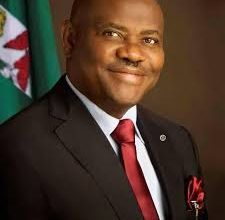
Also, Rivers State Governor, Nyesom Wike said President Buhari was afraid to assent to the Electoral Act Amendment Bill as it would make his party fail in the 2023 general election.
Wike, who asserted the inauguration of lecture halls, laboratories, and offices of the Faculty of Basic Medical Sciences of the Bayelsa Medical University in Yenagoa at the weekend, pointed to the inclusion of the compulsory transmission of electoral results electronically in the Electoral Act Amendment Bill as the APC’s greatest fear.
“They are afraid that if INEC in 2023 transmits election results electronically that is the end of them because they know they will fail,” he said.
Wike wondered why the APC-controlled Federal Government always seeks excuses to justify their unwillingness to sign into law what will advance the country’s electoral process.
He explained that in 2019, the president declined assent because the compulsory use of the card reader was included, which was seen as capable of dimming their chance of winning the election.
“Now, we are in 2022, going for 2023, National Assembly in their wisdom said there must be direct primaries by all the parties, Mr President came and said no, put options. National Assembly in their wisdom has amended the bill and agreed to what Mr President said. Now again, Mr President said I’m in dilemma, I’m consulting. What is the consultation?
NiMet predicts 3-day dust haze from Monday
“That there is a clause that says if a minister or a commissioner wants to run for election you have to resign, that is why up till now Mr President cannot assent to the Electoral Act Amendment Bill.”