By Nathaniel Zacchaeus, Abuja
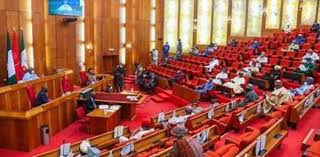
The Senate on Wednesday took a major step toward addressing delays in the nation’s justice system by passing for second reading two bills seeking to increase the number of judges of the Federal High Court and justices of the Court of Appeal.
The proposed legislation seeks to increase the number of Federal High Court judges from 70 to 90 and the strength of the Court of Appeal from 70 to 110 justices to address mounting case backlogs and improve access to justice nationwide.
Both bills, sponsored by Senate Leader Opeyemi Bamidele, received overwhelming support during plenary and were subsequently referred to the Senate Committee on Judiciary, Human Rights and Legal Matters for further legislative scrutiny.
Senate President Godswill Akpabio announced the passage of the bills after they secured the support of lawmakers through separate voice votes.
•Bamidele says reform will fast-track justice delivery, introduce virtual hearings
•Bamidele says reform will fast-track justice delivery, introduce virtual hearings
Leading the debate on the bill to amend the Federal High Court Act, Bamidele said the reform had become necessary due to the court’s growing caseload and the need to ensure the timely dispensation of justice.
According to him, an effective judicial system remains the cornerstone of democracy, and he stressed that delayed justice often amounts to a denial of justice.
“The essence of every judicial system is to ensure the timely and effective administration of justice, as justice delayed is justice denied. No democracy can thrive where citizens and institutions are unable to obtain prompt judicial determination of disputes,” he said.
The Senate Leader noted that the workload of the Federal High Court has expanded significantly in recent years due to increased commercial activities, technological advancements, cybercrime prosecutions, anti-corruption cases and the complexities of modern governance.
He explained that despite the rising caseload, the number of judges has remained largely unchanged, resulting in congested court dockets, prolonged hearings and increased litigation costs for Nigerians seeking justice.
Bamidele argued that increasing the number of judges would strengthen the court’s capacity to handle cases more efficiently and reduce delays that have become a major challenge within the judicial system.
On the bill seeking to amend the Court of Appeal Act, the Senate Leader said the proposed increase in the number of justices was designed to address the growing volume of appeals from courts and tribunals across the federation.
He observed that the current number of appellate justices had become inadequate in view of the increasing demands placed on the court, leading to prolonged delays in the hearing and determination of appeals.
According to him, the amendment would not only expand the court’s capacity but also enhance administrative efficiency, improve case management and promote equitable representation of states and the Federal Capital Territory in line with the federal character principle.
“The existing number of justices has become grossly inadequate in view of the increasing volume of appeals emanating from courts and tribunals across the country,” Bamidele stated.
He added that the legislation would help reduce case congestion, facilitate the quicker disposal of appeals, and strengthen the constitutional guarantee of a fair hearing within a reasonable time.
A major feature of the proposed amendment is the introduction of a legal framework for virtual court proceedings at the Court of Appeal.
Bamidele said the provision was inspired by global best practices and lessons learned during the COVID-19 pandemic, when several jurisdictions adopted technology-driven judicial processes to ensure continuity of court operations.
The amendment would empower the appellate court to conduct proceedings electronically in accordance with its rules, a development expected to accelerate case handling and reduce logistical challenges associated with physical hearings.
The bill also proposes establishing an Alternative Dispute Resolution (ADR) Centre within the Court of Appeal to encourage the amicable settlement of disputes and further decongest the courts.
In addition, it seeks to clarify issues relating to the ranking and seniority of justices, define the composition of appellate panels and strengthen requirements for determining complex appeals involving significant legal questions.
Legal experts have long identified inadequate judicial manpower as one of the major factors responsible for delays in the administration of justice in Nigeria.
The Federal High Court handles matters relating to taxation, banking, maritime affairs, terrorism, cybercrime, intellectual property, corruption and disputes involving federal agencies.
The expansion of economic activities and technology-driven crimes has significantly increased its workload in recent years.
Similarly, the Court of Appeal has witnessed a steady rise in appeals from federal and state high courts, election petition tribunals and specialised courts, contributing to a growing backlog of cases.
The Senate committee handling the bills is expected to conduct further consultations and present its report to the chamber before final consideration and passage.