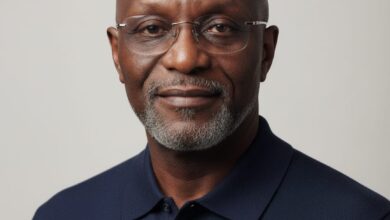
By Lemmy Ughegbe, Ph.D
In an era of economic strain and heightened public scrutiny, every presidential movement carries meaning beyond its immediate purpose.
When President Bola Ahmed Tinubu travelled to the United Kingdom, the visit was framed within the familiar language of diplomatic engagement and strategic partnership. Yet, as with many such trips, the central question for Nigerians remains disarmingly simple: what exactly did the country gain?
To be clear, no serious nation conducts its foreign policy in isolation. Engagement with global partners is not optional; it is essential. The United Kingdom remains one of Nigeria’s most significant bilateral partners, with deep historical ties, strong diaspora connections, and substantial interests in trade, finance and security cooperation. In that context, a presidential visit is neither unusual nor inherently problematic.
Indeed, there are legitimate arguments in favour of such high-level engagements. At a time when Nigeria seeks to reposition itself as an attractive investment destination, presidential visibility on the global stage carries weight. Investors, governments and multilateral institutions often respond not just to policy documents but to signals of commitment at the highest political level. A president who actively engages international partners can help shape perceptions of stability, seriousness and readiness for business.
Moreover, diplomacy is as much about relationships as it is about agreements. Face-to-face interactions can open doors that formal correspondence cannot. Strategic conversations on security cooperation, intelligence sharing, migration management and economic partnerships often require the kind of direct engagement that only top-level visits can provide. Yet, acknowledging the necessity of diplomacy does not preclude scrutiny. If anything, it demands it.
The primary concern surrounding the UK visit lies not in its occurrence but in its perceived outcomes. One of the most cited outcomes of the visit was the widely publicised £746 million financing agreement between Nigeria and the United Kingdom for the modernisation of key port infrastructure in Lagos. While presented in some quarters as a major economic gain, it is important to situate the nature of the arrangement properly.
The facility, backed by UK Export Finance, is not a grant but a structured financing mechanism tied to specific infrastructure projects. It is designed to support the refurbishment of the Apapa and Tin Can Island ports, critical assets in Nigeria’s trade architecture. Yet the deal is also mutually beneficial, with a significant portion of the contracts expected to flow to British companies, including support for the UK’s own industrial sector. This raises a more nuanced question: while the agreement may improve Nigeria’s long-term trade capacity, does it sufficiently address the immediate economic pressures facing citizens, or is it primarily a strategic, limited infrastructure intervention?
For many Nigerians, the trip still appeared heavy on optics but light on clearly communicated deliverables. Beyond the ceremonial meetings and public appearances, there remains limited clarity about the specific agreements reached, the investments secured, or the measurable benefits accrued to the country. Optics matter in diplomacy, but outcomes matter more.
There is also the question of timing. At a moment when many Nigerians are facing economic hardship, foreign trips by political leaders inevitably attract heightened attention. The issue is not merely the cost of such visits, though that is often a factor in public discourse, but the symbolic contrast between governance at the top and lived realities at the grassroots.
More pointedly, the timing of the trip coincided with fresh waves of terrorist attacks in parts of Borno State, once again exposing the persistent fragility of Nigeria’s security situation. For many Nigerians, this was more than a coincidence of schedules; it was a question of leadership optics and national sensitivity.
At a time when communities were mourning losses and grappling with fear, the President’s departure for an overseas engagement created a perception of distance from the urgency on the ground.
Leadership in moments of crisis is not measured solely by policy decisions but also by presence, both physical and symbolic. Even where governance continues from afar, absence at such critical moments can deepen public anxiety and reinforce the feeling that those at the centre of power are removed from the realities confronting ordinary citizens.
This points to a deeper, recurring issue in Nigeria’s foreign policy: translating diplomatic engagements into tangible national gains.
In many countries, presidential visits are tightly structured around specific deliverables. Trade agreements are signed. Investment commitments are announced with clear figures. Bilateral frameworks are unveiled with timelines and implementation strategies.
Even where negotiations are ongoing, communication is carefully managed to ensure that citizens understand what is being pursued and what has been achieved.
Nigeria’s approach, by contrast, often appears less coordinated. Visits are undertaken, meetings are held, communiqués are issued, but the linkage between these engagements and concrete outcomes is not always clearly articulated.
This communication gap creates room for speculation and criticism. It also places an unnecessary burden on the presidency. Even where meaningful discussions or preliminary agreements may have occurred behind closed doors, the absence of structured public communication allows the narrative to be dominated by perceptions of ceremonial engagement rather than substantive diplomacy. Diplomacy in the modern age is not conducted solely in conference rooms. It is also conducted in the court of public opinion.
Another dimension worth considering is institutional follow-through. Foreign visits should not be isolated events; they should form part of a broader strategic framework. Agreements reached must be tracked. Commitments made must be implemented. Ministries, departments and agencies must be aligned to ensure continuity between diplomatic engagement and domestic execution.
Without this continuity, even well-intentioned visits risk becoming episodic rather than transformational.
None of this suggests that the UK engagement was without value. Diplomatic gains are not always immediately visible. Some outcomes take time to materialise. Relationships built today may yield results months or even years later. But in a climate of public distrust and economic anxiety, governments cannot rely solely on delayed outcomes. They must communicate clearly, act transparently and deliver consistently.
Ultimately, the question is not whether the President should engage the world. He must. The question is whether such engagements are structured to maximise national benefit and reinforce public confidence.
Nigeria’s global ambitions require active and strategic diplomacy. But diplomacy must be anchored in purpose, guided by clear objectives and measured by tangible outcomes.
Anything less risks reducing important state engagements to little more than well-photographed moments. And in a country searching for results, photo opportunities are no longer enough. What citizens demand now is not movement, but measurable impact; not presence abroad, but progress at home.
Dr Lemmy Ughegbe, FIMC, CMC
Email: lemmyughegbeofficial@gmail.com
WhatsApp ONLY: +2348069716645