By Nathaniel Zacchaeus
The MacArthur Foundation yesterday said the National Assembly Appropriation Acts since 1999 was not having an impact on Nigerians.
It alleged that over N100trn had been approved in the appropriation acts in the last 33 years.
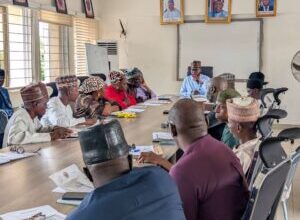
The Country Deputy Director of the global agency, Mr Dayo Olaide, stated this at the Policy Dialogue on Situating Constituency Projects in the 2023 Electioneering Campaigns organised by the Order Paper Advocacy Initiative.
Olaide said despite spending the huge sums, the population of the out of school children had risen from 10.5 million to 18 million.
He also said some laws that could have positive impacts on the lives of Nigerians were passed and signed into law but never implemented.
He said, “You can talk about the Public Procurement Law which was never there. You can talk about the anti-corruption Act and the Fiscal Responsibility Act, the Nigerian Extractive Transparency Initiative Act, and several important legislations that are in place.
“The significance of any law is not in the paper that has been signed. It is in the impact that it can make in the lives of the ordinary Nigerians and I think that is why the biggest deficit is.
“When you look at our education or health sectors, it is difficult to argue that there has been progressinging even though we can see progress in the number of laws, whether at federal or state, there has been progressing in all of these areas.
“Now, I did a very quick back-of-the-envelope calculation there. Between 1999 and as we speak, Nigeria’s Federal Government has budgeted over N100trn.
“This year 2022, It is N17trn, last year N13trn, 2020 – N11trn, 2019- N8trn, that is already over N40trn.
“Between 1999 and 2018, it budgeted over N63trn- that is the Federal Government. But within that same period, out-of-school children rose from 10.5 million to 18 million.
Insecurity: Police must deploy technology, says Buhari
“So ask the question, where are those over N100trn gone to? So, my first observation is to say that when we score ourselves as lawmakers, we should go beyond legislative activities that we can engage in – the laws that we can give to Nigerians.
“When the National Assembly passes the Appropriation, it is a law but the effect and impact of that appropriation will never be felt by the ordinary Nigerians unless it is implemented and there are clear indicators that are human-centered to show the extent to which they are impacting us.”
He said it was not enough for the lawmakers to praise themselves for achieving the January to December budget cycle when Nigerians were not feeling the impact of the fiscal documents they are producing.
He said, “It is success and progress, yes, we should commend the National Assembly for doing that but Nigerians are not concerned about those passages.
“Nigerians when they wake up every morning, they are asking themselves, what does this budget mean for me as a person?”
Also speaking on the occasion, the representative of BudgIt, Adewale Adejola, berated the lawmakers for not capturing the people they represent effectively in their various constituency projects.
He said, “On the issue of representation, we have 469 federal lawmakers, we also governors, House of Assembly members and local government chairmen and councilors. It is so disheartening that still, people’s needs are not being captured in the communities.
“Sometimes, the legislators don’t even know the situation of the people they are representing. That is why needs assessment is important. With our Tracker department, we monitor constituency projects in 32 states and the Federal Capital Territory.
“We have the understanding of what is happening across the country. We also see that empowerment projects take more than 60 percent of the N100bn allocation for constituency projects every year.”
He alleged that principal officers in both the Senate and the House of Representatives, usually allocate the largest share of the constituency projects to themselves.
He said, “The principal officers like the Senate President, Speaker of the House of Representatives, Senate Leader and his counterpart in the House, etc, take the largest share of the constituency projects.
“Like the Speaker, Honourable Femi Gbajabiamila, his share of projects is more that of lawmakers from two states combined.
“I stay in Lagos and if I measure the developments in the Federal constituency that he represents, the funds being allocated to the zonal intervention project cannot be compared to the projects on the ground. So people don’t know,” he said.