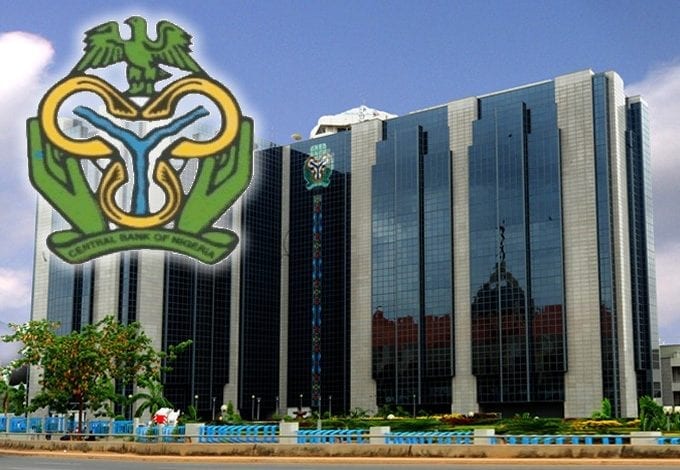
The Central Bank of Nigeria has directed all banks to publish the names and Bank Verification Numbers of their customers who default on the country’s foreign exchange (FOREX) policy.
The move, the apex bank said, was to stave off the activities of some persons, who engage in fraudulent and unscrupulous practices to obtain foreign exchange.
In the CBN circular obtained by our correspondent on Tuesday, the bank identified the use of fake visas as well as the cancellation of air tickets after purchase of Personal Travel Allowance and Business Travel Allowance as some of the sharp practices.
The circular, issued on Monday and addressed to the banks, was entitled, “Publication of names of Defaulters of a CBN policy on sale of Forex for PTA/BTA”.
The bank’s Director, Banking Supervision Department, Haruna Mustafa, signed the memo
The circular read, “ The CBN has received and noted with concern reports of sharp practices by some unscrupulous customers to circumvent the new CBN policy on the sale of forex for overseas personal and business travel.
“Some of these unwholesome practices include the use of fake visas and cancellation of air tickets after purchase of PTA/BTA. This trend, if not curbed, portends risk to the integrity and stability of the forex market.
“Consequently, further to the various measures already put in place, all banks are hereby directed to publish on their websites the names and BVN of defaulting customers who present fake travel documents or cancel their tickets and fail to return the purchased PTA/BTA within two (weeks) as stipulated in the customer declaration form signed by them”.
Prior to this order, most banks had written to their customers of their commitment to providing them with foreign exchange for their Personal and Business Travel as well as payment for overseas education, medical, and other eligible invisible transactions.
The exchange rate between the naira and the US dollar closed at N411.63/$1 at the Investors and Exporters window, where forex is traded officially.
Naira appreciated against the US dollar to close at N411.63/$1 on Monday, representing a 37kobo gain when compared to N412/$1 recorded at the close of trading last Friday.
However, the naira further depreciated at the parallel market as it closed at N527/$1 on Monday, representing an N3 drop when compared to N524/$1 recorded on the previous trading day.
The naira slumped to a new record low against the dollar at the black market on Monday days after the CBN banned microfinance banks from foreign exchange transactions as dollar supply drops significantly by 62 percent.
According to Reuters, the stoppage of forex allocation to BDC operators by the CBN has drained liquidity in the black market and could further weaken the naira.
Trading at the official NAFEX window The naira appreciated against the US dollar on Monday to close at N411.63 to a dollar, representing a 0.27 percent depreciation compared to N412/$1 recorded in the previous trading day.
The opening indicative rate closed at N411.93/$1 on Monday, as against N411.80/$1 recorded last Friday, representing a 13 kobo depreciation.
An exchange rate of N415.20 to a dollar was the highest rate recorded during intra-day trading before it settled at N411.63/$1, while it sold for as low as N400/$1 during intra-day trading.
Meanwhile, forex turnover at the Investors and Exporters (I&E) window dropped by 62.2 percent on Monday.
According to data from FMDQ, forex turnover declined from $216.52 million recorded last Friday to $81.81 million on Monday.
Cryptocurrency watch
The world’s most popular and largest cryptocurrency, Bitcoin, was down by 2.03 percent on Monday evening to trade at $47,040.42 as cryptocurrency investors are pushing alternatives to Bitcoin and Ether to new heights amid a climb in downloads for crypto trading apps.
Cryptocurrency prices continue to be in the red on August 31. The global cryptocurrency market cap is $1.98 trillion, a 5.19 percent decrease over the last day, while the total crypto market volume over the last 24 hours is $103.08 billion, which makes a 14.10 percent increase.
Meanwhile, anti-Bitcoin protests broke out in El Salvador as Bitcoin law is set to kick off in less than a week with citizens not entirely convinced about it.
The second-largest cryptocurrency by market capitalization, Ethereum, was up by 2.41 percent in price to trade at 3,237.43, while XRP slumped by 0.85 percent to trade at $1.11.
Crude oil price
Brent Crude oil was down 0.04 percent on Monday evening to trade at $73.38 per barrel after rising earlier in the day as hurricane Ida shut 95 percent of US Gulf coast oil output.
The Kuwaiti oil minister said that crude oil prices could rise further if OPEC+ stops adding barrels to global supply, which is a possibility after the cartel’s next meeting.
OPEC+ had agreed to boost oil production by 400,000 BPD every month beginning August until the group’s combined output reached pre-agreement levels towards the end of next year.
But now that demand concerns are once again coming to the fore, OPEC+ is signaling that it is always ready to change track.
Edo set to contain flooding
The West Texas Intermediate (WTI) was down by 0.04 percent to close at $69.18 per barrel on Monday evening, after rising earlier in the day.
Natural gas was down by 0.26 percent to trade at $4,294, Bonny Light Crude closed the day on a positive note as it gained 1.27 percent to close at $70.02 while OPEC Basket was up by 1.03 percent to close at $71.48.
External reserve
Nigeria’s foreign reserve rose by $91 million as it recorded its third increase in over two weeks to close at $33.662 billion last Friday, compared to $33.571 billion recorded as of the previous day. The latest increase represents a 0.27 percent boost in the country’s foreign reserve.
In the same vein, the reserve level has also gained $259 million month-to-date compared to $33.403 billion recorded as of the beginning of the month.
However, its year-to-date change shows a $1.891 billion loss compared to $35.37 billion recorded as of December 31, 2021.
While recent reports have suggested that Nigeria’s foreign reserve position could grow as high as $40 billion by the end of September 2021, the recent decline in the external reserve could be attributed to the decline recorded in the global crude oil market in recent weeks.