Clamour for restructuring is fundamentally flawed- Osaikhuiwu

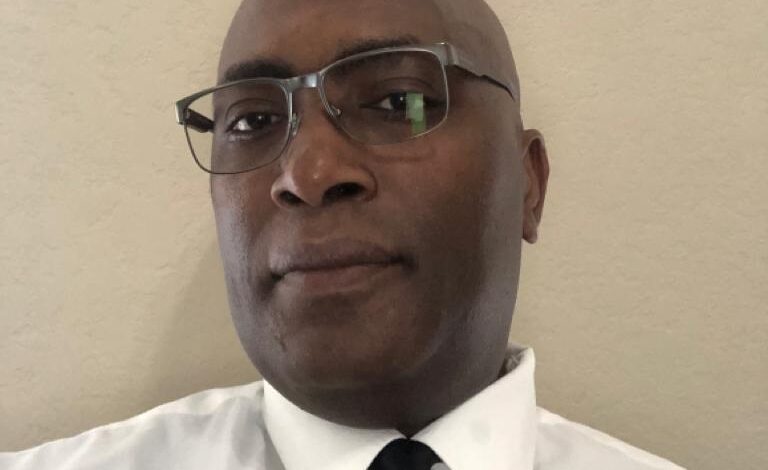
Global Coordinator, African Congress for Cultural and Economic Renaissance (ACCER), Nosa Osaikhuiwu, believes cultural change, not restructuring, should urgently be addressed. In this interview with ThisNigeria, Osaikhuiwu, who describes himself as a detribalized and decolonized African, talks about some issues the incoming administration should focus.
There is this belief held by some schools of thought that Nigeria is not yet a nation. That it is a country created by our erstwhile colonial masters, the United Kingdom, made up of many ethnic nationalities, but a nation waiting to be born. How do you react to this?
A nation is an aggregation of people formed based on shared values, language, history, and ethnicity. Yes, one could indeed classify Nigeria as a nation of many nations with some similarities and differences. However, we are where we are through the historical legacies of colonialism, which cobbled our people together for their selfish interest and to facilitate ease of administration then, but to say we are not a nation, or we are a nation awaiting birth is not rooted in reality. We are as I stated earlier a nation of many nations with many similarities in culture, traditions, norms, and in some cases religion, notwithstanding some differences. All we need to do now is how promote unifying policies and enthroning cultural transformation and good governance through Culture Change from the Ground Up.
Successive governments only danced around the issue of restructuring just to score cheap political points. Do you see the incoming government led by Bola Tinubu mustering enough political will to tackle this sensitive issue once and for all?
Yes, successive governments have indeed paid lip service to restructuring, and the incoming government will not be able to muster the universal consensus as some fear it may lead to a breakup. However, I do not see the need for a wholesale restructuring of the nation outside of some of the laws on devolution of authority that the National Assembly has passed and the president has signed into law. Many of the problems facing the people are currently in the domain of the various state governors who get monthly allocations from the federal government including additional resources to the oil-producing states. What is restructuring trying to address? Will restructuring fix many of the dilapidated infrastructures in the states or does restructuring tar roads and build local hospitals? This is diversionary tactics by the elites and we should not stand for that. Who will be in charge of the restructured entities after the process is completed, for example? The same group of political hyenas of today will be responsible for the new entities and nothing will change. The only solution which we are advocating for is CULTURE CHANGE which will help create a society and nation of our dreams where there individual and collective responsibility.
Fiscal federalism and allowing the component units of the federation to take charge of their resources, arguably, form the bases for restructuring, do you see it differently?
here is no one standard on federalism as every federating nation usually adapts it to their situation and Nigeria should be no exception. While one is not opposed to resource control as a principle, given where we are as a nation today, ceding outright control to states is not practicable, rather an improvement on the current sharing formula could be enhanced. The critical question that really should be asked by our people and that is not been asked is what are the oil-producing states doing with their shares of the 13 per cent federal derivation. Have these resources made any impact on the lives of the locals in these states? I recently visited Delta State a major oil-producing state and recipient of substantial resources as part of the sharing mechanism and what I saw was horrendous and a total infrastructural decay. It is an outrage that the state is in such decay when the resources it has collected from the federation’s account since its creation is enough to turn Sapele, Warri, and Asaba into a mini London and provide adequate infrastructural developments to all parts of the state. We do not need total local control of resources to develop our states and create enabling environments for local businesses to thrive and create jobs and opportunities for our people. Let us start by first managing what we have ethically, transparently, and for the benefit of our people, and then we go from there.
It has been said over and over that each part of the federation should be allowed to develop and grow at its own pace as was done in the first republic, does this suggest real restructuring?
Nothing is preventing any of the 36 states in Nigeria today from developing their state. As it currently exists each state government get enough resources along with internally generated revenues to pave and tar all the major roads with integrated drainage system in their areas. Do we need restructuring or local control of resources to use the people’s money judiciously? This concept of restructuring being the solution is HOGWASH and a bunch of HORSE MANURE that our people should not buy into but rather should demand accountability from local authorities. How about telling us what you are doing with the current resources at the state government’s disposal?
Some proponents of restructuring understand it to mean the creation of more states to represent sectional agitations, are they correct?
The whole idea behind the clamour for restructuring is fundamentally flawed as it seeks to solve a problem that does not exist. Things are not working well in the country is a fact, but it has nothing to do with the political structure of the country, but a lot more to do with the operators of the system and the prevailing national culture. We already have more than enough states and these calls are unnecessary, except that some interest groups are trying to create their fiefdom where they can continue their looting of the people’s wealth. We can address all these challenges by embracing cultural change from the ground up. We need to change the culture of permissibility and the culture of forgiveness without atonement for infractions and lawbreakers so we can create a lawful and law-abiding people and society.
To what extent do you think restructuring will address the fear of domination and the political imbalance being expressed by some sub-nationals within the federating states?
I strongly disagree with the premise of the question since restructuring is been advocated for by the elites in politics, society, and even the media and this is a No, No for me. The idea of political domination today under this current political terrain in Nigeria is an illusion and a hollow cry as such, since we have a democracy and every citizen has the right to contest for any position freely without any hindrance and that is a fact today in Nigeria. The act of politicking is the ability to be able to engage the electorates and stakeholders and persuade them to support your candidacy and today some areas of the country are better at doing this and creating a support base across the nation than others. This can be addressed by those that perceive the marginalization to deepen their engagement with other areas and assuage any concerns to earn their political support I thought the Peter Obi campaign tried to an extent in this area, but has more ways to go.
What are your thoughts on equalising opportunities for Nigerians when it comes to consideration of the state of origin?
Equalising opportunities across the board for Nigerians meant removing the structural impediment of “State of Origin” requirements in any processes whether it is related to employment, school admissions, or contract acquisitions, so we can truly create a unified country of equal opportunities for all. For instance, in Nigeria today, Edo is the most welcoming state in our nation where no matter where you come from you can call it home without fears of molestation or intimidation and the locals are non-discriminatory. How can we say for instance that a child born in Ibadan to Hausa parents who has never been to the North is from the North when all that child has ever known is Ibadan in the South West? Similarly, how can one say a child born to Ibo parents from Abia State in Kaduna is from Abia State when the child has lived since birth in Kaduna and speaks the local language? It is about time that the National Assembly takes up this legislation and enacts the enabling laws for conditions for residency in a state. On our part, we will suggest that if you live in a state for two years continuously and work and pay taxes there then you have established conditions for residency and should be able to access equal benefits accruing as such. As a detribalised Nigerian, who believes strongly that those talking about ethnic representations do not mean well for the people as what is important is not where you are from or what your religion is, but your ability to serve and deliver for the people and improve their quality of life. I will say here that my mission today as part of pushing for CULTURE CHANGE in Nigeria is to also detribalise Nigeria, by pushing for the replacement of “State of Origin” with “State of Residence” in all forms, documentation, and identifications by Federal, State’s and local authorities. Emphasising the state of residence instead of the state of origin will help promote national cohesion and unity.