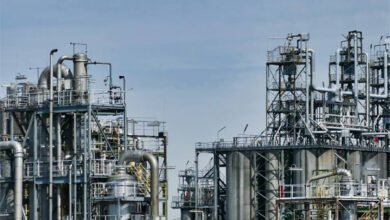
The Crude Oil Refinery Owners Association of Nigeria (CORAN) has called for urgent presidential intervention to address challenges confronting domestic refiners and reduce Nigeria’s dependence on imported petroleum products.
The association urged the Federal Government to convene a Presidential Refining Industry Roundtable involving regulators, crude producers, financiers, infrastructure investors and refinery operators to develop a national roadmap for the sector.
CORAN, in a position paper issued on Friday, said domestic refiners were grappling with foreign exchange pressures, high borrowing costs, crude supply constraints, inadequate infrastructure and rising logistics costs.
The association said Nigeria’s experience contrasted sharply with that of the United States, where President Donald Trump recently met refinery and fuel-distribution executives despite the country’s high refinery utilisation, underscoring the importance of government engagement with strategic industries.
CORAN said Nigeria, despite being one of Africa’s largest crude oil producers, still faced difficulties supplying local refineries with crude under commercially sustainable arrangements.
It called for the full institutionalisation of the Federal Government’s Naira-for-Crude initiative, arguing that refineries selling most of their products in naira should not face unnecessary foreign exchange pressure in sourcing crude.
The association also demanded a domestic crude-pricing framework that considers transportation, crude quality, point of delivery and other transaction costs rather than relying solely on international benchmarks.
“Physical allocation alone is not enough. Crude must be delivered at commercially sustainable prices and under arrangements that properly consider transportation, quality, evacuation, financing and proximity to producing assets,” CORAN said.
The refinery owners also expressed concern over the continued influx of imported petroleum products, warning that excessive imports could undermine investments in local refining, increase foreign exchange demand and expose the country to external supply disruptions.
While acknowledging that imports might be required to cover temporary supply gaps, CORAN said they should not remain the dominant structure of Nigeria’s downstream petroleum market.
The association identified access to long-term financing as another major obstacle and called for a Refinery Development and Expansion Financing Framework involving development finance institutions, commercial banks, pension funds, infrastructure funds and private investors.
It said the proposed framework should provide long-term funding, credit guarantees, refinancing windows and construction-risk support for new and existing refineries.
CORAN also called for increased investment in pipelines, storage terminals, depots, rail-linked transport and marine evacuation facilities, noting that reliance on road transportation significantly increased costs and safety risks.
The association urged the Federal Government to treat refineries as strategic industrial infrastructure capable of supporting employment, engineering, fabrication, petrochemicals and other sectors.
“Nigeria cannot continue exporting crude, exporting jobs and importing petroleum products at significant economic cost,” the association said.
CORAN said the proposed presidential roundtable should produce clear timelines for strengthening the Domestic Crude Supply Obligation, institutionalising Naira-for-Crude, developing a domestic crude-pricing framework, reducing unnecessary product imports and expanding refinery financing and infrastructure.
It said Nigeria must move from an import-dependent petroleum economy towards a production-driven model, with domestic refineries playing a central role in meeting local demand and positioning the country as a refining hub for Africa.