CSOs, Lawyers Lament Marginalisation of Women, PWDs
Daniel Ariahu: Abuja

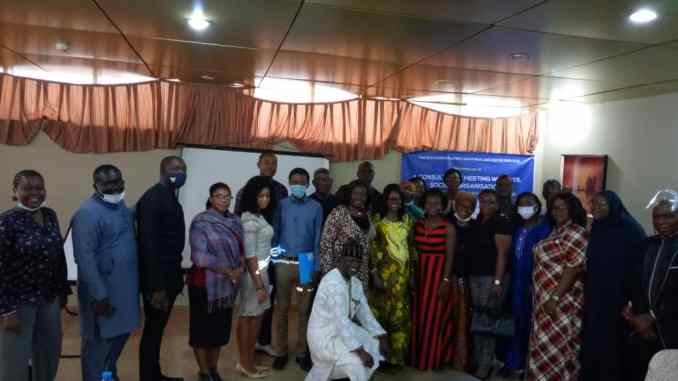
A civil society organisation (CSO), Rights Enforcement and Public Law Centre (REPLACE), in collaboration with the British Council, has held a consultative meeting to task government on upholding the fundamental human rights of Nigerians, especially women and people living with disabilities (PWDs).
The consultative meeting held in Abuja, on Thursday drafted guidelines for the federal government and security agencies to follow in addressing issues affecting women and PWDs.
Addressing participants at the event, the executive director of REPLACE, Barrister Felicitas Aigbogun-Brai, said that women and PLWDs are greatly marginalised in Nigeria and called on government for urgent intervention.
She said: “Out of Nigeria’s estimated population of 200 million, approximately 27 million people live with disabilities. A 2005 study by the Leprosy Mission Nigeria found that, of its 1,093 respondents, 37 percent struggled with visual impairments, 32 percent had limited mobility, 15 percent had reduced hearing and the majority of people surveyed- 61 percent- were unemployed because of their disability.
“People with disabilities in Nigeria typically receive little support from the government and instead rely on family members, nongovernmental organisations (NGOs) and religious groups”
“One of their biggest obstacles is the stigma surrounding their disabilities, which excludes them socially, economically and politically. The challenges posed by the above for access to justice cannot be over emphasised, hence the need to bridge, to a considerable extent, identified gaps by devising guidelines consistent with the best global practices identified earlier, including social, spatial, political, economic and other factors”.
“During the past years, activists have been working tirelessly to pass the Nigeria Disability Act. In January 2019, President Muhammadu Buhari signed it into law. As this law comes into force, activist and organisations now have a significant legal basis for calling on Nigeria to do more for PLWDs, in line with her treaty obligations as contained in the Convention on Rights of Persons with disabilities, the Banjul declaration and other relevant norms and standards. While Nigeria has a way to go to give people with disabilities equal opportunity, the passage of this law is a great start. By increasing access and protection, people with disabilities in Nigeria can have a greater voice in politics, education and the economy.”
Also speaking, a lawyer, Sarah Rinmicit Garba, said that the basic objective for the formulation of guidelines for government was to formulate workable themes dwelling on the access to comprehensive, achievable and attainable justice for women in Nigeria in order for them to contribute to development of society.
“The chief objective of this guideline is to analyse and formulate workable themes dwelling on the access to comprehensive, achievable and attainable justice for women in Nigeria as well as the issue on gender identity from a constructive perspective, examining whether a reconstruction of gender perspectives would translate to justice for women and empower them to contribute positively to the society
“By exploring the above, this guideline will strive to provide fresh and valuable insight into the subject, and ultimately seeks to develop a framework of tangible arguments, explaining that gender equality would support women in Nigeria to engage positively towards the development needs of the society,” she said