A don, Prof. Taibat Lawanson, on Monday called for multi sector collaboration towards achieving zero carbon emission in Lagos State by 2050, to mitigate climate change and ensure a sustainable livable city.
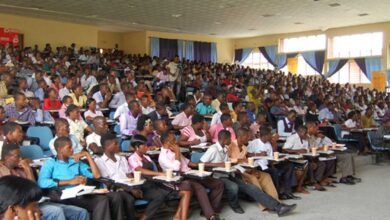
Lawanson said this at the 2021 World Habitat Day celebration in Alausa tagged “Accelerating Urban Action for a Carbon Free World”.
She said that carbon emission was prevalent in urban centres such as Lagos with high population density, small land mass and high commercial and industrial activities.
Lawanson, a professor of Urban Management and Governance in the University of Lagos (UNILAG) called for proactive measures in accelerating action for a carbon-free state through sustainable measures in transportation, energy, agriculture and other areas.
She advised the state government to improve waste collection and management methods as well as transportation and energy infrastructure, and set time lines to achieving goals.
The Guest Speaker said that cities generate about 70 per cent of global carbon dioxide emissions with transport, buildings, energy and waste management accounting for the bulk of urban greenhouse emissions.
The don said there were only 29 years remaining to achieve targets to reach zero global net-zero emissions set at the Paris Climate Agreement.
She stressed the need to empower local governments through adequate funding and education to ensure they drive the process.
“Lagos State generates emissions of 26,443,656 tons of carbon dioxide, or 1.3 tons of carbon dioxide per capita.
“An estimated 65 per cent of the residents of Lagos who are extremely poor are highly vulnerable to climate impacts.
“Over 6,500 infrastructure assets, buildings and other features, valued at N73 billion , are classified as highly vulnerable to climate risk,’’ she said.
Lawanson advised the Lagos state government to prioritise protection of natural environment to reduce carbon footprints and warned against continued dredging – a looming disaster.
Prosperity of Lagos has multiplying effect on S’West, Nigeria – Sanwo-Olu
She also warned against building on wetlands and other water paths.
“The issues are interlinked, therefore, a multi sectorial approach must be adopted,’’ she said.
Mr Daisi Oso, General Manager of Lagos State Planning and Environmental Planning Monitoring Agency (LASPEMA) said that 90 per cent of open areas in the state had been encroached upon and badly managed.
Oso, who was among panel discussants, said LASPEMA was already mapping out the encroached areas so as to construct concrete poles to provide green areas within the Right of Way.
He said several businesses had been established illegally and government was adopting the design to ensure coexistence as well as reduction of carbon footprints.
Other panelists at the session called for boost in public transportation infrastructure to ensure more people use the state government’s mass transit buses.
They called on residents to take responsibility in ensuring behavioral change by adopting environment-friendly practices to achieve zero net emission set targets.
They also appealed to the state government to ensure policy sustainability.