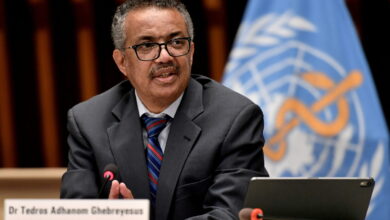
Chairman of the Economic and Financial Crimes Commission (EFCC), Ola Olukoyede, yesterday disclosed that the agency has uncovered a religious sect laundering money for terrorists.
Olukoyede, who made the revelation at a one-day dialogue on Youth, religion, and the fight against corruption, yesterday in Abuja, also said N7bn fraud proceeds were traced to another religious organisation.
He further said the EFCC had found religious organisations, institutions, sects, and bodies culpable of money laundering in the country.
Olukoyede said one of such religious bodies dragged the commission to court to protect its leader after laundered money was traced to its bank account.
The EFCC boss said the religious body got a court injunction restraining the commission from inviting, arresting, or prosecuting its leader.
“We will not give up on recovering the stolen funds. It is so sad that as I stand before the eminent audience today, our experience in fighting corruption has to do with religious leaders and even traditional rulers.
“As I stand before you there is a matter we are handling of over N30bn fleeced from Nigeria, and we were able to trace N7bn to a particular religious body.
“As we wrote a letter to the leader, the next thing we saw was a restraining order, stopping us from inviting them, stopping us from recovering the money,” Olukoyede said.
READ ALSO:Naira free fall: Senate summons CBN gov on state of economy
He, however, said that the EFCC had appealed the judgement.
“Sometimes ago, we investigated the issue of money laundering, somewhere in this country.
“There is a particular religious sect that launders money for terrorists, these are the problems we are battling with,” Olukoyede added.
He also revealed that since he assumed office about three months ago, the anti-graft commission has secured 747 convictions, but said over 60 per cent of the convictions were cybercrime cases.
“To our faith leaders, my appeal is that those who lead our society from churches and mosques should develop messages that glorify industry, hard work, probity, and contentment over riches, irrespective of how it was made.
“We all must stand up and be counted in the efforts to reset the mentality of our youths that the fast lane to affluence is fraud.
“Aside from our commitment to using faith to tackle corruption in various levels of society, we have also developed a remarkable tool which we intend to deploy to prevent corruption in our Ministries, Departments, and Agencies,” he said.
According to him, this tool, a Fraud Risk Assessment Project, is meant to assist government agencies in addressing systemic vulnerabilities at the personal, institutional, and environmental levels.
“When fully deployed, it will save the nation billions of naira in stolen wealth, time, and resources spent in investigating grand corruption cases.
“The project is intended to commence, in the first instance, with 20 extremely vulnerable agencies of government.
“We believe that with the support of the government and the cooperation of the leadership of the selected agencies, we will be able to drastically close the space for brazen graft in the public sector,” he said.
The News Agency of Nigeria (NAN) reports that the one-day event was aimed at addressing the challenges of youth involvement in cybercrimes and how religion could be used for their reorientation.
“Youth, Religion and the Fight Against Corruption,” featured the launch of the Interfaith Preaching and Teaching Manual developed by the Interfaith Anti-Corruption Advisory Committee of the Commission to instigate abhorrence for corruption among adherents of Islam and Christianity.
The EFCC’s Fraud Risk Assessment Prevention and Control Project for Ministries, Departments, and Agencies was also inaugurated at the event.