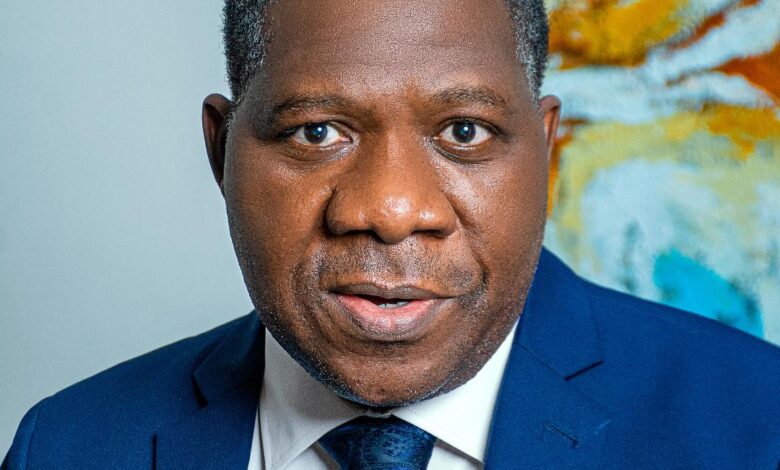
By Opeyemi Bamidele
I have been inundated with messages from many concerned and well-respected stakeholders in the last fortnight. The contents of their messages are virtually the same. In all, they sought clarification on the Senate’s decision to retain Sections 60(3 & 60 (5) of the Electoral Act, 2022, in the ongoing reform of our country’s electoral governance framework.
Regrettably, I could not respond to any of these messages for at least two reasons. First, I was on a national assignment outside the shores of our fatherland when I received the messages. Due to the importance of the task at hand, I was time-constrained to respond to the messages one by one.
Second, the messages largely reflect the mood of the citizenry as we prepare for the 2027 general election. Hence, I developed this intervention to address the concerns of our constituents nationwide collectively.
What then was the real issue that triggered the public debate? The debate centres on the National Assembly’s resolve to redraft an electoral governance framework that reflects the stark realities of our fatherland. Consequently, the Senate resolved against Clause 60 (3) of the Electoral Bill, 2026.
The clause literally mandates the presiding officer to “electronically transmit the results from each polling unit to the IREV portal in real time, and such transmission shall be done after the prescribed Form EC8A has been signed and stamped by the Presiding Officer and/or countersigned by the candidates or polling agents where available at the polling unit.”
As Nigeria’s foremost democratic institution, the Senate recognises the strength of the clause. It recognises its potential to strengthen the integrity of our electoral process. It also recognises that the clause has a high probability of deepening trust in democratic institutions, especially the National Assembly and INEC.
With all these possibilities, Clause 60 (3) of the Electoral Bill, 2026 is an initiative that any legislature or parliament worldwide would ordinarily have embraced. But this is just one side of the clause. We have a tradition of making decisions after due consideration of both sides of the coin. It is this tradition that spurred our inquiry into the other side of the clause, given the implications it may have for 237 million in the future.
Further inquisition threw up an indispensable question. What are the pitfalls that may arise or that we may encounter if we make the real-time electronic transmission of election results mandatory? Resolving this question requires us to separate emotion from what is practicable, facts from fictions or reality from sentiment.
As a result, we broadened our consultation and engagement to ensure that we did not take any decision that would further dampen public confidence or plunge our fatherland deeper into crisis.
As pragmatically as possible, we sought empirical answers to this question by engaging principal actors in communications and power sectors, among others. In the end, we identified useful findings that guided the Senate’s decision.
First, we discovered that the Electoral Act 2022 had already mandated the transmission of election results to the INEC Result Viewing Portal (IReV). This is evident in Section 62 (2), which established the National Electronic Register of Election Results. Introducing Clause 60(3), which compels all presiding officers to transmit election results to IReV in real time electronically, is no longer necessary, as we have not fully embraced electronic voting.
This finding underscores the need to distinguish the electronic transmission of election results from electronic voting.
Electronic transmission of election results does not mean Nigerians will vote electronically. It simply means that the presiding officers will transfer or transmit the election results to the IReV using the Bimodal Voter Accreditation System (BVAS) after voting has concluded and the results have been declared at the polling units, in accordance with the provisions of the Electoral Act.
In other words, it means we are voting and counting the election results manually. After the entire process, the election results will be transmitted to the IReV for all stakeholders in each of the 176,974 polling units nationwide. This is the system we have been using since 2020, and it has significantly improved the integrity of our electoral process.
On the contrary, the latter precisely demands the use of electronic technologies to either aid or handle casting and counting ballots. This system basically allows voters to use an electronic device to make and record their ballot choices.
In Nigeria, as of today, we are not yet at this stage, considering the state of the communication infrastructure. Even though we have not attained this stage, it is a system we all aspire to embrace in the future once our country’s power and communications infrastructure has been developed to the level that we can guarantee the seamless operations of electronic voting systems.
Second, we discovered that our power infrastructure would not efficiently support the real-time electronic transmission of election results across the federation. We have a huge population spread across the federation. Compared to our population, official data shows that at least 85 million Nigerians still lack access to grid electricity. This figure amounts to about 43% of the population. This shortfall speaks to the state of our power infrastructure.
Even though our generation capacity hovers roughly between 12,000 and 13,500 megawatts, our distribution and transmission capacity is acutely limited. As we all know, it can only deliver 4,500 megawatts to households nationwide.
Given the current state of our power sector, can we guarantee a stable power supply nationwide on election days? Like most technologies, BVAS depends on batteries to function. If such devices are used continuously for a long time, their batteries will drain, even if they are powerful. It will then require that the devices be charged before they can function again.
Can we guarantee a stable power supply nationwide on election days? If we cannot guarantee a stable power supply nationwide, why should we make the real-time electronic transmission of election results mandatory? We must be careful with the choices we make so that we will not create unnecessary problems for ourselves during and after the 2027 elections.
Consequently, to avoid a situation that will compound our country’s woes, we should make it discretionary since Section 62(2) of the Electoral Act, 2022 has already established the National Electronic Register of Election Results. The section states that the Registrar “shall be a distinct database or repository of polling unit by polling unit results, including collated election results.”
This provision has mandated that presiding officers transfer or transmit election results to the IReV at polling units. Hence, the use of ‘real time’ in Clause 60(3 & 5) of the Electoral Bill, 2026, is nothing but a bait for an intractable crisis. We must avoid such a slippery path now in the interest of national peace and security.
Does this shortfall suggest that the federal government has not been addressing the problems with our power sector? In the last four years, we have achieved quite a lot. In 2022, for instance, the National Assembly reviewed the 1999 Constitution and delisted electricity from the Exclusive Legislative List. By implication, electricity is now under the Concurrent Legislative List. This means that the State Houses of Assembly can legislate on electricity.
We have also amended the Electricity Act, 2025, to accelerate the decentralisation of the power sector while strengthening subnational governments’ ability to generate, transmit, and distribute electricity. This reform is indeed profound, and it will no doubt open the door to more investments to support the real-time electronic transmission of election results in the future.
The third finding directly relates to the coverage of our country’s broadband infrastructure. This is another fundamental consideration in every conversation that touches the electronic transmission of election results and the electronic voting system.
Currently, as official data show, our broadband coverage is on a steady rise, though it remains very weak by global standards. As shown in our 2020-2025 National Broadband Plan, we targeted 70% national coverage by 2025. But we mix that target, though we are making real progress. Our broadband coverage now stands at 50.58%.
Aside from the NCC’s findings, 4,834 communities with a population of 21 million still lack access to basic mobile connectivity. This suggests that 49.42% of the federation still lacks access to the internet network needed to enable the real-time electronic transmission of election results nationwide.
This finding is not limited to our broadband coverage. Our level of internet penetration offers lessons we cannot ignore in lawmaking. Right now, our internet user penetration is equally low, at 44.53% of our population. This indicates that a significant number of our people lack internet access.
This may actually seem irrelevant at the reform stage. But it may be a spark that becomes an inferno during implementation. For me, it is a highly consequential factor that cannot be thrown away for a republic of our size if election results must be transmitted real time because any delay, failure or hitch in real-time delivery or transmission can breed public suspicion, and public suspicion can trigger unrest now that we are all now more interested in who governs our fatherland than any time in our history.
Beyond these realities, comparing Nigeria to other countries further revealed the condition of our communication infrastructure. Speedtext Global Index, a global leader in connectivity intelligence, provides empirical data that further guides our decision.
In 2025, for instance, the Index ranked Nigeria 85th out of 105 countries. Our mobile network reliability was 44.14 megabits per second. This is extremely low compared with the UAE (691.76 Mbps), Qatar (573.53 Mbps), Kuwait (415.67 Mbps), Bahrain (303.21 Mbps), and Bulgaria (289.41 Mbps). The Index ranked Nigeria far below average for mobile network reliability.
In terms of internet connection speed, Nigeria’s rating for fixed broadband is quite disturbing. Out of 150 countries, Nigeria ranked 129th with only 33.32 Mbps. In this ranking, Singapore ranked first with 410.06 Mbps, followed by the UAE with 382.35 Mbps, France with 346.25 Mbps, Chile with 348.41 Mbps, and Hong Kong with 345.25 Mbps.
This rating is not where we were decades ago. We have made remarkable progress. To strengthen the reliability of our broadband and mobile network infrastructure, we have introduced legislative initiatives to attract much-needed investment to our digital economy and to develop world-class communication infrastructure that can support the efficient deployment of e-governance to manage our public affairs.
All these empirical statistics guided the Senate’s decision to retain Section 60(3) and (5) of the Electoral Act, 2022. They speak directly to the stark realities of our federation, not to emotion or sentiment. We recognise that law-making globally carries significant responsibilities.
As representatives of the people, we cannot enact laws based purely on public emotion or sentiment. These are huge obligations the Constitution places upon us all, and we cannot, for any reason, discharge our responsibilities at the expense of the citizenry.
In a democracy, lawmaking sits at the heart of public governance. Indeed, it is its lifeblood that freely flows in the veins of all public institutions. It does not respond to mere emotion or sentiment, but to facts, proofs or realities that can define or distort the future of our political system. If our law does not capture the realities of the federation, then it is a script for anarchy or a ploy for instability.
This deduction guided the decision of the Senate to redraft Clause 60(3 & 5) with a caveat, while at the same time addressing the concerns of our people nationwide substantially. The caveat, in this case, is the outright deletion of ‘real time’ from the clause so that we will not end up with an electoral governance framework that cannot respond to the stark realities of our fatherland.
*Senator Opeyemi Bamidele, CON, is the Leader of the Senate, Federal Republic of Nigeria.