By David Lawani
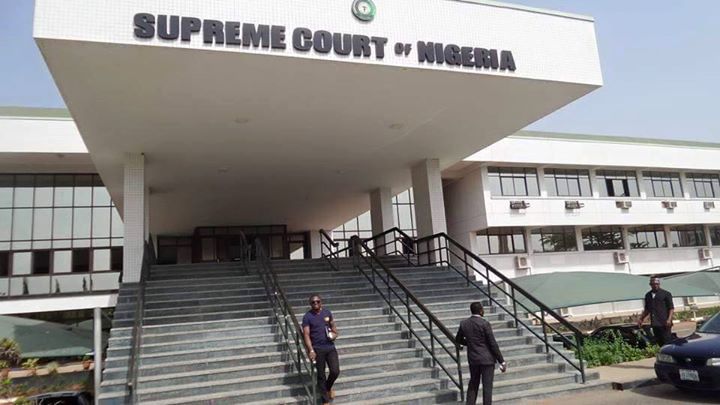
The Supreme Court has affirmed the President’s constitutional authority to declare a state of emergency in any state where there is a threat of a breakdown of law and order, ruling that such powers extend to the temporary suspension of elected state officials, provided the action is limited in duration.
In a split decision of six justices to one, the apex court held that Section 305 of the 1999 Constitution empowers the President to take extraordinary measures to prevent chaos or anarchy once emergency rule is proclaimed.
Delivering the lead judgment, Justice Mohammed Idris ruled that the Constitution does not expressly define the scope of “extraordinary measures,” thereby vesting the President with discretion on the steps required to restore normalcy.
The judgment arose from a suit filed by Adamawa State and 10 other Peoples Democratic Party (PDP)-led states challenging President Bola Tinubu’s declaration of a six-month state of emergency in Rivers State and the consequent suspension of Governor Siminalayi Fubara, his deputy, and members of the State House of Assembly.
Justice Idris first upheld the preliminary objections raised by the Attorney General of the Federation and the National Assembly, ruling that the plaintiff states failed to disclose a cause of action sufficient to invoke the Supreme Court’s original jurisdiction.
On that basis, the suit was struck out for want of jurisdiction. Notwithstanding this finding, the court proceeded to consider the substantive issues and dismissed the case on the merits.
The court held that emergency powers under Section 305 are designed to preserve constitutional order and that, in exceptional circumstances, the temporary suspension of elected officials may be justified as part of efforts to stabilise a state engulfed in crisis.
However, the decision was not unanimous.
In a dissenting opinion, Justice Obande Ogbuinya agreed that the President has the power to declare a state of emergency but held that this authority does not extend to suspending elected governors, deputy governors, or legislators, and warned against the use of emergency powers to undermine democratic mandates.
President Tinubu had imposed emergency rule in Rivers State on March 18, 2025, citing an escalating political crisis involving Governor Fubara, his predecessor, and FCT Minister Nyesom Wike, as well as the Martin Amaewhule-led State House of Assembly.
He subsequently appointed Vice Admiral Ibok-Ete Ibas (retd) as the sole administrator of the state.
The decision drew sharp criticism from opposition parties and some legal practitioners, prompting the opposition governors to file a suit.
Tinubu later announced the suspension of the emergency rule on September 17, 2025.