By Seyi Odewale
A civil society group, Corporate Accountability and Public Participation Africa (CAPPA) has called on the federal and state governments to enforce strict monitoring and regulatory measures against illegal mining activities to prevent avoidable tragedies across the country.
The group made this known in a statement at the weekend, in response to the recent collapse of an illegal mining pit located within a national game reserve spanning Gashaka Local Government Area in Taraba State and Toungo Local Government Area in Adamawa State.
The accident, which took place on November 6, left about thirty (30) gold miners presumed dead in the buffer zone of the Gashaka-Gumti National Park.
A statement yesterday by the group’s Media and Communication officer, Robert Egbe, in Lagos, said the organisation expressed deep concern over the incidences of illegal mine camps and mines collapse across the country, adding that these challenges cast doubts on the operational effectiveness of the Mines Surveillance Task Team and other monitoring outfits designed to regulate such occurrences.
It said: “Despite existing regulations, illegal mining continues to proliferate, revealing serious gaps in enforcement, often at the expense of local communities,” CAPPA said, adding: “Our field investigations have uncovered illegal and abandoned mining camps operated by local and foreign—often Chinese—interests in states like Nasarawa, Osun and Ekiti, among others.”
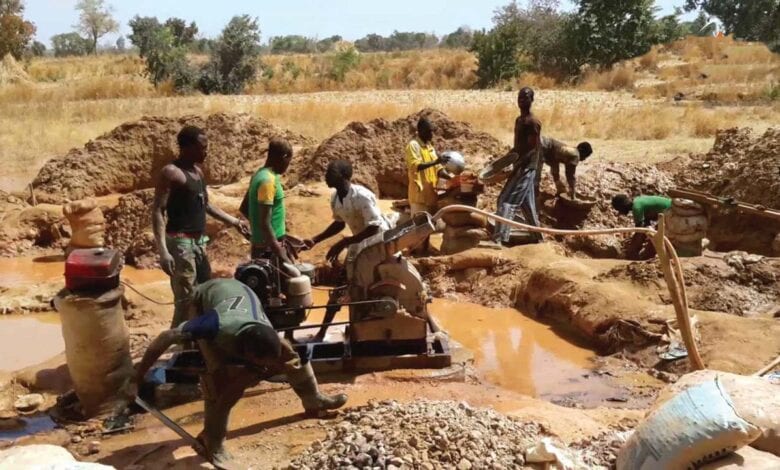
“Artisanal miners, primarily impoverished locals and vulnerable groups such as women and children, risk their lives digging as deep as 200 feet with nothing but shovels and minimal safety measures and equipment,” it added.
CAPPA’s Executive Director, Akinbode Oluwafemi, said: “This unregulated extraction not only facilitates the plunder of communal resources but also leads to severe environmental degradation, leaving behind hazardous open pits that endanger not only the miners but the broader community alike.”
The organisation also flagged the pressing need to address the socioeconomic conditions that compel locals into unsafe mining practices, reflecting that poverty, created and sustained by systemic exclusion, forces many to engage in dangerous mining operations as a means of survival.
The group also warned that as global capital now drives a frenzy for minerals to support a “green transition,” mineral-rich communities in Nigeria would remain locked in cycles of exploitation and danger unless they are allowed a rightful stake in the wealth extracted from their lands.
“Without structural changes that redistribute this economic power, illegal mining will continue as an imposed, desperate option for the impoverished. While we continue to sound the alarm about the dangers of illegal mining, we must also address the conditions that push individuals into these high-risk activities,” CAPPA stated.
It noted that though the Artisanal and Small-Scale Mining Department (ASSMD) under the Ministry of Mines and Steel is tasked with helping small-scale and artisanal miners formalise their operations and access support, costs of obtaining a mining lease and other official requirements make this process difficult for many.
It noted that though the Artisanal and Small-Scale Mining Department (ASSMD) under the Ministry of Mines and Steel is tasked with helping small-scale and artisanal miners formalise their operations and access support, costs of obtaining a mining lease and other official requirements make this process difficult for many.
“For instance, recent revisions to the fees for obtaining a Small-Scale Mining Lease as announced by the Ministry of Solid Minerals Development in July, now stands at N300,000 for two Cadastre units as opposed to an initial N10,000. While this fee might seem modest for mining cooperatives and corporate interests, it is unrealisable for many impoverished individuals and communities who rely on artisanal mining for survival. In practice, this barrier allows big players and corporate profiteers to secure this lease and proceed to exploit the labour of artisanal miners, who work under harsh and unsafe conditions and reap profits for them.
“Beyond the financial burden, applicants are also required to submit a pre-feasibility study, proof of adequate working capital and technical competence, and precise coordinates for the proposed site. For many artisanal miners, whose level of education and economic standing limit their ability to meet these requirements, these demands are simply unattainable, excluding them from legal mining avenues and pushing them toward unsafe and exploitative options,” said CAPPA.
It urged the federal government to reform mining policy to make licensing processes accessible and affordable for local communities and small-scale miners. The organisation suggested reducing licensing fees, simplifying application processes, and providing technical and educational support to equip small-scale miners with safer, legal pathways.
In addition to overseeing regulatory reforms and robust enforcement against unauthorised mining camps, it demanded that corporations exploiting resource-rich areas across the country be held accountable for any human rights and environmental violations they cause.
The organisation called on state governments to exercise strict oversight of corporate mining operations, enforcing penalties, including license revocations and financial reparations, to deter corporations from bypassing safety and regulatory obligations.
CAPPA also stressed the need for a task force on mining that operates with responsibility, rather than force, when dealing with vulnerable communities.
“Using force on desperate communities only creates resistance and worsens tensions at mining sites,” CAPPA warned. “The government must protect lives and prioritise the rights of these communities, who are often left with the scars and costs of resource extraction that does not benefit them.”