By David Lawani
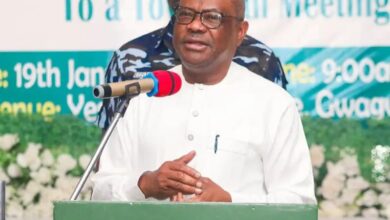
Former Minister of Labour and Employment, Dr Chris Ngige, was on Friday arraigned before a High Court of the Federal Capital Territory (FCT), sitting in Gwarinpa, Abuja, over allegations of ₦2.2 billion contract fraud.
Ngige, who supervised the Nigeria Social Insurance Trust Fund (NSITF) between 2015 and 2023, pleaded not guilty to an eight-count charge filed by the Economic and Financial Crimes Commission (EFCC).
The charges border on abuse of office and acceptance of illicit benefits from contractors allegedly linked to NSITF projects executed during his tenure.
Following his plea, Justice Maryam Hassan ordered that the former Minister be remanded at the Kuje Correctional Centre, pending the hearing of his bail application scheduled for Monday, December 14.
EFCC lead prosecutor, Sylvanus Tahir (SAN), urged the court to fix a trial date and remand the defendant, arguing that the seriousness of the allegations required judicial custody to ensure the integrity of the trial.
“In view of the not guilty plea entered by the defendant, we respectfully apply for a trial date and for the accused to be remanded pending the commencement of a full trial,” Tahir told the court.
The prosecution rejected any attempt to diminish the gravity of the charges, stressing that the alleged offences were substantial economic crimes which, upon conviction, carry lengthy custodial sentences under Nigerian law.
The EFCC further alleged that Ngige failed to surrender his international passport after being granted permission in October to travel abroad for medical treatment—an issue the commission said raised concerns about compliance with court processes.
*Ex-labour Minister pleads not guilty, seeks bail on health grounds
However, Ngige’s defence team, led by Patrick Ikwueto (SAN), vigorously opposed the remand application and pressed for immediate bail, citing constitutional guarantees and the defendant’s health condition.
Ikwueto argued that his client, a former senator and cabinet minister, posed no flight risk, describing him as a nationally known public figure who had cooperated with investigators.
“The defendant has been in EFCC custody for three days. Bail is a constitutional right, not a privilege,” Ikwueto submitted. “This is not a terrorism or treason case. There is no justification for denying him bail.”
He also faulted the prosecution for allegedly denying the defence adequate time to respond formally to the remand application. He insisted that correctional facilities lacked the capacity to manage Ngige’s medical needs.
Responding, the prosecution maintained that the alleged offences—relating to public procurement and abuse of supervisory authority—were far from trivial, warning against what it described as attempts to “bamboozle the court” through emotional appeals.
Justice Hassan, after listening to arguments from both sides, ruled that Ngige should remain in custody pending the bail hearing, adjourned the matter to December 14, and directed that he be held at Kuje Correctional Centre.
Ngige’s arraignment adds to growing public scrutiny over contract awards and oversight within federal agencies during past administrations, as anti-graft agencies intensify efforts to pursue accountability long after officials leave office.