By Cross Udo, Abuja
The Presidential Livestock Reforms Implementation Committee has recommended the adoption of a combination of ranching and open grazing, at least in the short term, to end the perennial clashes between farmers and herders in Nigeria.
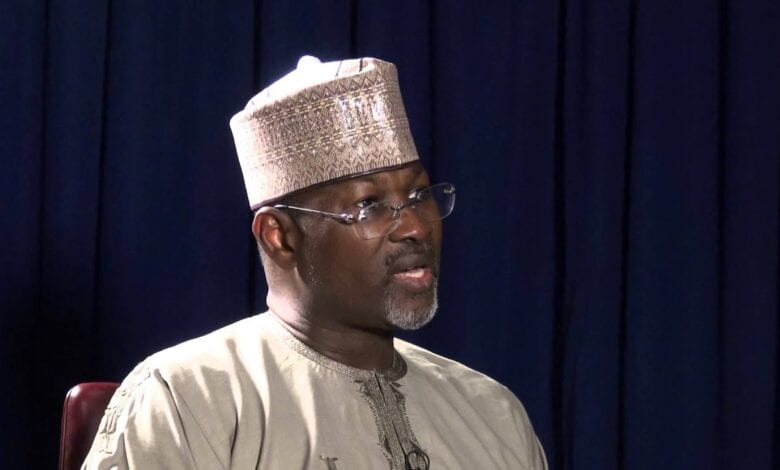
Prof Attahiru Jega, co-chairman of the committee and former National Chairman of the Independent National Electoral Commission, INEC, stated this yesterday after the committee submitted a 152-page inception report to President Bola Tinubu at the State House in Abuja.
Other members, including Prof Eustace Iyayi, Dr Winnie Lai-Solarin, and Prof Placid Njoku, accompanied Jega.
The former INEC boss explained that abandoning traditional pastoral activities overnight is impractical, given the large number of people engaged in such activities, saying it is abandoning pastoralism.
He further explained that the abrupt abandonment of traditional ranching activities without consideration for those who have their lives built around the system, which he described as a huge population, would not be advisable.
The committee’s long-term objective is to promote intensive livestock production through ranching.
However, he noted that achieving this goal requires a gradual transition, accommodating both ranching and open grazing for a period.
This incremental approach aims to eventually phase out extensive pastoralism.
Jega attributed past challenges and the politicization of the issue to the tendency to seek a single, simplistic solution. Instead, he advocated for a nuanced approach, considering incremental positive changes within a specific timeframe.
He said, “It’s a combination of both. It’s not an ‘either-or’ situation. You cannot wake up tomorrow; all you have is ranching because you already have a large chunk of the population in traditional pastoral activities; what do you do with them? It’s neither either nor, but any solution that has to be developed now must combine both.
“Why we are promoting long-term objective is that we now have intensive live livestock production, that is a long-term objective, but you know you cannot wake one day and have that; you have to develop policies and frameworks that can accommodate both for some time while increasingly the objective is to have intensive livestock production, not to have extensive like pastoralism that we have now.
“I think some of the challenges we have had in the past, and those also led to the politicisation of the issues, is we are quick to develop a single frame of mind with regards to what the solution is, but in a complicated situation as we have, you have to really think in terms of incremental positive changes, but you must have a time frame within which this should be achieved.”
*Tinubu receives presidential committee on livestock development report
On the report submitted to the President, the committee, comprising 23 professionals, developed recommendations to unlock the potential of Nigeria’s livestock sector.
Jega said the report detailed several achievable targeted indicators within a 10-year time frame that would inform reforms in Nigeria’s livestock sector. It adds that it addresses 12 terms of reference and includes 22 objectives and 3,146 targeted indicators.
Key recommendations include establishing a Federal Ministry of Livestock Development with specific structures and functions.
He further said the committee believes focused implementation can lead to significant improvements within 10 years, benefiting job creation, economic growth, and potential exports.
Jega said the President had fully supported the committee’s efforts, which also aimed to mitigate conflicts related to pastoralists and nomadic herders.
“We believe there has been neglect of this sector for a very long time, and we are delighted that Mr. President has recognized the need to redress this neglect and has invited us to contribute to finding ways and the means of unlocking the opportunities in this sector.
“So I’m happy to say that today we presented an inception report to Mr. President. It’s a document of about 152 pages divided into five sectors. In this report, we addressed 12 terms of reference that were given to us as a committee, and we developed 22 clear objectives of what the reform effort in the livestock sector should entail.
“We’ve been able to make very specific recommendations on each of these issue areas. In addition to that, we were also able to identify achievable targeted indicators, about 3,146 of them, and we believe that by pursuing these and actualizing them, there is no doubt that within a reasonable time frame, and we believe with focused attention and the effort in implementation, maximum within 10 years, we would be able to, remarkably, see improvements in virtually all aspects of the livestock sector; from the large animals to the small ruminants.
“The opportunities are there. In fact, quite often in Nigeria, when you speak about livestock development, people tend to think you are only talking about cows. Still, the livestock sector is much more than cows. There is in it for everybody once the conducive environment is created, once the government provides not just the enabling environment but other support services that can ensure the unlocking and expansion of these potentials, and we have done our best in this Inception report, we have even made recommendations.”
A member of the delegation, Dr Lai-Solarin, highlighted the potential growth and development that the establishment of the new Federal Ministry of Livestock Development holds for Nigeria and investors in the livestock sector.
She said the country’s livestock sector is on the verge of a significant transformation, with investors set to reap huge benefits from the federal government’s establishment of the ministry. The country’s vast livestock population presents immense opportunities for investment.
According to her, Nigeria boasts an impressive livestock population, with 563 million poultry, 600 million sheep, 124 million goats, 58 million cattle, and 16 million pigs, making it the most significant livestock producer in West Africa and fifth in the entire continent, adding that the poultry sector alone has N1.7trn in investment.
She also said currently, only 1% of ruminant livestock are raised intensively, with 85% in the hands of pastoralists, but noted that reforms suggested by the committee aim to balance this by adopting a more intensive production system, similar to the poultry sector where 21% of farms operate intensively.
However, Lai-Solarin encouraged investors to capitalize on the government’s renewed focus on the livestock sector, which would ensure economic growth and improved nutrition security for Nigerians.