Minister of Information and Culture, Alhaji Lai Mohammed has criticized Twitter for deleting President Muhammadu Buhari’s tweets on dealing with those who want to take the country back to the days of civil war.
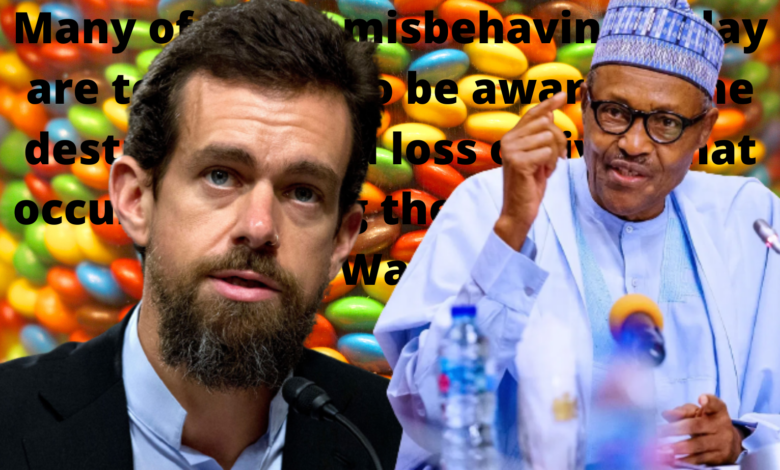
President Buhari on Tuesday had tweeted that: “Many of those misbehaving today are too young to be aware of the destruction and loss of lives that occurred during the Nigerian Civil War.
“Those of us in the fields for 30 months, who went through the war, will treat them in the language they understand,”
The Minister of Information and Culture, reacting to the deletion said Twitter’s role in Nigeria is suspecting and that it may have its own rules but the rules are not the universal rule.
He also said that Twitter ignored other inciting tweets just as he asked if Twitter which cited a violation of its rules had deleted violent tweets by Nnamdi Kano and other Twitter users during the #EndSars protest.
He said: “Twitter may have its own rules; it’s not the universal rule. If Mr. President, anywhere in the world feels very bad and concern about a situation, he is free to express such views. Now, we should stop comparing apples with oranges. If an organisation is proscribed, it is different from any other which is not proscribed.
Suspension of Edo PDP chair stirs controversy
“Two, any organisation that gives directives to its members, to attack police stations, to kill policemen, to attack correctional centres, to kill warders, and you are now saying that Mr. President does not have the right to express his dismay and anger about that? We are the ones guilty of double standards.
“I don’t see anywhere in the world where an organisation, a person will stay somewhere outside Nigeria and will direct his members to attack the symbols of authority, the police, the military, especially when that organisation has been proscribed. By whatever name, you can’t justify giving orders to kill policemen or to kill anybody you do not agree with,” he said.
Some of the rules that Twitter uses in the removal of tweets include Tweet that may contain disputed or misleading information current misleading information policies cover: synthetic and manipulated media, COVID-19, and civic integrity.