By Seyi Odewale
The Federal Government has raised the alarm over the growing destruction of critical public infrastructure, warning that vandalism and illegal occupation could undermine billions of naira invested in roads, bridges and other national assets.
The Minister of Works, David Umahi, issued the warning on Sunday in Lagos, describing the deliberate destruction of government infrastructure as “devilish”, “wicked” and unacceptable.
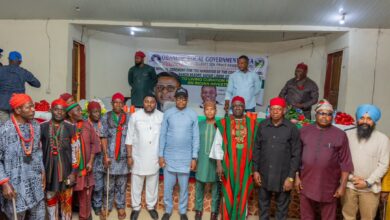
Umahi spoke during a press conference and stakeholders’ engagement on the Lagos-Calabar Coastal Highway, where he also flagged off rehabilitation works on the Eko Bridge and Marine Bridge.
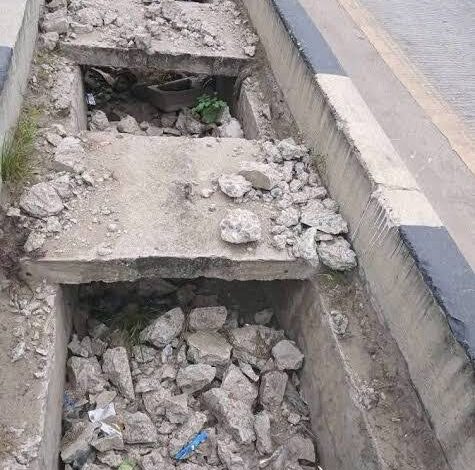
His warning followed the recent vandalism of sections of the newly constructed Festac-Alakija Bridge, where suspected scavengers reportedly broke into parts of the structure in an attempt to remove embedded iron rods and other metal components.
The incident has heightened concerns over the security of major infrastructure projects at a time the Federal Government is committing substantial resources to expanding and rehabilitating the country’s road network.
The Lagos State Government has arrested 27 suspects in connection with the Festac-Alakija Bridge incident following a joint operation involving security and enforcement agencies.
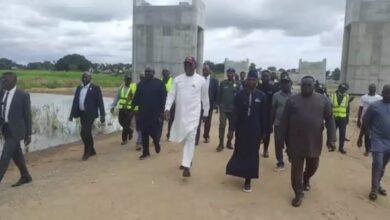
Governor Babajide Sanwo-Olu, who inspected the affected sections of the bridge on Saturday alongside engineers and contractors, assured residents that the structure remained safe, structurally sound and open to traffic.
He also ordered immediate reinforcement and repairs, while warning that those involved in the destruction, as well as buyers of stolen government property, would face the full weight of the law.
Umahi said the responsibility for protecting public infrastructure could not be left solely to government, stressing that the President, ministers and governors could not be everywhere to monitor national assets.
“It is very disheartening to know that these people, the efforts they are putting in to destroy national assets, if they put it on labour work in Lagos-Calabar Coastal Highway, if they put it in all the construction sites of the state government and Federal Government, they will put in less effort, and they will make more money,” he said.
The minister urged communities and citizens to take ownership of public infrastructure and promptly report attempts to damage or remove components from government projects.
He warned that the destruction of completed roads and bridges would effectively force the government to spend additional resources rebuilding infrastructure that had already been provided.
“When these roads are built under the President, they will last for 100 years. But when the roads are excavated and removed, we will be back to square one,” Umahi said.
*Coastal highway faces fresh threats
The minister also expressed concern over the activities of vandals and other unauthorised persons along the Lagos-Calabar Coastal Highway.
He said construction materials, including blocks and reinforcement rods, had been removed from parts of the project, while some sections were being used for activities unrelated to construction.
“We have had very terrible, unpatriotic elements removing the blocks, breaking the fence, removing the rods and treading on the highway. This must stop,” Umahi said.
He directed the Works Controller in Lagos to ensure that motorcycles, tricycles, hawkers and other unauthorised activities were removed from the highway corridor.
The minister said the coastal highway should not become a place for loitering, trading or informal occupation capable of compromising construction and public safety.
“Their job is that no keke on the coastal highway, no motorcycle on the coastal highway, and no loitering,” he said.
Umahi disclosed that he had personally observed people sleeping along parts of the highway at night, describing the situation as unacceptable.
“Last night, we were there with the National Assembly members by 11 pm; people were sleeping on the coastal highway. It must stop. No hawking, no illegal occupation along the entire coast,” he added.
The minister also called on the Nigeria Security and Civil Defence Corps to strengthen the protection of strategic national infrastructure and work with other security agencies to prevent further attacks on government assets.
The latest incidents have raised questions about the sustainability of massive investments in road infrastructure when completed and ongoing projects remain vulnerable to theft, vandalism and encroachment.
Beyond the immediate cost of replacing stolen materials, officials said such activities could delay projects, increase construction costs and expose infrastructure to premature deterioration.
Umahi said the Works Ministry had opened its ongoing projects to scrutiny by anti-corruption agencies as part of efforts to promote transparency and accountability in project execution.
The Lagos-Calabar Coastal Highway is a 750-kilometre, 10-lane project designed to connect Lagos with Cross River through Ogun, Ondo, Delta, Bayelsa, Rivers and Akwa Ibom states.
Hitech Construction Company Limited is executing the project under the supervision of the Federal Ministry of Works.