Dennis Mernyi
Revenue collection agents in the country have failed to account for N7,472,146,000 revenue receipts from companies operating in the Solid minerals sector in the country.
There are about 31 streams through which government collects revenues from such firms with the instrument of both primary and third-party confirmations to ensure completeness, accuracy, and reliability.
But 25 of those companies’ level financial flows were reconciled while the remaining 6 flows were unilaterally disclosed but were not validated giving rise to N7,472,146,000 unreconciled receipts.
Details of the revenue inconsistency were contained in the 2019 solid mineral sector report conducted by the Nigeria Extractive Industries Transparency Initiative (NEITI).
According to the latest report which is about the fourth in its series, the total company payments to the government was actually N79.960 billion of which N72,488,081,000 is the overall reconciled receipts against government records.
It further shows that the Federal Inland Revenue Service (FIRS) however, made the highest revenue collection of N69 918,427,563 in 2019 followed by the Mining Cadastral Office and federal ministry of Environment respectively, while the state board of internal revenue services collected the sum of N5,092,349,020.
Speaking recently in Abuja while giving NEITI’s scorecard on the global EITI implementation of policies in Nigeria from February to September 2021, Executive Secretary, Dr. Orji Ogbonnaya Orji stressed that NEITI is giving serious focus in the sector because of its potential growth to contribute hugely to the nation’s revenue earnings.
He said, going forward, NEITI will keep a close tab on both the activities of the companies operating in the mining sector as well as the government revenue collection entities to check further discrepancies and sharp practices.
Why PIB law will bring better ROI to both companies, govt – NEITI
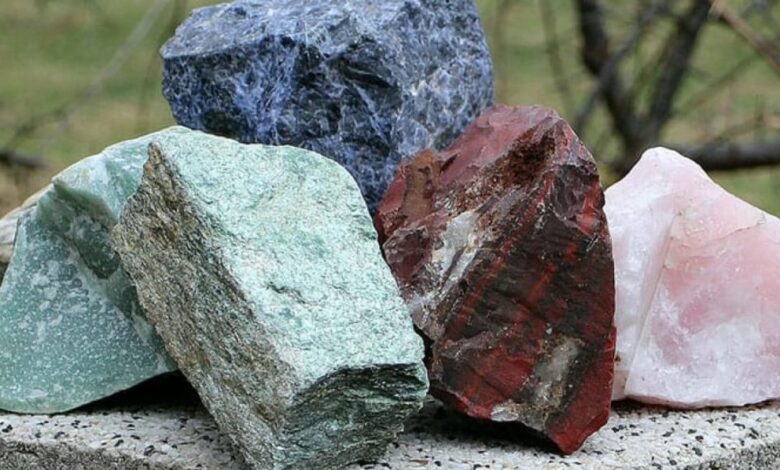
Nigeria possesses vast mineral resources spread across the States which are categorized as energy, industrial, metallic ores and precious stones.
Their exploration is aimed at discovering viable minerals for exploration as raw material production. 44 different minerals are found in large commercial quantities in 450 locations across the country.
Nigeria launched a Mining and Minerals Regulation document in 2011.