

By Justina Auta
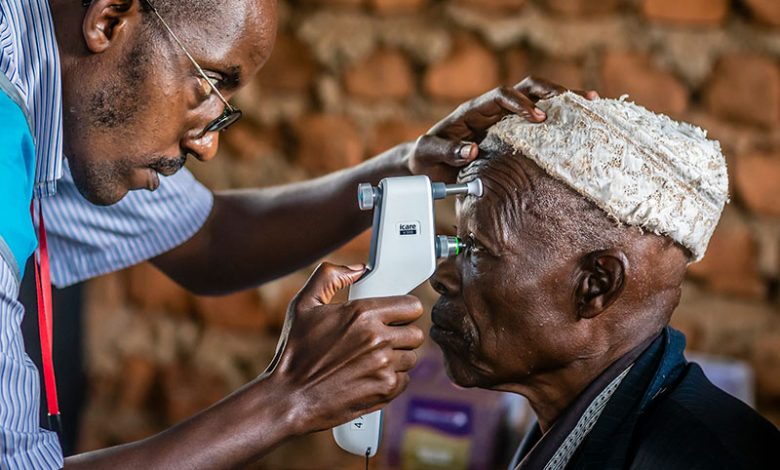
Sightsavers Nigeria, an International Non-Governmental Organisation (NGO), says more than 4.25 million Nigerians are suffering from blindness and visual impairment.
Ms Barbara Marok, the organisation’s Eye Health Programme Officer, disclosed this during a meeting with media partners on Thursday in Keffi, Nassarawa State.
Marok particularly noted that many of the cases stemmed from preventable conditions such as cataracts, glaucoma, and uncorrected refractive errors.
Highlighting the staggering statistics, the programme officer stressed the need for increased awareness and investment in eye health services, particularly in rural communities where access to eye care remains a significant challenge.
“More than 4.2 million Nigerians are blind or visually impaired; many due to preventable or treatable conditions like cataract, glaucoma and corrective refractive errors.
“Only 4.4 per cent of Nigerians have access to eye care health, compared to the 38 per cent in middle-income countries,” she said.
According to Marok, Nigeria loses billions of dollars annually due to poor vision, a trend she said poses a major setback to productivity, income and education.
Speaking, Ms Folake Aliu, Senior Monitoring, Evaluation and Learning Manager of the Neglected Tropical Diseases (NTDs)/ Safeguarding Lead of the organisation, noted that Nigeria bears 25 per cent of Africa’s NTD burden.
Aliu also noted that some causes of blindness, such as cataracts, glaucoma, and uncorrected refractive errors, were largely preventable.
She added that Sightsavers was tackling the five most prevalent NTDs, including lymphatic filariasis (elephantiasis), river blindness (onchocerciasis), trachoma, intestinal worms and schistosomiasis.
“As at 2024, Sightsavers has ensured that more 653 million people get access to NTD treatment. We have also supported 74 Local Government Areas to reach the trachoma elimination threshold and provided 80 per cent support for trachoma elimination in Nigeria,” she said.
She, however, identified insecurity, funding gaps in government ownership, and ineffective programme implementation as challenges affecting the elimination of NTDs in Nigeria.
Declaring the meeting open, Prof Joy Shuaibu, the Country Director of Sightsavers Nigeria, said the meeting aimed to equip journalists to amplify the ongoing fight against avoidable blindness further.
Shuaibu, represented by Mrs Anita Gwong, Project Director, NTDs of Sightsavers, said that the organisation had impacted about 60 per cent of Nigeria’s population through its various interventions.
She, therefore, charged the media to amplify issues around NTD, encourage ownership of projects by the government, close the funding gap, and implement policies that would address challenges affecting access to healthcare and education for Persons with Disabilities (PWDs)
Speaking on social inclusion, Ms Esther Bature, the Advocacy Coordinator of the organisation, decried that the discrimination often faced by PWDs had hindered them from accessing healthcare, facilities, and education, amongst others.
She added that, through its inclusive programmes such as the Support Mainstreaming Inclusion to all Learn Equally (SMILE), the Inclusive Family Planning project, Inclusion Works ll, and GESP-SABI Woman, it had promoted social inclusion.


