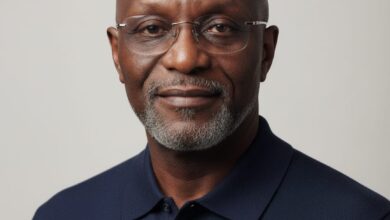
By Lemmy Ughegbe, Ph.D
In the vast and often chaotic theatre of Nigerian state leadership, talk is cheap, and delivery is rare. Too many newly minted governors begin their tenure with grandiose promises only to spend the next four years rehearsing excuses for failure. It is in this uninspiring context that Peter Ndubuisi Mbah’s first two years as Governor of Enugu State stands out—not merely for their ambition but for their concrete results.
Mbah has refused the well-worn script of blaming predecessors, citing empty treasuries, or claiming to be “planning” while nothing happens on the ground. Instead, he has treated governance as a project to be delivered, and the evidence is increasingly hard to ignore.
While many political leaders see their first two years as a time to consolidate power and reward loyalists, Mbah has chosen the path of hitting the ground running—tackling long-standing infrastructure deficits, reviving dormant industries, and investing in education and health.
Crucially, to achieve this, he has built a cabinet of energetic young professionals, technocrats, and subject-matter experts. For Mbah, governance has been more important than politics.
Consider education. The Smart Green School in Owo is not just a glossy PR stunt with a fancy name. It represents a genuine shift in the way public education is being conceived in Enugu State.
Integrating modern technology and sustainable design into the curriculum and infrastructure signals an intent to prepare the next generation of Enugu citizens for a world that demands technological literacy and environmental consciousness.
In a country where public schools are often left to decay while the political elite send their children abroad, this is not just policy—it is a statement of values.
Beyond education, Mbah’s administration has focused keenly on connectivity. The Owo-Amankanu-Ikem Road project is significant not merely because it lays asphalt on neglected rural paths but because it links communities that were previously cut off from markets, schools, and healthcare. Rural roads are lifelines, often determining whether a farmer’s produce can be sold or whether a sick child can reach a clinic in time.
By prioritising this artery in Enugu East Senatorial Zone, Mbah is recognising the rural population as citizens deserving of dignity and access.
Healthcare itself has seen overdue attention. Too many Nigerian states treat rural health centres as abandoned relics, with patients forced to travel long distances or rely on unqualified “chemists.”
In Owo, PHCs have been rehabilitated or newly established to close this gap, reinforcing the idea that healthcare is a right, not a privilege.
He also promised to solve the persistent problem of access to potable drinking water within his first few months in office, and remarkably, he met that target. This achievement was especially noteworthy given the unforeseen and frustrating challenge he faced: many underground borehole pipes had been deliberately compromised and diverted by people for other purposes. Overcoming such sabotage underscored both his administration’s resolve and its capacity for effective problem-solving.
Meanwhile, the push for industrialisation is not being left to campaign rhetoric alone. An Asphalt Plant and a Tractor Assembly Plant have been launched—deliberate moves to reduce Enugu’s dependence on costly imports and to create local jobs.
These are not vanity projects but foundational investments. Roads need asphalt. Agriculture needs tractors. By producing them locally, Enugu retains value in its economy and insulates itself better from forex volatility.
Equally important is the revitalisation of the Technical, Vocational Education Training College (TVET) at the Government Technical College. It’s easy for governments to promise jobs without preparing citizens to fill them.
Mbah’s focus on vocational training acknowledges an uncomfortable truth: many young people lack the practical skills demanded by modern industries. By equipping them, he is creating not just employees but entrepreneurs who can grow the economy from the grassroots.
The list of projects continues: the Haire Factory shows targeted support for manufacturing and light industry. The Holy Ghost Terminal represents a vision of modernising urban transport—a crucial factor for trade and mobility. Hotel Presidential, that once-iconic but faded symbol of Enugu’s golden era, is receiving new life, serving both as a nod to heritage and as a pragmatic effort to boost tourism and business travel.
One of the most striking investments is in healthcare at the top tier. The development of an International Hospital promises to reduce the humiliating and costly outflow of Nigerians seeking medical care abroad. If delivered well, this facility can offer world-class care at home, save foreign exchange, and restore citizens’ confidence in the state’s ability to meet their needs.
Mbah’s administration is also thinking about Enugu’s role in the broader regional economy. The planned Five Star Hotel and International Conference Centre signals a clear ambition to make Enugu a hub for business conferences and tourism. This vision can deliver strong multiplier effects across hospitality, retail, and transport.
Security has not been neglected. The Command and Control Centre introduces modern surveillance and coordination capabilities to law enforcement, a necessary response to the security challenges confronting Nigeria. While no technology replaces good policing and intelligence work, such infrastructure is a vital enabler.
And then there is Enugu Air. Announced recently, it is the kind of bold, even audacious idea that sceptics might dismiss as unrealistic. Yet this willingness to think big is precisely what Nigerian governance needs.
For too long, states have managed to decline, offering the bare minimum while dreaming small. Enugu Air, even with its inevitable challenges, reflects a leadership willing to imagine Enugu as a serious player in air transport, trade, and tourism.
If all of this sounds like high praise—it is. Because it is deserved, in a country where citizens have grown numb to empty rhetoric, Peter Mbah’s first two years offer something rare: tangible delivery. The roads, the schools, the factories, the hospitals are not slogans—they are real.
Of course, no fair appraisal can ignore the turbulence within his party. The PDP national secretary controversy has generated serious debate, with critics accusing Mbah of being heavy-handed or divisive—especially over his strong opposition to Senator Sam Anyanwu remaining as the party’s national scribe and his push to install a replacement.
Critics reasonably asked: if a national convention was already due to elect new officers, why not wait rather than press a move that risked throwing the party into litigation? It is a clear reminder that party unity is not merely an internal affair—it signals to the public a leader’s temperament and capacity to manage differences constructively.
Yet it would be unfair, even misleading, to reduce his political skill to that single episode. Mbah’s broader record in inter-party relations suggests quite the opposite: he has proven himself an effective, statesmanlike bridge-builder.
When President Bola Ahmed Tinubu visited Enugu to commission projects, he did not hold back in praising Mbah’s achievements. Tinubu even publicly urged other South-East governors to learn from Mbah’s approach to governance. It is rare in Nigeria’s partisan climate to see a ruling-party president so openly commend an opposition governor, and it speaks volumes about the respect Mbah commands beyond his party lines.
Nor is Tinubu the only one. Many prominent figures across Nigeria’s political spectrum have acknowledged Mbah’s seriousness, vision, and commitment to development. Dr Augustine Eigbe, a respected development communication expert, puts it succinctly: “This Enugu Governor is a top performer.
There’s hardly a day you don’t hear about one activity or the other in the state. Honestly, Governor Mbah is a visionary leader with a neoteric approach to governance.” Such testimony is not partisan flattery but an informed assessment of a leader determined to govern differently.
These accolades suggest the real problem may not lie with Mbah’s political instinct but with the entrenched factional culture within his party, which has long been a breeding ground for personalised rivalries and opaque deals. Effective governance requires more than efficient administration. It demands the ability to navigate competing interests without sacrificing principles. Mbah has demonstrated he can plan, execute, and deliver on substance. The challenge now is to apply the same discipline and vision to building consensus within his political family. If he can manage that, he will not only secure his legacy in infrastructure but also as a unifying leader in a region that badly needs such figures.
Still, even sceptics must acknowledge the overall balance sheet so far. Peter Mbah has achieved more in two years than many manage in four—or eight. He has shown a seriousness about governance that is all too rare. He has refused to make excuses or defer tough decisions. He has, quite literally, put his state under construction in the best sense of that phrase.
There is time yet for him to master the other half of leadership. Politics will always be messy. But if he can learn to navigate it with more grace and inclusivity, Enugu stands to benefit not just from his projects but from the stability and unity that good politics can foster.
Ultimately, leadership is about delivering results while building trust. On the first count, Peter Mbah is earning his distinction. On the second, the work continues. But for now, Enugu has a governor who is working—working. And in these times, that is no small achievement.
Lemmy Ughegbe, PhD writes from Abuja
Email: lemmyughegbeofficial@gmail.com
WhatsApp ONLY: +2348069716645