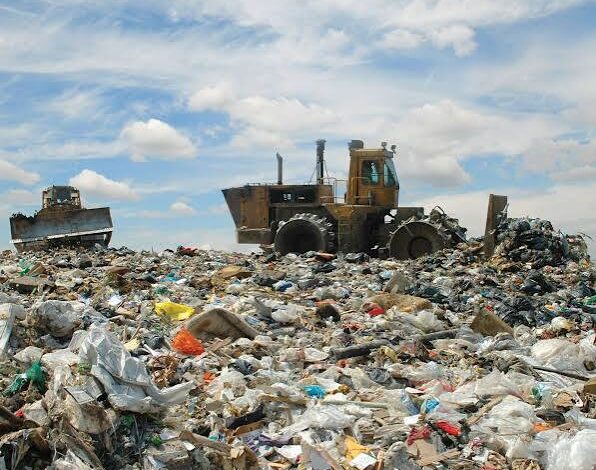
Unarguably, Nigeria’s waste crisis is deepening as overflowing, rotting dumps line streets nationwide, in spite of repeated public and private efforts to solve the problem.
Residential apartments, markets, waterways, highways, streets and undeveloped plots of land have been turned to waste dumps for many households.
Environmental analysts attribute poor waste management to a combination of insufficient funding, rapid population growth, incomplete legal frameworks, and weak enforcement of existing regulations.
Additional challenges include underfunded infrastructure, a shortage of skilled technical and administrative personnel, and deep-rooted public carelessness regarding waste disposal.
More so, the system suffers from weak planning, inadequate data management, rapid urbanisation, and overlapping institutional responsibilities.
For experts, these issues are compounded by a disconnect between academic research and industry application, and a fundamental lack of political will from leadership.
Mr Williams Osaze, the President of Society for the Promotion of People’s Rights, an NGO, said the problem of indiscriminate disposal of refuse and unsanitary environment should be given urgent attention because of the risk-factors on human health.
Osaze said that addressing environmental issues like plastic waste disposal required a united plan backed by strong political will among relevant stakeholders and the government’s sincerity.
He urged the government to pursue solutions that genuinely protected and preserved the constitutional rights to health and a balanced and healthful ecology.
“Government should initiate a concerted effort to coordinate together various laws, policies and international conventions/agreements to manage waste,” he said.
Speaking on the menace and effects of plastic waste on the environment, the Chief Executive, Environmental and Rural Mediation Centre, Chief Monday Itoghor, said the government needed to be more aggressive and responsive.
Itoghor said that it was necessary as the efforts would promote genuine solutions to curb plastic production and consumption.
However, he noted that there were major challenges confronting recycling interventions in Nigeria including lack of public awareness about the recycling value chain.
“Inadequate collection of infrastructure especially in remote locations; high cost of logistics; and lack of finance are challenges.
“Another challenge is inadequate implementation of the Extended Producer Responsibility (EPR) Programme, a policy placing responsibility on producers to manage the life cycle of their products.
“In other words, the government should mainstream the above-mentioned challenges in any policy framework for sustainable plastic waste solutions.
“What Nigerians need are real and urgent solutions to this plastic crisis. We can no longer afford any more excuses and delays.
“While individuals and local government areas are doing their part, the state needs to make efforts by passing a comprehensive law banning single-use plastics.
“This policy will significantly advance other local efforts to preserve and protect our environment,” he said.
Mr Michael Ogbonna, a climatologist, said that the attitude of people towards the environment had continued to increase the menace, thereby causing more harm to the environment as well as to individuals’ health.
“What we should do as individuals, is to find out what we can do to help make a difference in our environment every day.
“Whether you are at home, on the go, in the office, at school, or anywhere we find ourselves, there are many opportunities to go green by reducing, reusing, and recycling.
“The best place to start making a difference is right in your own home. Learn how you can reduce, reuse, and recycle materials to decrease household waste,’’ he advised.
Mr Sola Obadimu, Director-General of the Nigerian Association of Chambers of Commerce, Industry, Mines and Agriculture (NACCIMA), said Nigeria generated more than 32 million tonnes of solid waste annually.
He said Nigeria’s industrial sector accounts for more than 30 per cent of national energy consumption but operates below optimal efficiency levels.
“Studies indicate that energy efficiency improvements in Nigerian industries could deliver savings of between 20 per cent and 40 per cent, translating into reduced costs and lower greenhouse gas emissions.
“At the same time, Nigeria generated more than 32 million tonnes of solid waste annually, much of which is industrial and can be reduced through cleaner production techniques.”
Obadimu said the Resource Efficient and Cleaner Production approach provides a practical pathway for environmental sustainability, improved profitability and long-term business resilience.
According to him, the initiative aligns with NACCIMA’s mandate to promote a competitive private sector.
“We will continue to advocate policies and practices that enhance productivity, reduce operational inefficiencies, and open new frontiers for sustainable growth.”
The director-general reiterated NACCIMA’s commitment to working with stakeholders to deepen awareness, build capacity, and promote the adoption of energy-efficient and cleaner production practices.
“Together, we can build an industrial sector that is productive, competitive, sustainable, and globally relevant,” he said.
Meanwhile, the News Agency of Nigeria reports that the Ministry of Environment, recently, unveiled the National Waste Marketplace Programme (NWMP).
The essence of the programme is to promote an inclusive circular economy and advance sustainable waste management in Nigeria.
The Minister of Environment, Balarabe Lawal, said that the national waste marketplace was an innovative digital platform designed to formalise the country’s waste value chain by connecting waste generators, collectors, aggregators, recyclers and end-users in a transparent and traceable system.
He said the initiative also aligned with Nigeria’s commitments under global environmental agreements.
Lawal said the platform was a practical step towards mainstreaming circular economy principles in Nigeria’s waste management system and modernising the sector’s operational standards.
“By leveraging technology, the platform will create economic linkages across the recycling ecosystem while promoting environmental compliance, material recovery and sustainable production and consumption patterns.”
The minister said the challenge of waste management in Nigeria was multifaceted.
“Each year, millions of tonnes of recyclable materials such as plastics, metals, paper, glass, organics and electrical waste are lost to indiscriminate disposal.
“This not only strains our environment and public health systems but also undermines our resource efficiency and industrial competitiveness.”
He said the platform sought to address these gaps by converting waste streams into economic assets and providing a structured mechanism for resource recovery and traceable transactions.
“This initiative is consistent with the implementation framework of the National Policy on Solid Waste Management, the Extended Producer Responsibility (EPR) Programme and the National Circular Economy Roadmap.
“As we advance towards a circular economy, it is essential to recognise that environmental protection is not only a regulatory obligation but also a driver of innovation and green growth,” he said.
Also, Prof. Innocent Barikor, the Director-General of the National Environmental Standards and Regulations Enforcement Agency (NESREA), said that the unveiling of the NWMP represented a bold and innovative step by the agency to harness digital technology in solving one of the country’s most pressing environmental challenges.
“Through this initiative, we aim to train and certify thousands of Nigerian youths and micro-enterprises in circular business models, thereby creating decent green jobs and stimulating sustainable growth,” he said.
Barikor said the programme would also create new economic opportunities by providing verified market linkages, improving traceability in recycling activities and supporting the establishment of a regulated secondary materials market.
Mr Nkem Orakwe, Founder and Chief Executive Officer, Recycle Stack Nigeria Ltd, said that his organisation was revolutionising the circular economy and sustainable waste management sector in Nigeria through technology.
According to him, there is now a global shift to circular economies; countries no longer see waste as waste but waste becoming wealth.
Prof. Emmanuel Oladipo, an environmental expert, said that environmental issues were cross-cutting and affected all segments of the economy.
Oladipo listed some of the efforts to ensure effective environmental governance through compliance monitoring and enforcement of environmental laws, standards and regulations.
He said that apart from special sensitisation and awareness campaigns to specific groups and individuals, government agencies needed to carry weekly sensitisation programmes to markets, schools, parks, shopping malls, among others.
“This is aimed at educating the general public on how to address identified emerging environmental issues in accordance with relevant environmental laws and regulations.
“Environmental compliance monitoring for sustainable development can only be achieved in an atmosphere of good environmental governance.
“Good environmental governance presupposes effective and adequate environmental compliance monitoring and enforcement mechanisms to address environmental problems at all levels,’’ he said
To tackle this daunting challenge, stakeholders agree there is a need for concerted commitment among individuals, families, enforcement authorities and waste disposal firms.(NAN Features)