By Cross Udo, Abuja
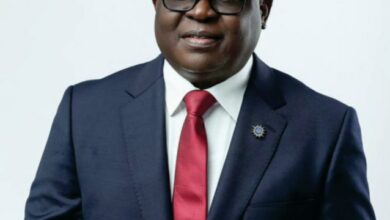
The Chief of Staff to the President, Rt. Hon. Femi Gbajabiamila and the Deputy Chief of Staff, Ibrahim Hadeija have called for reforms within the National Hajj Commission (NAHCON) to address financial mismanagement issues, negligence, pilgrims’ maltreatment, and late preparation for pilgrimage exercises.
They made these remarks during a fact-finding visit to the NAHCON headquarters in Abuja yesterday as part of their engagement with government agencies under the supervision of the State House.
Earlier, they visited the National Emergency Management Agency (NEMA), where Gbajabiamila highlighted the potential role of states in providing funding to the Agency through an insurance scheme or other means.
Addressing the challenges at NAHCON, Gbajabiamila said: ”This is a Commission that should not be found in any controversy, simply because of its mandate and what it represents.
”It’s a religious commission. It’s a commission that is set up to fulfill religious and spiritual obligations for men and women of faith.
”So, we are always surprised, even from the time when I was a speaker, when issues that should never come up, arose in relation to this Commission.”
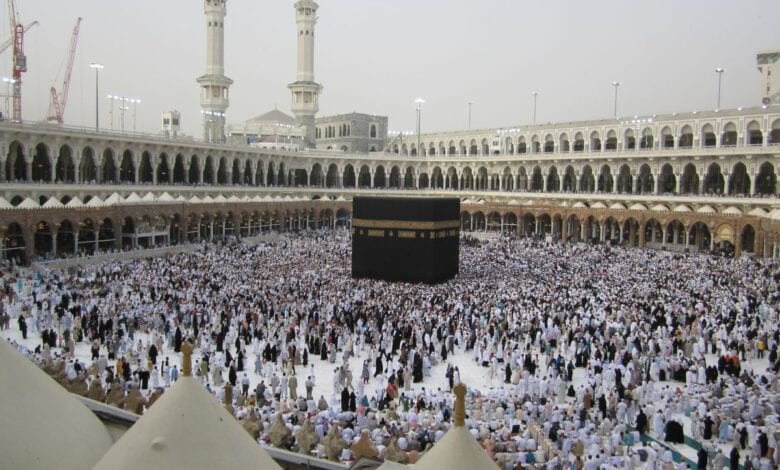
He continued: ”Pilgrims travel every year to fulfill an Islamic religious obligation. Not only that, when they’re there, they’re there as ambassadors of Nigeria.
”As ambassadors of Nigeria, it is expected that they will carry the emblem and the flag of Nigeria on their full chest to represent and to show both in demeanour and conduct who and what we are.”
”But many times, our pilgrims and fellow Nigerians face maltreatment or lack of proper organization from this Commission, and they end up sometimes not conducting themselves the way they should.
”The buck stops at the table of the Commission, and you must accept responsibility for what goes on here and in Saudi Arabia when Nigerian pilgrims are there ” he added.
Concerning the recent controversy in the Commission that led to the appointment of a new Executive Chairman, Gbajabiamila urged the management staff to work closely with the Office of the Vice President, which oversees the agency, to identify past mistakes, make corrections, and ensure seamless operations for pilgrims.
”What happened has happened and we are here to chart a way forward. It is time that the system of the Commission was reformed in such a way that it aligned with Mr. President’s Renewed Hope Agenda,” he said.
Gbajabiamila expressed optimism for a new chapter in the Commission’s operations, stressing ”Hajj is not supposed to cause pain to the pilgrims.”
The Deputy Chief of Staff echoed the Chief of Staff’s position, emphasizing the need for early preparation for Hajj operations.
”Hajj is essentially a big-logistics operation. I was involved in the 2024 operation, and one of the key lessons learned is the need for early preparation.
”Nigeria has the largest quota of pilgrims from Africa, and we have countries whose quota is less than the number from a state in Nigeria.
”The Hajj Commission also needs to be more transparent in informing pilgrims what they are paying for,” Hadeija said.
In his remarks, NAHCON’s Executive Commissioner, Policy, Personnel Management, and Finance, Prince Malam Abdulrazak, called for an overhaul of the Commission’s accounting system and improvement of federal character representation within the organisation.
”The Commission is described as a national entity, but the federal character is not fully represented. If you go through the nominal roll, it is dominated by a particular region,” Abdulrazak said.
At NEMA, the Chief of Staff stressed the need to shift disaster management in Nigeria from a reactive to a proactive approach.
Emphasizing the importance of prevention over mitigation, Gbajabiamila noted that many disasters in the country could be avoided with better preparation and early warnings.
”The mandate NEMA has is two-pronged: prevention of disaster and mitigation of disaster. But it appears that we concentrate more on mitigation and leave the other side of the mandate, which is prevention.
”In turning the page, we must look more closely at the area of prevention because a lot of these disasters can be prevented,” he said.
On NEMA funding challenges, Gbajabiamila suggested exploring creative funding methods, including state contributions through an insurance scheme.
”What is the role of the states? How do they come in? Do we tweak the law, amend the legislation to be clear to the extent that perhaps the states form a model of insurance scheme, and pay into the purse in the form of counterpart funding?
”These disasters occur in the states. There’s no land called the federal government and every disaster is local,” he said.
The discussions at the meeting, attended by the Deputy Chief of Staff, Permanent Secretary State House, Engr. Olufunso Adebiyi and the Senior Special Assistant to the President on Administration and Operations (Office of the Chief of Staff), Mrs Oyinade Nathan-Marsh also highlighted the role of technology and regular training in improving disaster response.
On NEMA’s operations, its Director-General, Mrs Zubaida Umar, disclosed that from January 2024 to date, the agency has provided 626,000 essential relief items to over 100,000 people across 33 states and the Federal Capital Territory (FCT).
According to her, they include 288,875 food items, over 300,000 non-food items, and over 26,000 building materials.
On the distribution of 42,000 metric tonnes of assorted grains approved by the President, she said the grains have been distributed to all the states of the federation except Akwa Ibom and Osun.
”This is due to logistic issues because the states are responsible for the logistics to transport these items. In all, we have been able to distribute 39,347.6 metric tons of grains,” she said.