By David Lawani, Abuja
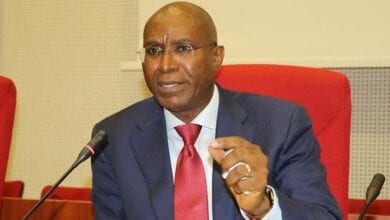
The Chairman and Chief Executive Officer of the Nigerian Electricity Regulatory Commission (NERC), Sanusi Garba, has stated that the national grid’s collapse was due to a lack of capacity in the Transition Company of Nigeria.
He said the Commission is ready to work with stakeholders to ensure a change in the sector’s narrative.
Garba, who chaired the public hearing on the collapse of the National grid on three different occasions at the NERC headquarters in Abuja on 24 October 2024, which had participants drawn from Transition Company of Nigeria, TCN, Discos, Gencos, and other stakeholders, stated that the Commission is ready to recommend expeditiously whatever can be done to ensure the stability of the National grid, most especially making funds available to TCN.
He said, “We will make recommendations on what needs to be done expeditiously and round up capacity within the industry. We have also explained what the Commission is doing from the regulatory perspective to ensure that some funds are available to do priority and impactful projects in TCN.
“If there are concerns about changing priorities, we are open to listening and doing the right thing. We look forward to working very quickly to make our recommendations and working with all stakeholders to change the narrative in the sector.”
The NERC boss reiterated further, “This is time very well spent. We have taken note of your contributions. We also have a number of written submissions that we will go back and analyse. Within the Commission, there is ongoing work to ensure that any missing scope so far is identified and captured.
“We have made a significant effort to identify possible sources for the scope that made it to be visited today. We are also very passionate about identifying short-term and immediate action that we must take today following the hearing. Also, many of the participants have repeated the submissions that we have been receding even clearly the issue of maintenance culture. But, we did, from all interventions, express our concern.
“Whatever we do today to mitigate the story of the system collapsing, which is more of a national embarrassment, is the story of the past. There has been a contribution to the enforcement of grid codes, especially by the system operator. The industry provides a significant system to enforce these codes and ensure they are implemented on all participants.
“There have also been references to senior reserves. The Commission is not averse to providing resources to procure them. The market operator mentioned that it is sitting at 30 billion. This is to identify the severe role we need to play to ensure stability in the grid. You are not a banker, but we must support you with that money, which must be used for the purpose.
“If there is any indication of adequacy of resources to do it, you will revert to the Commission to see what can be done. There have been recommendations about having one on the system and the embarrassment that CT and substations can lead to a national blackout.
“Hopefully, we will be able to work very closely with external systems and so on to make sure that not only do we maintain the plants. But we will begin to think about all replacing those assets we inherited from the Niger Delta authors, whether it is 30 to 40 years old, so that we don’t operate the industry on the basis of waiting for the following instability before a national blackout.
“There were also recommendations around the structure of the grid. But we break it down into islands of interconnectedness and so on.
“We will engage credible engineering teams to see how this can be efficiently done. There have been recommendations about going back to engineering. This type of engineering is expected to be done to evaluate the integrity of what is to be done. To ensure that we have something comparable to our West African neighbours and something that we can call world-class.”