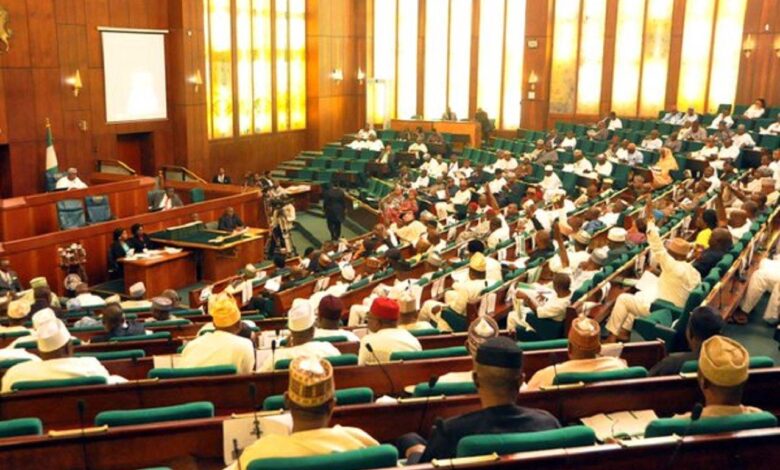
By Nathaniel Zaccheaus, Abuja
The House of Representatives on Tuesday abandoned its own constitutional amendment proposal on state policing and threw its weight behind President Bola Tinubu’s version of the State Police Bill, marking a significant shift in the legislative push to decentralise Nigeria’s policing structure.
The move followed the formal transmission of the Constitution of the Federal Republic of Nigeria (Alteration) (State Police) Bill, 2026, by President Tinubu to the National Assembly for consideration and passage.
The Executive-sponsored legislation was introduced during plenary and, in a rare display of urgency, scaled both first and second readings before being referred to the House Committee on Constitutional Review for detailed scrutiny.
The development effectively sidelines the House’s earlier proposal on state police. It signals lawmakers’ preference to proceed with a single framework initiated by the Presidency as momentum builds for what could become one of the most far-reaching security reforms since Nigeria’s return to democracy in 1999.
In a letter addressed to Speaker Tajudeen Abbas, President Tinubu said the proposed legislation seeks to amend the 1999 Constitution to establish the legal and institutional framework for state police services nationwide.
According to the President, the bill incorporates lessons from previous legislative efforts while introducing safeguards to ensure accountability and prevent abuse in a dual-policing arrangement between federal and state authorities.
“This Bill builds on the significant work already done in this regard by the House of Representatives and incorporates additional safeguards to ensure that the creation of a dual policing structure can be achieved quickly and effectively.”
Tinubu described the proposed legislation as a critical component of his administration’s efforts to reorganise Nigeria’s security architecture in response to increasingly complex security challenges.
The President urged lawmakers to expedite consideration of the bill, arguing that a more responsive and localised policing framework had become necessary to address insecurity across the federation.
The House’s decision to adopt the Executive version comes barely weeks after the Senate passed a similar constitutional amendment proposal after securing the constitutionally required support of more than two-thirds of senators.
The latest legislative movement suggests a growing consensus within the political establishment that Nigeria’s centralised policing structure is struggling to cope with the scale and complexity of insecurity ranging from terrorism and banditry to kidnapping, communal clashes and violent crimes.
For years, state governors have argued that, despite being designated as chief security officers of their states, they lack operational control over police commands within their jurisdictions, often leaving them dependent on decisions made in Abuja during security emergencies.
Supporters of state police believe decentralised policing would improve intelligence gathering, strengthen community policing and reduce response times to local security threats.
Opponents, however, continue to express concerns that state police could be weaponised by governors against political opponents, critics and dissenting voices, especially in states with weak democratic institutions and fragile checks and balances.
These concerns are expected to dominate deliberations at the House Committee on Constitutional Review, which has been tasked with examining the bill’s operational framework and protective mechanisms before reporting back to lawmakers.