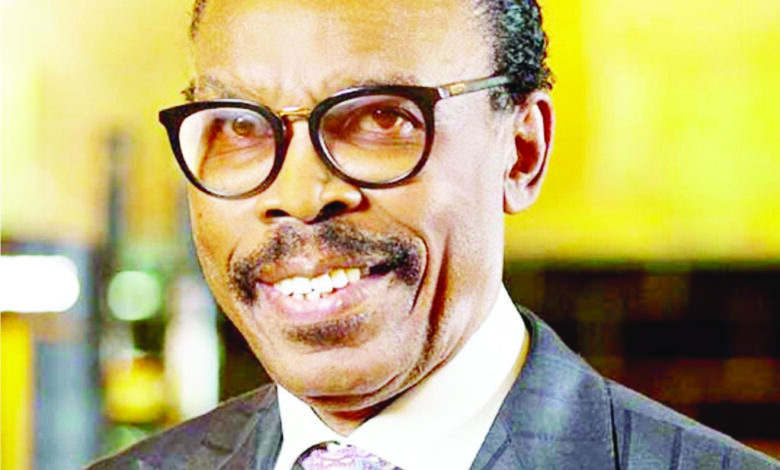
The Managing Director/Chief Executive Officer of Financial Derivatives Company Limited, Mr Bismarck Rewane, in this interview on channels television news monitored by Deborah Onyofufeke, breaks down the Monetary Policy Situation in Nigeria in the past year and weighs it side-by-side with what it is now. Explaining why inflation is still on the increase despite steps taken by the Central Bank of Nigeria to tidy the unfortunate situation
As announced by the CBN Governor, the MPR has been raised to 17.5 per cent. It has been raised five times in the last 10 months, yet the inflation rate has not declined, is this the medicine or is this the dooms?
The Monetary Policy Committee (MPC) bit the bullet by going up a hundred basis points to 17.5 per cent per annum, but the monetary policy rate is not the lending rate, it is a signalling rate to the market, the actual rates are a composition of other rates which includes Treasury bill rates and all of that. So what do we mean by this, you send the signalling rate up to 17.5 percent per annum, but the treasury bill rate for 90 days is down by two per cent, and the treasury bill rate for one paper, is at about eight per cent. So, the signalling rate is up, but the actual rates are down. Mixed signals so, inflation is still a cankerworm. Five times in 10 months but all that we’ve seen, is a 13 basis point reduction in inflation as against a 600 mull that is, a six per cent increase in total cremating point increase for this period so that is important to know that. So again, the medicine is right, but the dose is inaccurate. The only way to do this is to make sure that the other rates in the Economy go up and then it begins to affect what we call the marginal perplexity to save which will help to taint inflation. I also understand that monetary policy has its limits, which you have been talking about recently.
So, why is that so?
Monetary policy compliments fiscal policy, so, the tools for monetary policy have a limit, with what we’ve done you’ve seen that despite all of these increases up to six per cent we’ve had only a marginal increase decrease in inflation because the monetary policy is candid, inflation is still biting, growth is tepid, and Naira is embattled and then you also said in some humour that status quo is in the dustbin, yes, nosing is in the Atlantic Ocean, yes but the treasury bills are declining so you cannot signal higher rates at the same time and the federal government of Nigeria is seeking to borrow for 40 years at nine percent per annum with the three-year moratorium so, one hand businesses should borrow at N17+, but the Federal Government of Nigeria wants to borrow for forty years for 39 per cent/annum, we need to reconcile this so that things complement one another in other words, the monetary conditions are loose while the monetary policy is tight. We must reconcile that.
What does all of this mean to the common man on the street?
Interestingly, we broke this down into three particular segments, you will find that we took a bag of rice, January is the period when the prices come down, the price of rice in 2021 January was N17, 000 and now it is N38, 000. It went up to N45, 000 during Christmas, but a bag of beans was N22, 000 in January 2021, and it is now N32, 000, it’s gone up by 45 per cent, and tomatoes N7,000 in January 2021 now N16,000. As if that is not enough, a loaf of bread in January 2021 was N400, it is now N900- that is 121 per cent. Chicken, if you can afford it was N800 in January 2021, it is now N2, 000 (per kilo), which is 150 per cent that’s not all, that is food basket, bread, and butter issues. A bus ride from Obalende to Oworonshiki was N200 in January 2021, it is now N400, which is 100 per cent up. Flight ticket to Abuja was N35, 000 one way in 2021, it is now N100, 000- that is 186 per cent. The data bundle was N5, 000 in January 2021, it is still N5, 000. You will find here in 2015 if you divided all our income by the population, every Nigerian was worth the value of $2,700, but now it’s gone down marginally by 14 per cent to $2,300 in 2015, if you divided our external debt by the population every Nigerian was owing $49 today those Nigerians are owing $215 that is 239 per cent. Let’s take a look at secondary schools. You pay N2.5m per annum in 2015, but you are paying N7.1m today so that’s what it is.
What next?
The big thing here is that February inflation numbers will come out on the 15th of February and elections will be on February 25th. Whether you like it or not the Central Bank of Nigeria has done its own, the policy issue, they’ve dealt with but the point is that after the presidential election, we are told, INEC has guaranteed that there will be free, fair credible elections, so there will be a change. Know that a change is as good as a rest.