By Olusegun Olanrewaju
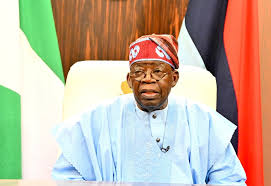
Transparency and Social accountability group, the Socio-Economic Rights and Accountability Project (SERAP), has urged President Bola Tinubu to use his leadership position and good offices to direct the Nigerian National Petroleum Company Limited (NNPCL) to immediately reverse the illegal and unconstitutional increase in the pump price of premium motor spirit (PMS), also known as petrol, across its retail outlets.
The group also urged the President to “direct the Attorney-General of the Federation and Minister of Justice Mr Lateef Fagbemi, SAN, and appropriate anti-corruption agencies “to probe the allegations of corruption and mismanagement in the NNPC, including the spending of the reported $300m ‘bailout funds’ collected from the Federal Government in August 2024, and the $6bn debt it owes suppliers, despite allegedly failing to remit oil revenues to the treasury.”
SERAP said, “Suspected perpetrators of alleged corruption and mismanagement in the NNPC should face prosecution as appropriate if there is sufficient admissible evidence, and any proceeds of corruption should be fully recovered.”
In an open letter dated September 7, 2024, and signed by its deputy director, Kolawole Oluwadare, the organisation said, “The increase in petrol price constitutes a fundamental breach of constitutional guarantees and the country’s international human rights obligations.
“Nigerians have for far too long been denied justice and the opportunity to get to the bottom of why they continue to pay the price for corruption in the oil sector.
“Rather than pursuing public policies to address the growing poverty and inequality in the country and holding the NNPC to account for the alleged corruption and mismanagement in the oil sector, your government seems to be punishing the poor.
“The increase in petrol price has rendered impoverished citizens incapable of satisfying their minimum survival needs. The growth is not inevitable, as it stems from the persistent failure of successive governments to address allegations of corruption and mismanagement in the oil sector and the impunity of suspected perpetrators.
“Corruption in the oil sector and the lack of transparency and accountability in using public funds to support the operations of the NNPC have resulted in persistent and unlawful hikes in petrol prices. Holding the NNPC to account for alleged corruption and mismanagement in the oil sector would serve legitimate public interests.
“The increase is causing immense hardship to those less well-off. We are concerned that as Nigeria’s economic situation deteriorates, the rise in petrol prices is pushing people further into poverty.
“We would be grateful if the recommended measures are taken within 48 days of this letter’s receipt and publication. If we have not heard from you by then, SERAP shall consider appropriate legal actions to compel your government to comply with our request in the public interest.”
SERAP regretted that increasing petrol prices at a time when millions of Nigerians continue to face worsening economic conditions was entirely inconsistent with your government’s constitutional and international obligations to ensure the minimum living conditions compatible with human dignity.
The group also stated, “The arbitrary increase has placed a disproportionate burden on the marginalised and most vulnerable sectors of society, particularly those disadvantaged by poverty.
“The increase is seriously jeopardizing their living conditions and individuals’ physical, emotional, and individual development, intensifying and worsening socioeconomic conditions in the country.
“The increase constitutes a serious human rights problem because of the intensity with which it undermines the enjoyment and exercise by Nigerians of their human rights and renders their civic participation illusory.
“The fundamental right to life includes not only the right of every Nigerian not to be deprived of their life arbitrarily but also the right that they will not be prevented from having access to the conditions that guarantee a dignified existence.
“The growing poverty and inequality in the country has continued to adversely affect the right of Nigerians to participatory democracy and impede their ability to participate in their government.
“Persistent increases in petrol prices keep people in poverty, which in turn perpetuates discriminatory attitudes and practices against them. Your government is legally obligated to mobilise the maximum available resources to ensure people’s socio-economic rights and protect the most vulnerable and disadvantaged Nigerians.”