By Naomi Sharang
The Attorney-General of the Federation (AGF), Mr Lateef Fagbemi (SAN), has said that implementing the Freedom of Information (FoI) Act will help tackle corruption in the country.
He said this yesterday at an event in Abuja organised by the Centre for Transparency Advocacy (CTA) in collaboration with the ministry to mark the “2024 International Anti-Corruption Day.”
The theme for the 2024 commemoration is “Uniting with Youth Against Corruption: Shaping Tomorrow’s Integrity.”
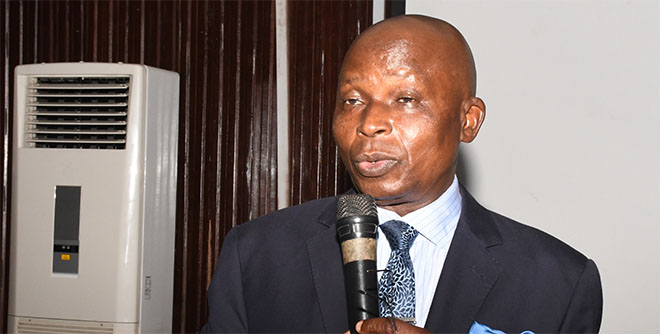
Fagbemi, who was represented by the Head of the ministry’s FOI Unit, Mr Godwin Garba, said that the Act had paved the way for transparency in governance.
“The Freedom of Information Act has paved the way for transparency in the conduct of government businesses and where the public sector can be held accountable.
“The States High Courts and Federal High Courts, in a plethora of cases, have given landmark rulings and judgments in FOI cases in order to promote the implementation of the act.”
On ease of accessing public information using the Act, Fagbemi said that concerning the public sector, the onus was on the office of the Attorney-General of the Federation to ensure that the Act was populated among government institutions.
“In the area of the citizens, the Act also expects CSOs to get the citizens involved in how to use the ACT. We found that most Nigerian citizens need to be made aware of the Act, which has been a major bottleneck to its implementation.
“In the government space, the AGF has tried as much as possible to release guidelines and train so many desk officers and even the CEOs of various government offices on how to use the Act and release information. Their response has been encouraging,” he said.
In her address, Ms Faith Nwadishi, Executive Director of the Centre for Transparency Advocacy (CTA), said that corruption undermines democratic institutions, distorts economies, and erodes public trust.
Nwadishi said Nigeria’s ranking on Transparency International’s (TI) Corruption Perceptions Index underscored the urgency for collective action against corruption.
“As we reflect on our journey, we recognise the Freedom of Information Act 2011 (FOIA) as a potent tool in combating corruption. This legislation empowers citizens to demand transparency and accountability from government institutions.”
She noted that CTA was working towards a Nigeria where citizens can access information.
“We are also working toward a country where citizens are free to request records and documents from public institutions and have them,” she said.
Therefore, the executive Director called for effective domestication, implementation, and deployment of the FOI Act across states in Nigeria, as this would expose embezzlement, misappropriation, and abuse of office.
“It will ensure transparency in budgeting, contracting, and public procurement, leading to good governance while empowering citizens to hold leaders accountable through inclusive participation in decision making.”
Also, Commissioner of Justice and Attorney-General of Edo, Samson Osagie, said that modalities were in place to ensure that all the bills currently before the Edo State House of Assembly were speedily attended to.
Roseline Osunde, a legal associate, represented Osagie.
“The FOI shall prioritise that list. In addition, upon the passage of the bill, speedy reforms will be set for an FOI Act desk in the state.”
The bail was set at N50 million, with the condition that a surety must provide the same amount and own a landed property.
The court has adjourned the case to January 29, 2025, for further proceedings.
Farotimi’s legal challenges stem from a defamation suit filed by Chief Afe Babalola, a Senior Advocate of Nigeria, who accused him of making defamatory statements in his book, Nigeria and Its Criminal Justice System.
The 95-year-old legal luminary alleged that Farotimi’s claims tarnished his reputation.
In response to the allegations, the Ekiti State Police Command arrested Farotimi, sparking widespread public backlash.
Civil society organizations and the Nigerian Bar Association (NBA) have condemned the arrest, arguing that it undermines free speech and raises concerns about the state of justice in Nigeria.