By Seyi Odewale
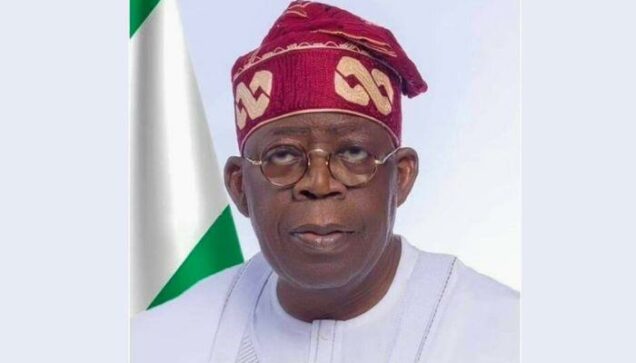
As President Bola Tinubu marks the second anniversary of his administration, Nigeria finds itself at a defining crossroads.
For many citizens, the past two years have brought a cocktail of hope and hardship, ambition and anxiety.
While his supporters laud bold decisions and long-overdue reforms, critics point to surging inflation, increasing insecurity, and a rising cost of living as signs of policy failure.
Tinubu, who assumed office on May 29, 2023, following the two-term tenure of President Muhammadu Buhari, inherited an economy teetering on the edge, a deeply divided nation, and a citizenry impatient for change.
From day one, he signalled a break from the past—starting with the controversial removal of fuel subsidies.
*Economic reforms: Bold moves, painful fallout
The most defining policy of Tinubu’s presidency thus far has been his aggressive economic reform agenda. The removal of the fuel subsidy, announced in his inaugural speech, triggered an immediate and severe shock to the system.
The pump price of petrol shot up from N198 to over N875 per litre, causing ripple effects across all sectors. Transportation costs soared, food prices skyrocketed, and millions of Nigerians saw their purchasing power severely eroded.
For defenders of the policy, the subsidy removal was an economic necessity—an end to a leaky system that cost the nation billions annually. Tinubu’s administration argued that the subsidy regime was unsustainable and had been a source of massive corruption.
Paired with the unification of multiple foreign exchange windows—a policy that allowed market forces to determine the naira’s value—the reforms were seen as an effort to reset the Nigerian economy and attract foreign investment. However, the immediate results were troubling. The naira plummeted from about N460 to the dollar to over N1,500 in the official market, triggering a sharp rise in inflation.
According to the National Bureau of Statistics (NBS), headline inflation stood at 33.69 per cent as of April 2025, while food inflation climbed above 40 per cent.
The World Bank estimates that over 80 million Nigerians now live below the poverty line, a figure that has climbed in the wake of recent reforms.
Economic analyst Muda Yusuf, CEO of the Centre for the Promotion of Private Enterprise, acknowledged that while reforms were crucial, their social costs have been immense.
“The reforms triggered serious inflationary pressure, eroded real incomes, and deepened poverty. The challenge now is to calibrate fiscal, monetary, and trade policies to cushion the impact and restore hope to Nigerians,” he said.
Nonetheless, there have been glimmers of recovery. Investor confidence is reportedly growing, with the Central Bank of Nigeria citing improved stability in the foreign exchange market and a rise in external reserves, which now stand at around $23 billion.
The Federal Government’s revenue position has also improved, bolstered by reduced subsidy spending and increased oil exports.
*Security: Mixed bag of progress, regression
Security remains one of the most formidable challenges of the Tinubu presidency. While the administration has shown commitment to overhauling the security architecture—with new service chiefs and improved funding for the armed forces—the results have been uneven.
Boko Haram and its splinter group, the Islamic State West Africa Province (ISWAP), remain active in the Northeast, with several deadly attacks reported in 2024 and 2025. In April alone, over 100 civilians were killed in renewed terrorist assaults, including drone strikes and roadside bombings.
The situation in the North-Central has also deteriorated. Clashes between herders and farmers in Plateau, Benue, and Nasarawa states have led to hundreds of deaths, with over 1,000 reported fatalities in Plateau State alone between late 2023 and early 2024.
In the South-East, the Indigenous People of Biafra (IPOB) continue to challenge the authority of the state, enforcing sit-at-home orders and engaging in sporadic attacks on government facilities and personnel.
Military crackdowns have failed to fully restore calm, raising questions about the long-term efficacy of a force-based approach.
Despite his administration’s promises, Tinubu has yet to unveil a comprehensive national security strategy that addresses the root causes of conflict—land use, ethnic tensions, poverty, and weak local governance.
Reports of delayed salaries for soldiers and declining morale have further complicated efforts.
*Taxation reform: Towards fiscal federalism
One of Tinubu’s more ambitious undertakings is the ongoing reform of Nigeria’s tax regime. His administration established the Presidential Fiscal Policy and Tax Reform Committee to drive changes that would enhance revenue generation, reduce leakages, and ensure states become less dependent on federal allocations.
According to Afolabi Adekaiyaoja, a fellow at the International Centre for Tax and Development, these reforms are crucial to ending Nigeria’s “feeding bottle federalism.” States, he argued, must be empowered to generate revenue independently and become accountable to their residents. The reforms, if fully implemented, could redefine Nigeria’s fiscal landscape and ensure long-term sustainability.
*Oil and gas: Modest gains, missed promises
Nigeria’s oil production has seen a moderate uptick, reaching around 1.6 to 1.8 million barrels per day. While still below pre-2015 levels, the improved figures have contributed to GDP growth and increased foreign exchange earnings.
However, systemic challenges remain. Oil theft, pipeline vandalism, and underinvestment persist as significant challenges to the oil and gas sector. The promise to re-invest subsidy savings into public infrastructure, healthcare, and education has not been fully realised.
Electricity supply remains erratic, with 85 million Nigerians lacking access, according to the World Bank. The power sector’s reliance on government subsidies—now at N800 billion—further highlights structural inefficiencies.
Nonetheless, the Tinubu administration has recorded modest achievements, including the commencement of operations at the Dangote Refinery, progress at the Warri and Port Harcourt refineries, the award of gas distribution licenses, and the signing of key gas infrastructure deals, such as the $3.3 billion Brass Methanol project.
*Labour and employment: Worsening realities
Job creation remains a sore point for the Tinubu government.
The removal of fuel subsidies and subsequent inflation led to massive cost pressures for businesses, many of which have downsized or exited the market.
The closure of Microsoft’s Africa Development Centre in 2024 sent shockwaves through the tech ecosystem. While Tinubu’s foreign trips have secured over $50bn in proposed investments, many of these pledges remain on paper.
Unemployment remains high, particularly among young people, and underemployment continues to increase. The government has announced several skill acquisition and empowerment schemes, but implementation has been patchy.
*Foreign policy: ECOWAS, regional tensions, and ‘Nigeria First’
Tinubu’s foreign policy has been dominated by his chairmanship of ECOWAS and the crisis in the Sahel region. The withdrawal of Niger, Mali, and Burkina Faso from ECOWAS, as well as the formation of a breakaway alliance, has tested his diplomatic mettle.
While Nigeria has supported sanctions and mediation efforts, the ECOWAS bloc remains fractured, and Tinubu’s ability to influence regional stability has been called into question.
Domestically, his “Nigeria First” policy has emphasised self-reliance and the promotion of locally produced products. Critics argue that this vision remains aspirational, lacking the manufacturing base and infrastructure needed to compete globally.
*Rule of law and democracy: Alarming signs
Tinubu’s record on democratic governance and the rule of law has raised red flags. The declaration of a state of emergency in Rivers State amid ongoing political disputes and the controversy surrounding the banning of a satirical song by musician Eedris Abdulkareem has raised concerns about authoritarian tendencies.
Critics point to increased centralisation of power, controversial appointments, and favouritism in federal postings—echoing the same accusations levelled against his predecessor. While elections continue to hold and courts remain functional, there is a growing perception of declining democratic norms.
*The road ahead
Contradictions have marked President Tinubu’s two years in office. His policies have sparked fierce debate—praised for boldness, criticised for their fallout.
While some progress has been made in stabilising the economy, attracting investment, and reforming taxation, the social and human costs have been steep.
Security remains fragile, inflation is eroding incomes, and many Nigerians feel the promised benefits of reform have not materialised in their daily lives.
Yet, the president still commands significant political capital and faces little opposition ahead of the 2027 elections.
The following two years will be crucial. If Tinubu hopes to cement a legacy of transformation, he must urgently address the disconnect between his policies and the lived realities of Nigerians.
A more inclusive, transparent, and compassionate approach may yet turn the tide from hardship to hope.