By Adaora Sydney-Jack
In the grand amphitheatre of democracy, where every citizen is meant to speak, vote, and lead, there remains a conspicuous and deafening silence. It is the silence of the side-lined, the muted roar of millions of Nigerian women whose voices have yet to be heard echoing through the hallowed halls of parliament.
In a country where women constitute nearly half of the population, their political representation still hovers just above the margins, a mere whisper in a storm of governance.
The debate around “special seats” for women is no trivial theatre. This is not, as some would lazily argue, a sideshow. It is a fundamental reckoning with justice, equity, and the very soul of our democracy.
Those who deride gender quotas misunderstand both their necessity and their history. Quotas are not crutches for the incapable. They are correctives for centuries of exclusion. They are not about handing women power. They are about clearing the way so that women can seize it.
In societies like Nigeria, where cultural, economic, and institutional barriers persistently deny women equal opportunity to participate in politics, quotas serve as the scaffolding of a more just future. They are the instruments of levelling, not lowering the playing field.
Globally, the evidence is irrefutable. Countries that have implemented quotas have not only improved gender representation but also enhanced governance.
In Rwanda, where constitutional gender quotas were introduced following the 1994 genocide, women now occupy over 60 per cent of the seats in the lower house of parliament. The result? Rwanda’s governance has garnered global recognition for its innovations in health, education, and community development. The presence of women hasn’t just changed the gender makeup of parliament. It has transformed its priorities.
In Bolivia, the legislation mandates that half of all elected officials be women. Since implementing these laws, Bolivia has seen an uptick in legislation focused on poverty alleviation, indigenous rights, and education.
In Norway, party quotas played a pivotal role in ushering in an era of strong female leadership, from corporate boardrooms to prime ministerial cabinets. These are not isolated anecdotes. They form a resounding pattern: when women lead, societies thrive.
Even across Africa, examples abound. Senegal’s parity law, introduced in 2010, propelled women into 44 per cent of the parliamentary seats. South Africa’s African National Congress voluntarily adopted quotas, helping push the country’s proportion of women in parliament above 40 per cent.
These shifts have coincided with progressive legislation on reproductive health, gender-based violence, and social welfare issues too often neglected in male-dominated systems.
And then there is Nigeria, a paradox of potential and paralysis.
Despite being the continent’s largest democracy, Nigeria ranks abysmally low in female political representation, 179th globally. Out of 469 federal lawmakers, just 19 are women. That is less than 5 per cent.
At the state and local government levels, the figures are even more dismal. This is not just a democratic deficit; it is a crisis of credibility. How can a democracy speak for its people when half of those people are absent from the decision-making table?
What Nigeria faces is not a lack of competent women. It is a wall of structural prejudice, a complex mesh of cultural expectations, economic disenfranchisement, media bias, electoral violence, and party gatekeeping. Women are expected to run races while being shackled by invisible chains. And when they dare to run, they are told they lack the merit.
But as Nigerian author Chimamanda Ngozi Adichie reminds us, “Culture does not make people. People make culture.” The culture of exclusion is not sacred. It is not destiny. It is policy, and it can be changed by policy.
To those who say that gender quotas betray meritocracy, let us ask: how can merit be measured in a rigged system? When the gates to political power are fortified against women, it is not merit that triumphs. It is a tradition, a privilege, and an exclusion.
We do not question the merit of men born into political dynasties or the fairness of incumbents perpetually recycled through patronage. Why, then, do we ask about the legitimacy of institutional pathways for women?
Let us be clear: quotas are not the destination; they are the departure point. They are the ignition switch of inclusion. As former US Secretary of State Hillary Clinton declared, “Human rights are women’s rights, and women’s rights are human rights once and for all.”
But in Nigeria, the conversation must go further. Women’s rights are not just human rights. They are democratic rights. And until they are respected, democracy itself remains a hollow promise.
To the National Assembly of Nigeria: the burden of history is upon your shoulders. You have the power to light a torch whose glow could illuminate the continent. Passing the Special Seats Bill, enshrining special seats in law, is not political charity. It is constitutional clarity. It is moral courage. And it is long overdue.
This is your opportunity to correct a national wound. To recognise that the absence of women in politics is not a gap but a gaping hole in the heart of Nigerian governance.
This is your moment. Make it matter.
And let it be said of us that we were not the generation that clung to tradition while ignoring the truth. That we did not allow another decade to pass in the quiet suffocation of women’s potential. That we rose, not in defence of the past, but in defiance of injustice. That we carved a space for every girl to dream, to dare, and to lead.
Let it be said of this generation, “We did not shrink from the echo of justice; we widened the table, we built new chairs; we listened when silence was no longer an option, and in the parliament of tomorrow, she stood not alone.”
But as one voice in many, rising like thunder through the chambers of change.
The time for special seats is not tomorrow. It is now. Not as a privilege. But as a principle. Not as a favour. But as a foundation.
History is watching. Let us be worthy of it.
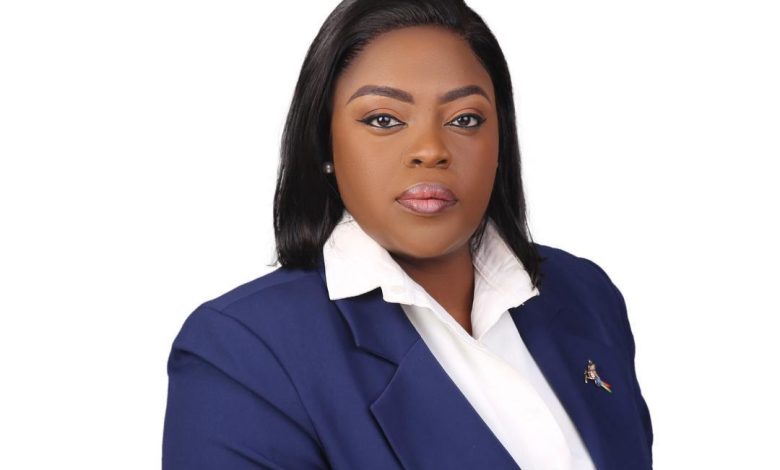
*Adaora Sydney-Jack is an international broadcast journalist, Author of the best seller, Politics, Pussy and Power, Gender and Public policy expert, Creative Director/ Host of Gender Agenda showing on Africa Independent Television, Founder of Gender strategy advancement international and an inclusive governance advocate.
email:adaoraonyechere1@gmail.
Follow on Instagram @officialadaoraonyechere
facebook@Adaoraonyechere
Linkedln @Adaoronyecheresydney-jack
X@Talk2adaora