1. Introduction
I am pleased to be part of this esteemed panel constituted by the organisers of this International Conference to discuss “The Judiciary and the Deepening of Democratic Practice in Nigeria”. I have been assigned to discuss the topic: “Judiciary and Deepening Democracy”, which is quite apt and contemporary, especially when examined against Nigeria’s recent history and her quest for democratic consolidation. The topic highlights the inexorable link between Democracy and the role the judiciary plays in its sustenance in the polity. Therefore, this paper aims to explore that link by discussing the basic concepts that make up the theme, appraising the judiciary’s role in the sustenance and deepening of democracy in Nigeria and proffering policy recommendations to ensure symmetry in the discharge of this responsibility.
2. Conceptual Underpinnings
The topic under consideration has two keywords: ‘Judiciary’ and ‘Democracy’. However, given the role that the judiciary plays in conditioning the proper operation of democratic governance, we shall first interrogate the concept of democracy before examining the judiciary and its role in deepening democracy in Nigeria.
2.1 The Concept of Democracy
Democracy has been severally defined by jurists, scholars, public commentators, and politicians according to their understanding and perspectives. In the 16th Century, Abraham Lincoln defined democracy in its simplest terms as the government “of the people, by the people, for the people”. (1)
Since then, others have added their perspectives to the concept. According to Schattschneider, “democracy is a competitive political system in which competing leaders and organisations define the alternatives of public policy in such a way that the public can participate in the decision-making process.” (2)
Schumpleter, on the other hand, perceives democracy as”…a method by which the individual acquires the power to participate in decisions by means of a competitive struggle for the people’s vote…it is this competition for votes that is the distinguishing character of the democratic method”. (3)
It is obvious from the above definitions that democracy “is a government in which the supreme power is vested in the people and exercised by them directly or indirectly through a system of representation usually involving periodically held free elections.”(4)
This portends first that Democracy is people-centred and based on the people’s will-the governed have a say in the leadership selection process and how they are governed. They may express this will directly, as was the case in the Greek city-states (Athenian Democracy) or through their representatives, who must constantly revert to the people for direction on how they should be governed.
Secondly, political pluralism or a multi-party system is necessary for democracy. This allows people regularly to correct their mistakes, especially concerning the quality of leaders, through periodic elections. This amicable way of resolving the rather intricate problem of leadership selection ensures the harmony and stability necessary for development. Consequently, democracy, when practised as envisaged by its founding fathers, has the potential to produce an accountable, responsive, and legitimate government.
The American concept of Democracy is known to rest on five basic notions, namely, recognition of the fundamental worth and dignity of every person; respect for the equality of all persons; faith in majority rule and an insistence upon minority rights; acceptance of the necessity of compromise, and insistence upon the widest possible degree of individual freedom.
However, some universally recognised ingredients of democracy include leadership by choice through periodic elections, participation, and empowerment; respect for human rights and rule of law; effective and independent judiciary, and the supremacy of the parliament as the delegated voice of the people. (5)
Nigeria embraced multi-party democracy upon the attainment of independence in 1960. Although it was short-lived due to military intervention in the country’s body politics in 1966, Nigeria eventually returned to civil democratic rule in the 2nd Republic in 1999. The constitutional and foundational bases of democracy in Nigeria are provided by Sections 14 (1) (2) (a), (b) & (c) of the Constitution of the Federal Republic of Nigeria, 1999.
Section 14 (1) expressly provides that “The Federal Republic of Nigeria shall be a state based on the principles of democracy and social justice”. (Emphasis supplied). The principles of democracy include the primacy of the law, promotion of the fundamental rights of individuals, attainment of social justice, fostering economic and social development, strengthening the cohesion of society, and enhancing national tranquillity, and creating a favourable climate for international peace.(6)
Hike in electricity tariff unjustifiable, consumers lament
2.2 The Judiciary
The judiciary, by the powers and functions conferred on it by the Constitution, (7) is an indispensable institution in any democratic system, including Nigeria. Section 6(6) (b) of the 1999 Constitution provides explicitly that the judicial powers of the Federation “shall extend to all matters between persons, or between government or authority and to any person in Nigeria, and to all actions and proceedings relating thereto, for the determination of any person as to the civil rights and obligations of that person”.
This provision implies that the judicial powers extend to every type of action except those expressly excluded by the Constitution. (8) The exclusion clauses expressly refer to matters about Fundamental Objectives and Directive Principles of State Policy set out in Chapter II and any law made on or after January 15, 1966, determining any issue or questions as to the competence of any authority or person to make any such law. (9)
Thus, the judiciary is constitutionally empowered to enforce the rule of law and resolve disputes among individuals and between individuals and the State. This is in addition to the power to resolve disputes between Nigeria’s various arms and tiers of government. This is responsible for the different appellations used to describe the role of the judiciary, such as “the last bastion of succour, ”([10) “the last hope of the common man”(11) and “the mighty fortress against oppressive and tyrannical laws.“ (12)
While alluding to the pre-eminent role of the judiciary under any form of government of prevailing political and social milieu, Popoola aptly stated as follows: “the crucial role of the judiciary remains unassailable regardless of the form of government and the prevailing social milieu in a country at any given time.” (13)
3. The Role of the Judiciary in Deepening Democracy
The role of the judiciary in a democracy cannot be overemphasised. The judiciary is thus considered “not only important but absolutely indispensable. (14) In similar, while describing the indispensability of the judiciary in a democracy, Professor Ademola Popoola (15) states as follows:
“Democracy requires that some group of persons acts as an arbiter not only between individuals but also between government power and the individual. Judges are then seen as an essential part of a democratic organisation, taking their place alongside the Executive and the legislature, more passive than they are but indispensable. “
To properly situate the judiciary’s role in deepening democracy in Nigeria, a brief survey of how they have discharged their adjudicatory function is essential, relying on a few landmark cases that have been decided upon by the Courts. In this regard, the words of the learned scholar remain indelible when he stated:
It is now a notorious fact that Nigerian Courts have been called upon from time to time to adjudicate on matters of far-reaching constitutional and political importance…under the civilian regimes, when the constitution is supreme, apart from their role as guidance of fundamental rights, the court has also been involved in the resolution of power conflict between the Federal Government and the state and between the latter in terms as well as in the adjudication of election disputes.
It is beyond doubt that the judiciary has demonstrated remarkable courage in the discharge of its responsibilities. Professor Dakas, (16) aptly expressed this view when he states, “… even the most vitriolic critics of the Nigerian Judiciary would concede that our judges have, through several landmark decisions, expanded the frontiers of, and deepened our democracy.” While there may be instances when the decisions of our courts failed to inspire confidence, the point being made is that we can point to instances and examples where their decisions have had salutary effects on the sustainability of our democratic experience.
3.1 Promotion and protection of Fundamental Rights and Civil Liberties
The courts have been at the vanguard in promoting and protecting fundamental rights and liberties in Nigeria. In the process, it prevented tyranny and widened the democratic space and political participation. In the case of Independent National Electoral Commission & Anor v Alhaji Balarabe Musa & $ Ors[17], the supreme court upheld the right of every Nigerian, including civil servants, to belong to political associations by declaring that section 79 of the Electoral Act, 2002, which sought to curtail the constitutional rights to assemble and associate, null and void.
3.2 Enthronement of constitutionalism and the rule of law
It is beyond dispute that respect for the rule of law is essential to democratic consolidation. In several decided cases, this judiciary has demonstrated its resolve to enthrone constitutionalism and respect for the rule of law to promote orderliness in the discharge of government business. In A.G Abia State & 32 Ors v. A.G. Federation, (18) the Attorneys-General of the 36 states were dissatisfied with the modifications made to the existing revenue allocation formula by the Allocation of the Revenue (Federation Account, ETC) Modification Order,2002 and brought an action against the Attorney General of the Federation challenging the Order. The apex Court held among other things, that:
“The president has wide power when modifying any existing law to bring it in conformity with the constitution. It is true that “separation of power” is essential to a healthy democracy, the power given to the president and also to State Governors in the existing law of the state by the constitution is not an abuse of the principle or doctrine of separation of powers, it is essential to giving meaning to an existing law so that the constitution itself is not abused. (Emphasis mine)
Similarly, in A.G. Abia State v. A.G. Federation,[19] the Attorneys General of the 36 states successfully challenged certain deductions made by the Federal government from the Federation account as a special Fund. The supreme court was emphatic that: “funding of joint venture contracts and the NNPC priority projects cannot, by any stretch of construction, come within section 162 (3) of the Constitution, which provides for the distribution of the Federation Account among the three tiers of Government, that is Federal, States and Local Government. Therefore, all those charges on the federation Account are inconsistent with the constitution and, therefore, invalid.” (Emphasis mine).
3.3. Internal Democracy in the operation of political parties
To promote the ideals of section 223 of the Constitution, the Supreme Court in Ugwu v Ararume[20], as well as Amaechi v INEC[21] 20, nullified the arbitrary decision of the People’s Democratic Party (PDP) to exclude its Gubernatorial aspirants in the aforementioned cases from contesting the Gubernatorial Elections in Imo and rivers states respectively.
3.4 Exercise of power of Impeachment
The courts have been moved severally to examine the manner in which the power of impeachment was being exercised by the legislature to prevent abuses that could derail the march to democratic consolidation. In Inakoju & Ors v. Adeleke & Ors(22) the supreme court deprecated the frequency, regularity, irrational and illegal manner in which the power of impeachment has been exercised. The court stated:
The plethora of removal proceedings in respect of Governors is not only frightening but is capable of affecting the stability of Nigeria. It is almost like a child’s play as some state legislatures indulge in it with all ease and comfort like the way the English man sips his coffee on his breakfast table. Unless the situation is arrested, Nigerians will wake up one morning and look for where their country is. That should worry every Nigerian. It does not only worry me: the idea frightens me so much.
3.5 Respect for the doctrine of separation of powers
Separation of powers among the various arms of government is a cardinal pillar of constitutional democracy. The judiciary has therefore ensured its interpretative role that this doctrine is persevered and protected since the return of the country to civil democratic rule in 1999. This has helped to nip in the bud needless conflict that could endanger our democracy. In A.G Abia v. A.G Federation (23), The supreme Court while upholding the doctrine, stated as follows:
The principle behind the concept of separation of powers is that none of the three arms of government under the constitution should encroach into the powers of the other. Each arm-the Executive, Legislative and Judicial-is separate, equal and of coordinate departments and no arm can constitutionally take over the functions clearly assigned to other. Thus, the power and functions constitutionally entrusted to each arm cannot be encroached upon by the other. The doctrine is to promote efficiency in governance by precluding the exercise of arbitrary power by all the arms and thus prevent friction.
The essence of the judiciary in a democracy was captured by Akinola Aguda thus “it is beyond dispute that to sustain a democracy in the modern world, an independent, impartial and upright judiciary is a necessity.” (24) The judiciary is indispensable in the democratic system of Nigeria being responsible for interpreting the Constitution and adjudicating the constitutionality and legality of the exercise of governmental powers in Nigeria among others. The Supreme Court in Governor of Lagos State and other v. Ojukwu(25) while enunciating the principle of rule of law stated that the judiciary is a necessary agency of the rule of law. In order to perform its role effectively, the judiciary must be independent and also accountable. The roles to be played by the judiciary to deepen democracy in Nigeria are further discussed.
3.7. Protection of Human Rights
The judiciary has been responsible for safeguarding the human rights contained in the Constitution and ensuring their enjoyment. True to the principle of checks and balances, the judiciary has been declaring unlawful any action of the executive that abridges the human rights of the people. In the case of Shugaba v. Federal Minister of Internal Affairs [26], the court declared that the deportation order made against the applicant was ultra vires and void as it violated the applicant’s fundamental human rights.
3.8. Protection of socio-economic rights
A cardinal principle of democracy is fostering socio-economic development, which can only be achieved when legislative measures enforce socio-economic rights. The courts have done this through their interpretative powers by ensuring the rights are obligations the government must fulfil. It is commendable that there are judicial decisions in Nigeria to the effect that the non-justiciable provisions in Chapter 2 of the 1999 Constitution can be enforced through Acts of the National Assembly. The Supreme Court of Nigeria in Olafisoye v Federal Republic of Nigeria(27) held that section 15(4) of the 1999 Constitution (a provision in chapter 2 which mandates the state to abolish all corrupt practices and abuse of power) is justiciable when read with Item 60(a) of the Second Schedule of the 1999 Constitution (which empowers Nigeria’s National Assembly to make laws with respect to the establishment and regulation of national authorities to promote and enforce the observance of Chapter 2). The rights in Chapter 2 of the 1999 Constitution, such as the right to health of prison inmates, were also held in Odafe & Ors. v. Attorney-General of the Federation (28) to be enforceable.
3.9. Ensuring Sanctity of Electoral Processes
The Electoral process commences with the voters’ registration and continues until election petitions are determined. The judiciary takes a critical part in the electoral processes, ranging from hearing cases brought by litigants on electoral matters to election petitions brought by candidates after elections. In the case of Salmat & Ors v INEC,[29], The court was faced with determining the timeline for the registration of voters and the update or review of the Register of voters before elections. The courts have also shaped the electoral climate by resolving the law’s lacuna. In the case of Wada v Bello (30), the court resolved the lacuna in the 2010 Electoral Act and the 1999 Constitution, which came to the fore following the demise of a candidate of the All-Nigeria Progressives People’s Congress, Prince Abubakar Audu, amid an inconclusive election. In the same vein, the case of Faleke v INEC (31) settled the issue of the transfer of votes and substitution of the candidate.
Conclusion
The Nigerian Judiciary has played a pivotal role in deepening Nigeria’s democracy. This has been achieved through the exercise of their adjudicatory functions, and our survey of some of the decided authorities reveals that they have performed their functions with courage and dedication. This commendable role can be further strengthened by insulating the judiciary from political pressures and granting them the autonomy they need to discharge their constitutional roles effectively. The political class should also consider whether it is now time for Nigeria to join other advanced democracies in shielding the judiciary from political interference by preventing them from answering political questions in the manner they have been subjected to in the recent past.
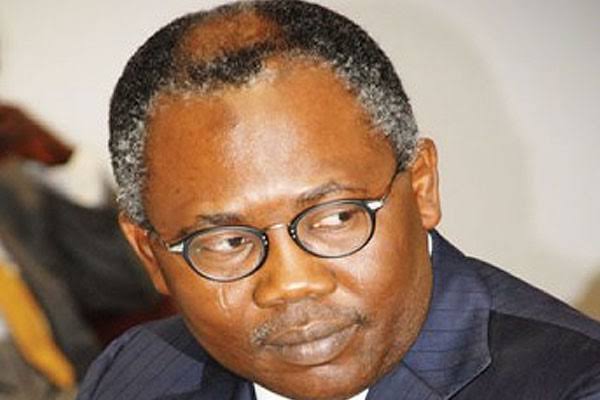
Mohammed Adoke, SAN, CFR, FCIArb (UK), was a former Attorney-General of the Federation and Minister of Justice