By Cross Udo and David Lawani
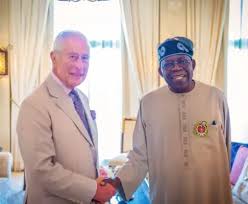
At the historic Windsor Castle, centuries of shared history between Nigeria and the United Kingdom were reframed not as a relic of the past, but as a living partnership poised for a more ambitious future.
Speaking as host, King Charles III set the tone with warmth, cultural familiarity and candour—opening in Yoruba, extending Ramadan greetings, and acknowledging both the promise and the pain embedded in the two nations’ long relationship.
“Nigeria hasn’t merely changed. It has arrived,” the monarch declared, capturing the essence of his address: a recognition of Nigeria’s growing demographic strength, economic potential, and cultural influence on the global stage.
With a population exceeding 230 million—half of them young—the King described Nigeria as a nation defined by “energy, ingenuity, ambition and resolve,” positioning it as a critical partner in addressing global challenges.
He highlighted the profound imprint of Nigerians in British life, from healthcare and academia to sports and the arts, calling them a “living bridge” of over half a million people binding both nations together.
From Afrobeats to Nollywood, and from Premier League stars to legal minds, Charles noted that “so much of Britain’s culture is, in truth, profoundly enriched by Nigeria.”
Yet, beyond cultural ties, the monarch pointed to a rapidly deepening economic relationship. He revealed that Nigeria has become the United Kingdom’s largest export market in Africa, with expanding trade, financial investments, and educational partnerships driving mutual growth.
Describing the relationship as a “partnership of equals,” Charles stressed that both countries are investing in each other’s future, adding that shared prosperity must be built on trust, cooperation, and evolving global realities.
Importantly, he did not sidestep history.
“There are chapters in our shared history that I know have left some painful marks,” the King admitted, in one of the most reflective moments of the speech. “I do not seek to offer words that dissolve the past… but history is a lesson in how we go forward together.”
That forward-looking vision, he said, must include stronger collaboration on security, particularly in northern Nigeria, as well as renewed commitment to the Commonwealth as a platform for economic growth and global influence.
Drawing from African proverbs, the King underscored unity and adaptability: “When the music changes, so does the dance,” he said, urging both nations to “learn new dance steps together.”
He ended on a distinctly Nigerian note, raising a toast with the popular phrase: “Naija no dey carry last.”
President Bola Tinubu, in his response, struck a complementary tone—anchoring Nigeria’s present aspirations in a shared institutional and historical framework shaped significantly by Britain.
Calling it a “profound honour” to speak at Windsor Castle, Tinubu reflected on the enduring influence of British democratic traditions, from the Magna Carta to the works of philosophers like John Locke and Edmund Burke.
“Our courts draw upon legal traditions rooted in English common law… our parliamentary institutions reflect constitutional practices that evolved here,” he said, acknowledging the foundational role of British systems in Nigeria’s governance.
But beyond institutions, Tinubu emphasised people as the strongest link between both nations, pointing to the Nigerian diaspora’s contributions to the UK, particularly in the National Health Service and across various sectors.
He cited prominent figures of Nigerian heritage in sports—Bukayo Saka, Anthony Joshua, and others—as symbols of a deep human connection that transcends borders.
On security, the President stressed Nigeria’s frontline role in tackling terrorism in West Africa, noting that “partnership with the United Kingdom remains essential” in addressing threats emanating from the Sahel.
Despite current challenges, Tinubu expressed optimism about Nigeria’s trajectory, describing a nation driven by youthful energy, entrepreneurial spirit, and a determination to realise its full potential.
In one of the most personal moments of his speech, Tinubu recalled his time in exile during Nigeria’s military era, expressing gratitude to the UK for providing refuge and protection.
“That solidarity remains etched in our collective memory,” he said, underscoring how far Nigeria has come—from dictatorship to democracy.
Both leaders ultimately converged on a shared message: that the future of Nigeria-UK relations lies not in history alone, but in a renewed commitment to partnership, mutual respect, and collective progress.
As glasses were raised in Windsor Castle, the symbolism was clear—two nations, bound by history, choosing to define their next chapter together.