Lagos’ future depends on science, sustainable blue economy, Wahab tells researchers

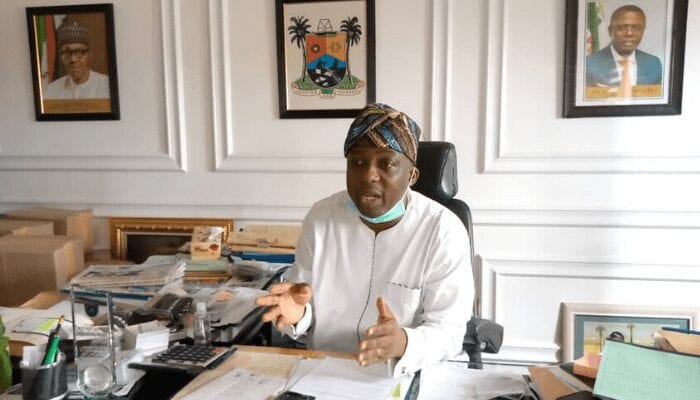
The Lagos State Commissioner for the Environment and Water Resources, Tokunbo Wahab, has stressed that science and the sustainable development of the blue economy will play a decisive role in securing the future of Lagos.
He said this is particularly important as the state grapples with the growing impacts of climate change, rapid urbanisation and environmental challenges.
Wahab made the remarks in a post shared on his X account on Tuesday while reflecting on his keynote address at the opening ceremony of the 58th Annual Conference of the Science Association of Nigeria, held at the Lagos Airport Hotel, Ikeja.
The conference, themed “Science, Coastal Cities, Public Health and Social Equality in the Blue Economy,” brought together scientists, researchers and other stakeholders to deliberate on practical solutions to emerging environmental and public health issues.
According to the commissioner, the theme of the conference is timely as countries across the world continue to face the realities of climate change, noting that while several European nations are recording unprecedented heatwaves, Lagos is experiencing increasing rainfall and more frequent flooding.
“Our world is facing unprecedented challenges. European nations are experiencing their hottest periods ever while here in Lagos we are witnessing increasing precipitation and more frequent flooding. Climate change is real and we must be ready to play our part,” Wahab said.
He stressed that climate change is no longer a distant concern but a present-day reality that requires urgent action from governments, researchers and citizens alike.
Wahab explained that the blue economy extends beyond maritime activities such as ports, fisheries and ocean resources, describing it as a broader framework for achieving sustainable economic growth through responsible management of water ecosystems while promoting environmental sustainability and social inclusion.
“The blue economy is about far more than oceans, ports, and fisheries. It is a vision of sustainable economic growth driven by our water ecosystems while ensuring environmental sustainability and social inclusion. Science must remain the foundation of every decision we make regarding our coastal environments because it provides the evidence necessary for governments to design policies and prepare for future risks,” he stated.
He maintained that scientific research must remain the foundation of public policy, particularly in coastal cities, saying evidence-based decision-making is essential for governments to anticipate future risks, strengthen resilience and develop effective environmental policies.
The commissioner further described Lagos as a low-lying coastal megacity with a 187-kilometre coastline, a rapidly expanding population and increasing exposure to the threats posed by rising sea levels.
“The choices we make today about urban planning, infrastructure, and ecosystem protection will determine the resilience of future generations. The health of our oceans and our people are inseparable,” he said.
He noted that decisions taken today on urban planning, infrastructure development and ecosystem conservation would significantly determine the ability of future generations to withstand the effects of climate change.
Highlighting the link between environmental sustainability and public health, Wahab warned that polluted waterways and recurrent flooding increase the risk of contaminated drinking water, cholera outbreaks and other waterborne diseases.
He added that the degradation of marine ecosystems also poses serious threats to food security and nutrition, making environmental protection a critical public health priority.
Calling for stronger collaboration between the academic community and policymakers, Wahab said the era when partnerships between researchers and government were optional had passed.
“This is a public health challenge that demands facts, figures, and a formidable alliance between Town and Gown. The time for optional collaboration is over. It is now a necessity,” he added.
He urged scientists and scholars to produce practical, evidence-based solutions capable of supporting the state’s environmental sustainability agenda and building a cleaner, healthier and more resilient Lagos.
The commissioner also welcomed participants to the conference and expressed optimism that the deliberations would generate innovative ideas that would contribute to achieving the goals of a Cleaner Lagos and a Greater Lagos.
“I charge this conference to produce practical, evidence-based solutions for a #CleanerLagos and a #GreaterLagos,” Wahab said.