By Nathaniel Zaccheaus, Abuja
The World Bank has identified Nigeria as a rising model for economic reforms among developing countries, reaffirming its commitment to supporting the nation’s recovery while calling for stronger legislative oversight to safeguard development outcomes.
The global financial institution said Nigeria’s ongoing reforms are beginning to deliver measurable progress, positioning the country as an example for others seeking to implement far-reaching economic changes.
Speaking on Wednesday during a meeting with the Senate Committee on Capital Market in Abuja, the World Bank Country Director for Nigeria, Mathew Verghis, said the Bank remains encouraged by the direction of reforms and is prepared to deepen collaboration with Nigerian authorities.
He disclosed that the Bank’s Managing Director recently visited Nigeria and commended the reform efforts, describing the country as an emerging model in economic transformation.
Verghis, however, emphasised that sustaining the gains would require robust legislative oversight, particularly for projects financed by development partners.
He noted that effective parliamentary scrutiny is critical to ensuring transparency, accountability and efficient utilisation of resources.
“Legislative oversight is essential in ensuring that projects deliver intended results and that funds are properly utilised,” he said.
He urged lawmakers to adopt a constructive approach that strengthens implementation.
The World Bank chief further revealed that the institution has, over the past few years, shifted more of its project implementation responsibilities to subnational governments in line with Nigeria’s federal structure.
According to him, while the Federal Government remains the borrower of record through the Ministry of Finance and is responsible for repayments, state governments now play a more prominent role in executing projects.
He explained that the decentralised approach has improved efficiency and delivery outcomes by bringing implementation closer to beneficiaries.
“States that meet clearly defined eligibility criteria can access funding, while those that do not may opt out. This ensures performance and accountability,” Verghis added.
On development priorities, he highlighted women’s empowerment as a central pillar of the Bank’s interventions, noting that increasing women’s participation in the economy is key to achieving long-term growth.
He said several initiatives are already underway to support women economically, alongside plans for an early childhood development programme focusing on maternal health, child welfare, early education and improved access to learning.
The Bank also expressed its readiness to strengthen engagement with the National Assembly on oversight of environmental projects, calling for continued dialogue to address challenges and improve outcomes.
“We welcome further discussions to understand the issues better and work towards practical solutions,” he said.
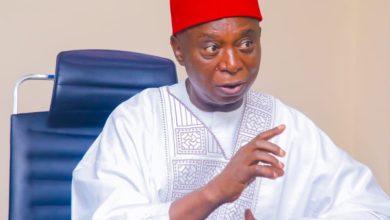
In his remarks, Chairman of the Senate Committee on Capital Market, Osita Izunaso, commended the World Bank for its sustained support and reaffirmed the committee’s commitment to effective oversight.
He disclosed that the committee would organise a technical session in the third week of April to deepen lawmakers’ understanding of World Bank-funded programmes and clarify their roles in ensuring successful implementation.
According to him, the initiative is particularly important for first-time legislators who require orientation on the workings of international development frameworks.
Izunaso also proposed that selected members participate in the forthcoming Global Parliamentary Forum to gain international exposure and share experiences with counterparts from other countries.
The World Bank’s renewed endorsement is expected to boost investor confidence in Nigeria’s reform agenda, even as stakeholders stress the need for policy consistency, institutional accountability and closer collaboration between the executive and legislature to sustain the recovery trajectory.