Malaria: Jigawa Govt, partners distribute 3.7m nets to households

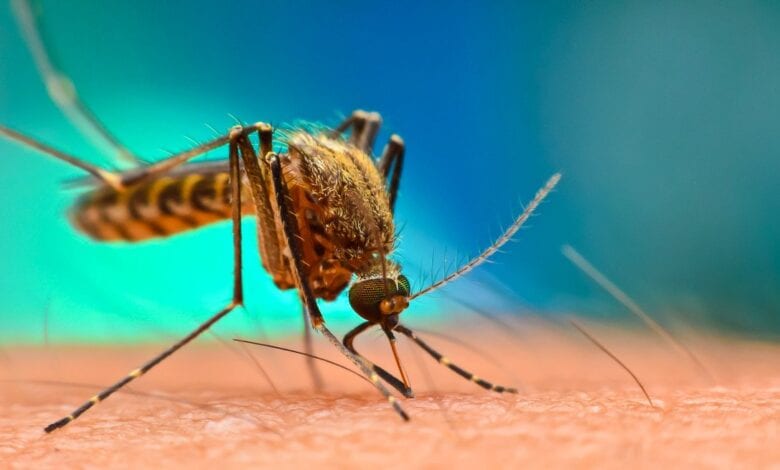
The Jigawa Government in partnership with Malaria Consortium has begun the distribution of 3.7 million Insecticide Treated Nets to vulnerable households in the state.
Gov. Muhammad Badaru, stated this during the inauguration of the 12-day distribution exercise on Wednesday, at Madobi village in Dutse Local Government Area of the state.
Badaru, represented by his deputy, Malam Umar Namadi, said that malaria could be prevented and cured through collaborative efforts to reduce its burden.
“Malaria is responsible for approximately 11 percent of the maternal and 30 percent of child mortality, especially among children under five years.
“So the goal is to ensure 100 percent coverage for net distribution and 80 percent utilization by encouraging everyone to sleep inside the net especially the vulnerable groups among us.
“Malaria is also preventable with the consistent and correct use of insecticidal treated nets, which have been made available for the citizens of the state.
“The nets have been treated with safe residual insecticide for purpose of killing and repelling mosquitos,” he said.
He said the state government had provided support to the Seasonal Malaria Chemoprevention (SMC) campaign to facilitate its implementation across the 20 local government areas of the state.
The governor urged residents to cooperate with personnel deployed for the exercise to facilitate its smooth implementation.
In his remarks, Dr. Perpetua Uhomioghi, Coordinator, National Malaria Elimination Programme (NMEP), described the exercise as appropriate and timely towards ensuring total eradication of malaria through effective nets application.
Uhomioghi said the 2021 Mass ITNs distribution was being conducted with the support of Global Fund (GF), adding that the ITNs are one of the key strategies for the prevention and elimination of malaria in the country.
“Furthermore, we adopted the use of technology for a better and more efficient ITNs campaign process.
“We foresee a future where programme data will be viewed real-time and decision making would become quicker and more effective,” he said.
According to him, there is a significant reduction in malaria cases recorded in the Nigeria Demographic Health Survey (DHS) 2018, where prevalence in children under five years dropped to 23 percent from 42 percent.
“This, notwithstanding, malaria still remains a major public health problem in Nigeria and constitutes a major barrier to social and economic development.
“It is in consideration of this that the health sector is being restructured for effective service delivery in the malaria elimination programme implementation,” Uhomiobhi said.
He reiterated the commitment of the Federal Government to continue to work with partners and state governments to achieve a malaria-free society.
Also speaking, Dr. Sunday Audu, Coordinator of, World Health Organisation (WHO) in the state, urged governments at all levels to increase investment in malaria control activities.
Audu said that malaria prevalence showed a sprawling decrease in the country in the past years, 42 percent in 2010; 27 percent in 2015, and 23 percent in 2018.
NGO to distribute 3.7m mosquito nets in Ogun
According to him, the 2021 World Malaria Report (WMR) has shown that the progress against malaria control has been stalled in high burden countries.
He added that since 2000, malaria high burden countries achieved significant progress in the fight against the disease through the use of the ITNs as the most cost-effective intervention.
On his part, Dr. Kolawale Maxwell, West, and Central Africa Programme Coordinator, Malaria Consortium (MC), urged beneficiaries to ensure effective utilization of the nets to protect themselves against malaria. (NAN)