By Cross Udo, Abuja
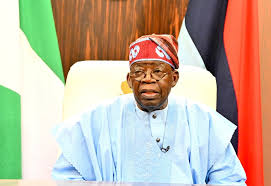
President Bola Tinubu on Tuesday said he would consult with the 36 state governors and members of the Organised Private Sector before arriving at the figure that will be submitted to the National Assembly in the form of an Executive Bill as the new national minimum wage.
The Minister of Information and National Orientation, Mohammed Idris disclosed this while briefing State House correspondents at the end of the Federal Executive Council (FEC) meeting presided over by President Tinubu at the Council Chamber, Presidential Villa, Abuja.
The Minister said that a memo on the report of the new minimum wage was presented to the council but it was stepped down because it is a national matter that has to do with the governors and the organized private sector.
The Minister said that it is after wider consultations with the relevant stakeholders that the President with informed knowledge would then forward a figure that will be the national minimum wage.
Recall that at the end of the Tripartite Committee meeting on the new national minimum wage, the government team and the organized private sector offered N62,000 from the current N30,000 but the Organised Labour comprising the Nigeria Labour Congress, NLC, and the Trade Union Congress, TUC, demanded N250,000 living wage.
The decision of the President to consult the relevant stakeholders is coming on the heels of the statement by the President of the NLC, Comrade Joe Ajaero, where he said that the organized labour had expected the President to reach out to the members of the Tripartite Committee to harmonise the figure.
Ajaero had hinged his position on the fact that there was a stalemate at the end of the Tripartite Committee meeting.
But briefing State House correspondents, the Minister of Information and National Orientation, Mohammed Idris said, “I want to inform Nigerians here that the Federal Executive Council deliberated on that (report of the Tripartite Committee on New National Minimum Wage) and the decision is that because the new national minimum wage is not just that of the federal government, it is an issue that involves the federal government, the state governments, local governments, and the Organised Private Sector and of course, including the organized Labour.
“That memo was stepped down to enable Mr. President to consult further, especially with the state governors and the Organised Private Sector, before he makes a presentation to the National Assembly before an executive bill is presented to the National Assembly.
“So I want to state that on the new national minimum wage, Mr. President is going to consult further so that he can have an informed position because the new national minimum wage, as I said, is not just an issue of the Federal Government.
“It affects the state governments, it affects the local governments, it also affects the Organised Private Sector, and that is why it is called national minimum wage. It’s not just an affair of the Federal Government.
“So, Mr. President has studied the report and he’s going to consult wider before a final submission is being made to the National Assembly.”
*Start saving money to pay arrears, Labour alerts states
President of the Trade Union Congress, TUC, Comrade Festus Osifo, told the 36 state governors to start saving funds that would be used to pay arrears of the new minimum wage when it comes into force.
Osifo gave the advice when he received some executive members of the Kogi State government led by the former Chairman of the Nigeria Labour Congress (NLC) comrade and Special Adviser to the Governor on Labour Matters, Onu Edoka at the TUC headquarters, Abuja.
While responding to the statement by Comrade Edoka on his statement that the Kogi State government is currently paying the N30,000 minimum wage, Osifo said that what should bother the state now is how to pay the new minimum wage when it is finally settled.
He said, “On the issue of the minimum wage what we wish to also say is that we are not at this moment even dwelling on the N30,000 again because we know that by the grace of God, before the end of July, the maximum early August, the new minimum wage act should be there.
“It should have moved from the stage of submission to the National Assembly to the stage of bill and to be assented to by the President.
“What we are working on from both labour centres is that before the end of July, we should have a new minimum wage that must have passed through the processes, that must have been assented to by the President so that the plight of the workers will improve much more so that the current economic challenges that we are facing as a country will be improved upon and an average worker will be able to go to market and buy one or two things to take care of his or her family because of this skyrocketing inflation that we have today in our country
“So I wish to also appeal to you all that when you go back, please let’s keep reminding His Excellency because I was listening to a state, I think Nasarawa State, that said they have started setting aside some money to meet the new obligations when the new minimum wage is passed.
“So I wish to also appeal that in Kogi, let that be the top priority amidst this scarcity of income, amidst this scarcity of revenue. Let the state pay the new minimum wage when it is implemented and also manage the consequential adjustment so that at the end of the day, the workers will be better off for it.
“I’m also happy when you said the workers’ salaries are paid promptly. It’s quite good because if you do that, you are even reinforcing and improving the GDP of your state. After all, when you pay a worker, he is going to go to the shop and buy foodstuff.
“He is going to go to that industry, to that company, and buy their products. But when a worker is not paid, then he will not be able to buy those products from those companies, and at the end of the day, those companies will store their products in the warehouses because nobody can afford them because there is no money to buy them.
“So I encourage you to continue in that regard, to pay salary promptly and also to implement the new minimum wage.
“Then I wish to also use this opportunity to speak to all other states as well that they should be putting plans in place to implement the new minimum wage because in Labour today, we are ready because when the new minimum wage act is passed, we are going to follow it state by state to ensure that it is implemented.
“So let the workers have a sigh of relief and we have the trust and the belief that with the high labour representation in Kogi state government today, we believe that Kogi state government will do the needful.
“We also call on the President, the National Assembly, to let everybody expedite the process of passing the new national minimum wage.
“As you are aware, labour we have submitted N250,000, the government, and organized private sector N62,000. Let both parties, let all parties come together, resolve, and have a common front so that the President will be able to send the bill to the National Assembly, and at the end of the day, we will have a new national minimum wage. This is key, this is a topic that is germane for all Labour unions today in Nigeria.”
Speaking earlier, Edoka said that the Kogi State government has currently cleared a hundred per cent backlog of salaries as well as pensions owed to the state workers and pensioners as part of Governor Ahmed Usman Ododo’s determination and efforts to enthroning a new era where workers’ welfare is prioritised.
He said that the State government under Ododo has taken the issue of workers’ welfare as a priority and is equally doing everything within its powers to put in place measures to ensure that the state worker’s interests are promoted and protected.
He said, “The Governor of Kogi State, Usman Ododo is already carrying out some labour-friendly interventions in the interest of workers State workers. As of today, there is prompt payment of salaries to the Kogi workers as early as the 24th of the month.”
He added, “Payment of 100 per cent to pensioners in both the State and Local Government levels are prompt.”
He also listed that the State governor currently ensures the; “Implementation of a 35 per cent hazard allowance to all categories of State Health Workers. Payment of a monthly Health Insurance Scheme for all State Workers to the Kogi State Health Insurance Agency as a take-off for the workforce. Harmonised CONMESS salary structure for veterinary doctors in Kogi State, and high improved salaries of Local Government Workers to 90 per cent.”
*Any amount above N62,000 will create crisis, job loss — NECA
The Director-General of the Nigeria Employers Consultative Association, NECA, Adewale Oyerinde, has warned that any approval of a new national minimum wage that is above N62,000 the government and Organised Private Sector agreed upon, will cause crisis and lead to job losses.
The NECA DG stated this while speaking to journalists on the sidelines of the Third Nigeria Employers Summit on “Economic Renaissance Harnessing Government Reforms and Private Sector Agility,” in Abuja yesterday.
He said it was painful to accept the N62,000 and that it was based on a certain premise.
Asked whether he was satisfied with the waiting game on the national minimum wage, he said, “There’s no waiting game and I think we have to put all this in context. And all this misinformation, I think we are just creating unnecessary tension. There’s a process and we don’t seem to be on the same page. There’s a process of the Tripartite Committee sitting to recommend the national minimum wage.
“And that process, once the minimum wage, the figures are recommended, we pass it to the president, which we have done. And the president is the sovereign. They have to pick the recommendation of the committee, do I accept it or I don’t accept it?
“The President remains the sovereign. That position is not contested. The employers cannot contest it.
“Labour cannot contest it. It is the sovereign that should pick a figure, and then pass it to the National Assembly to go through a legislative process. That process, we can only advocate for it to be fast-tracked.
“We cannot put a gun in somebody’s head and say, look, you have to do this, it’s tomorrow, you have to do it. It doesn’t work like that. Now, for us, and we have said it and we’ll say it again openly, the 62,000 that the employers came up to, the 62,000 was based on some premise.
“It was painful conceding that we did. And it was based on a certain premise. And one of those, or two of those, or three of those is the new electricity tariff, the government has to suspend it.
“That is one. That there should be an embargo on the introduction of new tax. And this speaks to the National Assembly as we speak. I hear the representative of the speaker saying he’s going to declare open a public hearing on CSR.
“It’s not a part of the issues we had. The House wants to legislate on CSR to make it compulsory. It is corporate social responsibility for God’s sake.
“It’s the prerogative of the business to say this is what I want to do. So you don’t legislate it. It’s another tax which we are also going to contest.
“So those are part of the conditions that we gave for us to agree on the N62,000 minimum wage. Now, if it goes above N62,000, you have created two or three different dynamics. One, you have set the tone for non-compliance.
“That is one. Because if I cannot pay, I just can’t pay. Now, you have created a problem for the judiciary. All employees that are not satisfied, have the right, according to the Act, to go to the National Industrial Court.
“Now, imagine 1,000, 2,000 employees, 5,000 employees across the country going to the National Industrial Court. How long will the Industrial Court take to dispense almost 5,000 cases? That is one.
“Two, you have also set in the process another dangerous pattern. We already have businesses leaving now. All of us are not interrogated, where are our brothers and sisters working in those companies? Where are they? So, a figure beyond what the private sector can pay may also lead to loss of jobs.
“Now, we complain about insecurity. So, we have to put all those together. And a fundamental, lastly for me, on this minimum wage issue, a fundamental element in setting up a national minimum wage that you cannot take away is the ability to pay. If you take away the ability to pay, then you have just set a crisis stage.”