By Nathaniel Zacchaeus, Abuja
The National Assembly has faulted the poor implementation of the 2024 national budget.
The nation’s apex legislative institution also expressed serious concern over the huge discrepancies in Recurrent Expenditures relative to Capital Expenditures.
It condemned the low level of fund releases for capital projects for Ministries, Departments, and Agencies (MDAs) in last year’s fiscal document, which is still being implemented.
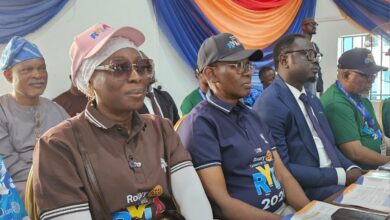
The chairmen of the Senate and House of Representatives Committees on Appropriation, Senator Solomon Adeola and the Honourable Abubakar Birchi, made the observations at a joint session of the panels.
They held a special session with the Presidential Economic Team to consider the 2025 Appropriation Bill.
Both Adeola and Birchi agreed that the economic team should act urgently to release more funds for capital projects.
They noted that doing so remained a major way for people to feel the impact of government away from recurrent expenditures, which affect only a negligible part of the population.
A statement by Chief Kayode Odunaro, the Media Adviser to the Senate Committee Chairman, explained that the National Assembly’s position followed the report of the economic team led by Mr Wale Edun, the Minister of Finance and Coordinating Minister of the Economy.
According to the statement, the report revealed that the 2024 budget performance has been 43 percent overall so far.
It stated that the recurrent expenditures achieved 100% performance, while the capital component of the budget only achieved 25% performance.
The statement explained that Adeola remained an advocate of drastically reducing the ratio of recurrent expenditures to capital in the budget from the present level of about 80 percent for recurrent and 20 percent for capital to at least 60 percent to 40 percent.
He stressed that the capital projects in the budget and their implementation are a significant spur for economic growth and directly impact the people.
Adeola said, “Capital releases to MDAs are the major drivers of economic activities within the nation. The non-release of funds for capital projects is a major issue in the performance of the 2024 budget, and funds should be released to prevent abandoned projects and ensure the success of the President’s Renewed Hope Agenda.”
Adeola added that it would not be good news for MDAs to come for their 2025 budget defence session with a record of non-performance of their core mandates as contained in the capital budget.
He added that the Finance Ministry should make an effort to release funds for capital projects during the period when the 2024 budget is still running.
Concurring with his counterpart in the Senate, Birchi called for more releases for capital projects of MDAs, such as schools, roads, dams, hospitals, and other social infrastructure.
He said items such as debt repayment can be restructured in the interim.
Birchi said, “Most of the recurrent expenditures that take up a huge part of our budget and are implemented 100 percent will only directly affect about 10 percent of our population.
“The capital projects of the MDAs, on the other hand, will directly affect the majority of over 200 million Nigerians in areas of social infrastructures provisions like hospitals, schools, roads, and energy.”
*Edun confirms pending warrants for capital projects
The Minister of Finance, Wale Edun, confirmed they have outstanding capital releases awaiting funding.
He regrets, however, that the country cannot go back to the old ways of spending money that is not there to avoid backlash, as happened recently in France and Germany.
He added that there are warrants awaiting payment for capital projects.
*Bagudu defends huge recurrent expenditure
Also shedding light on the issue, the Minister of Budget and Planning, Alhaji Abubakar Bagudu, defended the huge recurrent expenditures in the nation’s budget.
He said, “It is a function of our level of development and some of the societal challenges we are facing now.”
He added that some of the recurrent goes into the military’s campaign against insecurity, which is yielding results that spur agricultural production and economic activities.
The Director General of the Budget Office, Dr Tanimu Yakubu, also attributed the enormous recurrent expenditure to past legacies inherited by President Bola Tinubu.
He cited unpaid pensions and gratuities, which the administration had successfully addressed.
He assured Nigerians that the National Assembly may need to pass legislation to limit the size of recurrent expenditures in the budget in the future.
The meeting, which included the Minister of State for Finance, Dr Doris Uzoka-Anite, and the permanent secretaries of the Ministries of Finance and Ministry of Budget and National Planning, also deliberated on waivers and tax holidays, which seem to reduce government revenues.