By Clement Adeyi, David Lawani, Ben Adoga, John Danjuma, Anthony Otaru, Cajetan Mmuta, David Eze, and Kenny Folowosele
The remuneration of the National Assembly lawmakers has once again come under scrutiny, igniting widespread debate by Nigerians.
Despite the country’s ongoing struggle with significant socio-economic challenges as a developing nation, its legislators remain among the highest-paid in the world.
This stark contrast has drawn sharp criticism, as it may have further deepened the divide between the political elite and the average citizen.
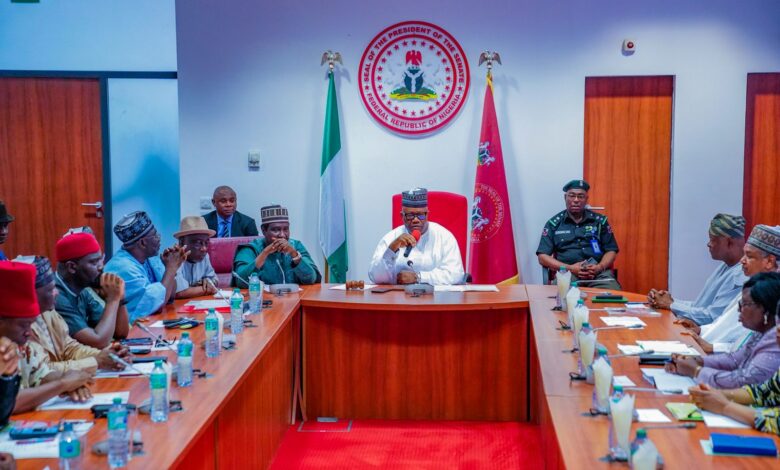
Nigeria’s National Assembly, which operates a bicameral system, comprises 469 members of the House of Representatives and 109 Senators. These lawmakers are charged with the critical responsibilities of creating laws, representing their constituencies, and conducting oversight functions.
A recent misleading claim by the Chairman of the Revenue Mobilisation Allocation and Fiscal Commission, Mohammed Shehu, that each Nigerian senator earns N1m as monthly salary when a senator’s actual take-home pay is N21m as confirmed by Senator Sumaila Kawu and corroborated by former Senator Shehu Sani, is one of the claims that has sparked controversy.
A former president, Chief Olusegun Obasanjo, had recently fired the first salvo when he said lawmakers were helping themselves by fixing their salaries to a whooping N13.5m. Since then, the controversy has generated different reactions.
The ongoing secrecy surrounding lawmakers’ earnings has only intensified public outrage, fuelling calls for greater transparency and accountability.
*Obi tackles Senators for taking N21m
A presidential candidate of the Labour Party (LP) in the 2023 elections, Mr Peter Obi, lamented that while it would take a doctorate holder about 10 years to earn N21m, a senator who may probably have just a secondary school certificate earns the amount monthly.
In his X handle over the weekend, Obi said, “A recent news story attributed to the Executive Secretary of the National Universities Commission (NUC) regarding the decline in the standards of our university education has highlighted the significant challenges facing our education system.
“According to the Executive Secretary, the situation requires the production of more PhD holders to address these issues. However, the Executive Secretary’s solution overlooks several obstacles, such as the unnecessarily prolonged time it takes to obtain a PhD in Nigeria and the frustrating disparity between wages and the level of academic attainment in the country.
“Though deeply troubling, I wonder how he expects an increase in PhD holders when it takes a minimum of 10 years of dedicated study after secondary school to earn a PhD.
“If fortunate, one might be employed as a Lecturer Grade 2 with a monthly salary of around N150,000, often paid irregularly, totalling N1.8m annually.
“In stark contrast, our legislators, whose required educational qualification is merely a secondary school certificate, receive a monthly salary of N21m, which is more than 10 years salary of a PhD holder.
“This disparity is the root of the problem. Additionally, legislators are provided with SUVs worth N160m from the public purse. For a PhD holder to afford such a vehicle, it would take over 85 years of saving every kobo earned.”
The former governor of Anambra State explained that the country has to move away from consumption to production by investing in education and innovation.
He added that a system that celebrates knowledge and expertise rather than political positions is what is needed to restore the country’s former prestige.
*Nigerians demand official publication of salaries- Ekpo, UniUyo don
A professor in the Department of Economics at the University of Uyo, in Akwa Ibom State, Akpan Ekpo, told ThisNigeria that the approved N1.06m monthly salary and allowances for Senators by RMAFC is what is officially recognised.
He charged the Clark of the National Assembly to come out openly to tell Nigerians what they received.
He, however, warned, “They must be transparent because we elected them, they are our servants, Let them come to tell us of a truth how much they collect as house allowances, maintenance allowances, car allowances, hardship allowances.
“I am calling on them to go ahead and publish what they earn, and I think the main thing is their allowances. Let the Clark of the House publish all their entitlements at least, for transparency and accountability sake.
“From there, we can now look at the whole thing if they march the current economic challenges we’re facing, even former president Obasanjo not too long carpets them over the wrongful fixing of salaries and allowances at the detriment of the economy and the nation.”
According to him, there are consequences from this because it shows that the government is not transparent to the people, and once they are not transparent, they are not accountable, then, they are not fit to lead, they need to know that they should be transparent to Nigerians they are lead.
He noted that the solution lies with the people of Nigeria who are supposed to come out in numbers to exercise their voting power against these political brigands in subsequent elections and cast their votes for more competent people that has integrity and fear of God in their veins.
*Salary, allowances abnormal under present economic reality- Tella
Also, an emeritus professor of Economics and ex-vice chancellor of Crescent University, Abeokuta, Sheriffdeen Tella, described the N13m or N21m salary and allowances claims as abnormal in a country that is enmeshed in poverty, lark, and wants.
He said, “It is that part of the funds used to destabilise the forex market, Each legislator cannot spend more than N15m monthly, so they used the excess to keep their wealth in forex which is the most profitable for now’’.
‘’They have to be compelled to confirm with the recommendations of the RMAFC committee to ensure their salaries are in tandem with national wages and salaries’’
*It’s part of codified legislative-executive criminalities– Anambra LP chieftain, Okoli-Akirika
Similarly, a senior lawyer and chieftain of the Labour Party (LP) in Anambra State, John Okoli-Akirika, said there is no reason why the salaries and allowances of public office holders should be a matter of conjecture, guess, or argument, adding that it ought to be statutory.
He noted that even if it’s statutory, why should there be an argument over it?
“It is either members of the National Assembly are not saying the truth or that the Revenue Mobilization, Allocation and Fiscal Commission (RMAFC) is also not telling the truth,” he added.
Okoli-Akirika advocated that there must be an applicable law that regulates the salaries and emoluments of members of the National Assembly and find out the truth because the law says members of the National Assembly should be earning a particular amount that is the position of the law.
According to the constitutional lawyer, “There should be an amendment of the law to reflect the present economic reality but since the law is silent and members of the National Assembly are paying themselves the law will now come in to fix their salaries and emoluments taking into consideration the present economic realities.”
Also, the Chairman Board of Trustees (BoT) of the International Society for Civil Liberties & the Rule of Law (InterSociety), Emeka Umeagbalasi, frowned at the situation where there persists a codified criminal conspiracy among the legislative and executive arms of government in Nigeria.
He described as unfortunate the state of decline in the country, urging lawyers to take the matter up legally.
“Nigeria is in a state of decline. Lawyers who are activists should come together as a group and file a suit over a public interest matter under the Freedom of Information Act and request from the Salaries and Wages Commission that fix the remuneration of all public office holders to make public the salary because they are under statutory obligation to disclose the true state of their remunerations.”
*There should be no secret about lawmakers’ salaries, allowances- Analysts
In the same vein, the Founder and President of Project Victory Call Initiative, an NGO also known as PVC Naija, Dr Bolaji Akinyemi, berated lawmakers for fixing their salaries.
He said their action was an insult to the sensibilities of their constituents who elected them to represent them.
Akinyemi argued that in a normal clime, it was an employer who hires that reserves the right to fix the salary of an employer hired and can also fire.
“Why then should people who are hired fix their salaries instead of those who hired them? Everywhere in the world, those who hire, fix the pay, and fire when the need arises. But in our own country, Nigeria, the reverse is the case.
“Those we hired (lawmakers) are fixing jumbo salaries for themselves, shrinking the purchasing power of the people who hired them, and have indirectly fired all of us.”
To correct what he described as an anomaly and misuse of power, he said, “Restructuring Nigeria is a must. Nigerians need to be given all the details of the salaries and allowances of the people they elected to represent them.
“Law-making should be a part-time job with emoluments declared and communicated. It is either they take the job or the salary if it’s okay by them, or walk away if they feel it is not.”
Also, the Head of the Mass Communication Department at Babcock University, Kolade Ajilore, said the controversy was needless because there were more fundamentally critical issues than the remuneration and allowances of Assembly members.
Ajilore, however, doubted the credibility of the insinuations of the salary and allowances because the sources were not confirmed.
“I don’t think there’s any modicum of truth in the allegation, given the doubtful credibility of the source of the allegation,” he said.
He added that lawmakers’ salaries and allowances were not supposed to be esoteric issues in a civilised society where much data were available and accessible.
“In a society where public data, save for those bordering on national security, are generally accessible, information on lawmakers’ salary and allowances should not be shrouded in secrecy. It’s causing this rancour basically because of the situation in the country and the perceived insensitivity of the political elites,” Ajilore said.
*CUPP scribe faults Senate for alleged corruption, lacking in transparency
Meanwhile, the National Secretary of the Coalition of United Political Parties (CUPP), Chief Peter Ameh, has urged the Senate leadership to provide clear information regarding the salaries of senators, including monthly, quarterly, and yearly payments.
Ameh, who is also a former chairman of the Inter-Party Advisory Council (IPAC), also urged the senators to disclose any hidden severance packages.
He said, “Recent discrepancies in salary disclosures, particularly the difference between Senator Abdulrahman Sumaila’s claimed monthly earning of N21m and the RMAFC Chairman’s figure of N1m, raise serious concerns about transparency within the Nigerian Senate.
“This lack of clarity undermines public trust and suggests deep-rooted corruption. Large salary disparities between senators and the average citizen foster economic inequality, erode social cohesion and contribute to corruption. It also devalues lower-income work and limits social mobility.”
To improve the situation, he charged senators to commit to integrity and transparency, through a consistent compensation structure aligned with economic realities.
He also urged the lawmakers to make salary information publicly available, consider an independent audit of compensation, and create strong accountability measures.
*Discrepancies worrisome, Oko, Ebonyi LP chieftain, others
A former governorship candidate of the LP in Ebonyi State, Oko Eze Splendour, said the discrepancies surrounding the emoluments of senators were worrisome.
“As I speak, no Nigerian is sure of what our Senators take home every month. This is sad. With all these controversies, and differences in the exact amount our Senators take home as their salaries, one will be wondering about the duties of the National Assembly Commission.
“This is because RMAFC has confirmed that the commission must provide details of the running costs enjoyed by the Senators. With these discrepancies in the salaries, I have already aligned myself completely with the position of Chief Olusegun Obasanjo the former President of Nigeria to say that our Senators are the ones who decide how much is their monthly salary, they are equally the only people who know the amount in Nigeria. This is horrible!”
Another politician from Ebonyi State, Innocent Igiri, urged the Chairman of RMAFC, Muhammed Bello Shehu to urgently step down from his position to stop the shameful happenings at the commission and save Nigeria from further mockery by neighbouring countries.
“The primary purpose of RMAFC is to provide true data as regards allocations of our resources to people and places.
“However, it is very shameful to see the chairman of the commission recently saying that the commission has no power to enforce its duty; meaning that they are only empowered to tell Nigerians whatever the leadership of the National Assembly or any other ruling political leaders tells them to say.
“So, what is the true job of this commission if I may ask? The commission and its chairman/members are part of Nigeria’s many problems. When common data are consistently being manipulated and lies are being dished as truth to the public just to fool the common man.
“In a common sense; how can a custodian of such National information like Mr. Muhammed Sehu make such a shameful defence of what Senator Shehu Sani revealed to Nigerians? What does he stand to lose if he tells Nigerians the truth?”
A veteran legislative aide, Joseph Jatau, it is unfortunate that at a time when Nigeria should engage in serious soul-searching to come out of the woods, they are discussing the salaries of senators and Rep members.
“For me, this is a distraction, we should have gone past that long ago, if we had good leaders. Though the issue is constitutional, given the state of the Nigerian nation, by now the president would have put in motion for a fast review of the construction.
“A review to come up with a unicameral federal legislature, part-time federal legislators who should not be on salaries, but minimal allowances for logistics with well-paid professional aides under a robust National Assembly Service Commission. With this, the issue of how much a federal lawmaker is paid would have been put to rest. “
As a civil society activist, Andrew Odey, who is privileged to have engaged with the National Assembly on issues in the past, said, “I know that members of both chambers of the National Assembly earn all manner of remunerations and allowances.
“Nigerians are not privy to these payments. They also get kickbacks from heads of Ministries, Departments, and Agencies under different names.
“The most contentious issue is that these allowances are fixed by lawmakers and no one questions them. No senator earns less than N20m monthly, to my knowledge. That also goes for members of the House of Representatives who earn nothing less than N15m.
“There are also special arrangements from the Villa and then kickbacks from constituency projects executed by various agencies on their behalf.
“Their take home cannot be transparent as there are several means and ways to gather into their pockets. Nobody is ready to address it, the situation is bad and sad that Nigerians are told to cut down while they earn fabulous amounts,” he disclosed.
A former governorship candidate of the African Democratic Congress (ADC) in the 2023 election in Kwara State, Issa Manzuma, described the N21m take home as not only controversial but as another aspect of the country’s high cost of governance.
Manzuma, who was also the former branch Chairman of the Nigerian Bar Association (NBA) in the state said the current situation calls for a holistic appraisal of the cost of governance.
Also speaking exclusively, the Executive Director of the Nigerian Workforce Strategy and Enlightenment Centre (NIWOSEC), Dr David Ehindero, expressed dismay over the shroud of secrecy surrounding the salaries and allowances of the senators.
Ehindero, a foremost unionist, said, “The fact that different figures are being bandied about- N21m, N1m, and N13m – is a clear indication of a lack of transparency and accountability.
“This lack of clarity suggests that our lawmakers may be hiding something, and it erodes the trust and confidence of the Nigerian people in their leaders. The spirit of service, which should be the driving force behind public office, has been grossly compromised.”
On its part, the Director General, Kwara ALGON, Prince ‘Yemi Adurotoye berated the disparity between the lower chamber and upper chamber’s pay, advocating that it must be well-managed.
“The flamboyant lifestyle of lawmakers is not helping matters. They live big while their people are experiencing poverty in practical terms. How can they convince anyone that they are not in charge of state funds when their extravagant lifestyle is more comparable to that of governors?” Adurotoye said.
A legal practitioner and cleric, Paul Omoluabi, said, “Records don’t lie. The relevant institution should make available the exact figures. What I feel is that the Revenue Mobilisation Allocation and Fiscal Commission has all the records for whatever a legislator earns whether it is allowances, monthly or quarterly.”
Another public affairs commentator, Ayeni Douglas noted that the controversy has been on since the birth of this democracy in 1999, saying those who are in the know should not hide under whatever guise.
According to him, “These salaries should be re-examined so that we will not just be paying this amount for less quality legislation.”
*Make your take-home pay public, SERAP tasks Akpabio, Abbas
Meanwhile, the Socio-Economic Rights and Accountability Project (SERAP) yesterday urged the Senate President, Godswill Akpabio, and Speaker of the House of Representatives, Tajudeen Abbas to “promptly disclose the exact amount of the monthly running costs of millions of naira currently being paid to and received by members of the National Assembly and the spending details of any such running costs.”
SERAP also urged them to “promptly end the alleged practice by the National Assembly of fixing its salaries, allowances and running costs, in conformity with the Nigerian Constitution 1999 [as amended], and the country’s international obligations.”
The group urged them “to end the alleged practice of paying running costs into the personal accounts of lawmakers, and to refer the alleged misuse or mismanagement of the running costs to appropriate anticorruption agencies for investigation and prosecution where there is relevant admissible evidence.”
SERAP called on them to “promptly disclose the total amount of running costs that have so far been paid to and received by the lawmakers and to ensure the return of any misused or mismanaged public funds.”
In the letter dated 17 August 2024 and signed by SERAP deputy director Kolawole Oluwadare, the organisation said, “We are concerned about the practice by the lawmakers of fixing their salaries, allowances and running costs, and the opacity and in the spending of millions of naira in running costs by lawmakers.
“The constitutional oath of office of lawmakers requires them to ensure transparency and accountability in the exact amounts of salaries, allowances, and running costs they receive.
“The provisions of paragraph N, section 32(d) of the Third Schedule to the Nigerian Constitution make it unlawful for the National Assembly to fix its salaries, allowances, and running costs.
“The allegations that members of the National Assembly are fixing their salaries, allowances, and running costs are entirely inconsistent and incompatible with the constitutional oath of office and the object and purpose of the UN Convention against Corruption to which Nigeria is a state party.
“We would be grateful if the recommended measures are taken within seven days of the receipt and/or publication of this letter. If we have not heard from you by then, SERAP shall take all appropriate legal actions to compel you and other members of the National Assembly to comply with our request in the public interest.
“Accounting for and returning any misused or mismanaged running costs collected by members of the National Assembly would build trust in democratic institutions and strengthen the rule of law.”