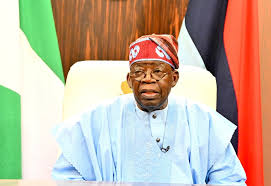
Civil Society Organisations have appealed to President Bola Tinubu to settle the rift between Nigerian National Petroleum Company Limited (NNPC Ltd.) and domestic refineries led by Dangote Refinery over the naira-for-crude policy.
They warned that if the policy was discontinued and Dangote and other domestic refineries were forced to assess crude with the dollar, Nigerians and petroleum users would face hard times ahead as the prices of Petroleum Motor Spirit (PMS), Jet A1, and diesel would naturally escalate.
Recall that the naira-for-crude policy was introduced on October 1, 2024, to save the country millions of dollars in petroleum product imports, reduce PMS pump prices, and ensure product availability.
However, NNPC Ltd announced the end of its naira-for-crude deal with Dangote Refinery and other local refineries, saying the six-month agreement, which began in October 2023, expired on April 1, 2025.
The company’s reversal to selling crude oil in dollars has sparked concerns about the potential economic fallout, including inflation and rising fuel prices.
The Lead Director of the Centre for Social Justice (CSJ), Eze Onyekpere, warned in an interview with ThisNigeria over the weekend that some saboteurs in the NNPCL were working against the country’s interests.
He said, “We can now see clearly that the NNPCL and their collaborators do not have the interest of Nigerians at heart, but only for their interest, sadly.
“What is happening in that NNPCL is that we have saboteurs and scandalous human beings who want Nigerians not to benefit from their God-given crude. These people are bereft of simple economic knowledge, so they need to know the importance of encouraging local industries to help the people.
“Dangote Refinery has come to bridge the gaps of fuel importation. It should be encouraged so that more industrialists from Nigeria and foreigners can also take advantage of it to invest in the country, create jobs for the jobless, and increase the nation’s foreign reserves.
“If this situation is not resolved, Dangote Refinery would be forced to source crude via importation in dollars, forcing the organization to sell fuel and related products at a higher price for Nigerians. This will further increase the cost of goods and services and make life more difficult for the people because it must break even and make its profit to remain in business,” Onyekpere said.
Also speaking about the dollar’s impact on crude policy, Emeka Umeagbalasi, Chairman of the Board of Trustees (BoT), International Society for Civil Liberties and Rule of Law (Intersociety), accused the Federal Government of being unresponsive and unwilling to find a concrete measure for its oil sector administration, operations, and reforms.
He lamented that the government’s over-reliance on Dangote Refinery cannot solve the problem Nigerians face in the oil sector, wondering why Nigeria, as an oil-producing country, cannot sell its oil in local currency so that the citizens can buy the petroleum products at cheaper prices
“Intersociety has not been a party to any government that relies on a smokescreen or fire brigade approach over the years. We advocate and speak on issues concerning serious-minded government and governance. As far as we are concerned, the government has not arrived at the downstream or upstream oil sector issues.
“The government of Nigeria is supposed to be serious and find a concrete measure in going about her oil sector administration, operations and reforms; and one of such serious measures the government is expected to adopt is to be circumspect and to go down memory lane in trying to solve the problem involving the oil sector. Nigeria is one of the world’s wealthiest countries with large crude reserves, but the government does not meet that expectation.
“Dangote is a private entrepreneur, and there is no way Nigerians can rely on whatever services Dangote is giving to believe that will solve our problem. The only good thing the Dangote refinery can bring about is a kind of competition, just like what we have in the communication sector, but it is not the same thing in the oil sector.
“We still operate absolute state monopoly; it’s like when Nigeria was in charge of NITEL Telecommunications. When NITEL was unbundled, Nigeria enjoyed healthy competition amongst other network providers.
“If they are not ready to look into the state of affairs of the country’s refineries with up to four of five refineries, let them bring favourable investors and hands off the oil sector regarding local consumption.
“I don’t see why Nigeria as an oil-producing country cannot sell its oil in local currency so that the citizens can buy the petroleum products at cheaper prices.”
Prior to the Naira-for-crude policy, the pump price of PMS hovered between N1 000 and N1200. This was blamed on President Bola Tinubu’s removal of subsidies at his inauguration on May 29, 2023, and the oil marketers’ inability to access forex (US dollar), which traded at N1600/$ to N1667/$ at the official market in September 2024.
After the Federal Government introduced its naira-for-crude policy, the sector witnessed price stability, with the pump price of PMS falling from N1150 in January 2025 to as low as N880 in March 2025.
But with the expiration of the policy, the pump price of PMS have jumped to around N925, N935, N960, and N980 and over N1,200 in Lagos, Abuja and other parts of the country.