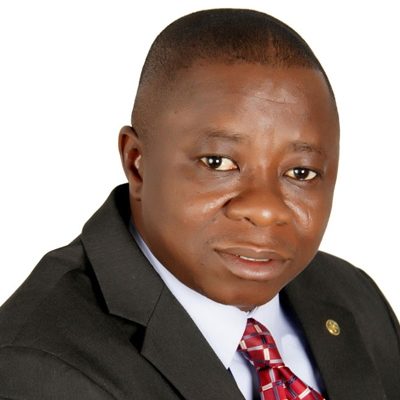
Honourable Samson Osagie, former minority whip of the 7th National Assembly, speaks to Demola Abimboye and Ben Ogbemudia on the problems militating against constitution review and other issues. Excerpts:
As a former legislator at state and federal levels, how do you assess Nigeria at 60?
At 60, Nigeria has achieved so much. First, it has managed to remain one indivisible entity. We have managed to remain a democratic nation for almost half of those number of years. The sad aspect of it is that we have not had time to actually democratise. If Nigeria had been under democracy for 50 out of 60 years perhaps we would have made a much more tremendous impact and governance in the lives of the people.
Compare Nigeria with the most advanced country of the world, and look at when they started the journey of nationhood, you will realise that in terms of development, Nigeria is still far behind.
But, again we must devise our indigenous governance strategy that aligns with international best practices to suit our local peculiarities. One of those things is that Nigeria’s leaders must be fair, they must be fair to all segments of the nation.
Nigeria has grown enough to have cultural re-evaluation in order to retool our nation and as a people. We are too driven by westernization such that we are leaving behind those values that our forefathers cherished.
These factors are lacking. Every segment of the country seems to be pursuing an individual agenda.
When you go to America everyone tells you he is American. In Nigeria, what you hear is that I am an Igbo, Hausa, Benin, etc. Nigerians won’t tell you they are Nigerians. Before we attain three scores and ten, there must be substantial and fundamental steps taken to tinker with her federal system which we pretend to be practising but is actually a unitary arrangement.
You talked of tinkering with federalism. Is this about restructuring and state control of resources?
There is a lot of sense and advantages in states controlling resources and developing at their own pace. Today, you see that the fight to be at the federal government is so intense that some parts of the country feel that it is their entitlement because of their numbers. That shouldn’t be. For example, what is actually federal? The land on which developments are made actually goes to states. The people are citizens of states, indigenes of state.
So, what is actually federal?
The challenges are in the states. The exclusive legislative list contains 68 items upon which only the federal government has the exclusive right to legislate or implement policies on them. And, when there is a conflict the federal supersedes.
The concurrent list is also part of the exclusive list. Because if the federal decides to interfere, it takes precedence.
Why should that be? Why is the central government not concerned about issues of currency, military, customs, immigration, international relations and diplomacy? Why will the federal government be sinking boreholes in the remotest part of the Niger Delta? Or building three classrooms in a community when you have states and local governments?
And, we are told that the essence of creating a local government system is to bring government closer to the people. We need leaders as a nation to agree that we can develop together; neither the president nor the National Assembly can do it alone.
Why is it so difficult to have a new constitution?
Because we have not agreed. Even the efforts we made in the 7th Assembly where we tinkered with the constitution, up to the extent of removing some items from the exclusive list to the concurrent was rejected by the president then. He refused to sign them into law.
On the floor of the National Assembly, those issues are very testy and sensational when you bring them up because there is fear that if you devolve too much power to the components units, it may be a weakening of the centre and empowerment of the component units. And, that may lead to secession.
The question I ask myself is: Can’t we also agree to separate? If a man and wife keep quarrelling and they have one injunction that they cannot separate, can’t they agree to do what will stop them from quarrelling?
If Nigerian leaders were to agree on a common solution to our lopsided arrangement where the federal government sits as an octopus, dispensing favours to states from federal allocations from resources that come from the states and cannot take us anywhere then we have a problem.
For example, Mr. President empowers the Nigeria Financial Intelligence Unit, NFIU, to monitor financial allocation to the local government councils with a view to making sure that revenues that go to the councils get to them directly. The governors kicked. Why will a governor who sits over the affairs of a state comprising various local governments now kick against autonomy for a local government council? When as a matter of fact he can take credit for some achievements of each local government in his state!
All he needs to do is set a template that local governments should a number of roads in a particular year while the governor does his. All year round, he will be commissioning projects for the benefits of the people. If governors can kick against legislative autonomy, how are they ready for the right things to be done to move our country forward? You alluded to the president’s refusal to sign amendments proposed to the constitution by the 7th Assembly.
Couldn’t the legislators have used veto power?
The veto power of the National Assembly is not an easy thing to exercise. When the president vetoes a bill, the law says if in the opinion of the National Assembly the reasons he offers are not cogent, then they can choose by two-thirds majority to override the decision. But, I tell you if the entire National Assembly were to agree on a certain bill to be passed into law, what the president does is to lobby against it among the legislators.
So you can hardly exercise the two-third majority rule. It was only the bill for the creation of the Niger Delta Development Commission, NDDC, that scaled through the hurdle. President Olusegun Obasanjo refused to sign the bill into law. But the National Assembly passed it by a two-third majority. But now, the two-third majority is difficult to muster.
The case in the 7th Assembly was an exercise that was carried out in the 360 constituencies and 109 Senatorial districts across the country. Consultations were made leading to the enactment of those constitutional amendments. That was the most robust that has ever been done. But President Jonathan vetoed it for mundane reasons. I wept because I was part of that process. I knew what went in and that it was the most transparent constitutional review exercise that was ever conducted because every Senator or Representative went to his constituency to hold town hall meetings to seek inputs to the process.
Many of the things Nigerians are crying about now – local government autonomy, state police, devolution of powers, amendment of revenue formula, the role of traditional institutions, the independence of the judiciary and so many areas were reviewed but the president refused to pass it into law.
The current assembly is doing a review. How far can it go?
The 8th Assembly passed some laws and reviews and the president has accented to some. That was possible because NASS changed some strategies by not lumping all the amendments together but made them separate bills. About 15 were sent and I think about eight or nine of them have received the president’s assent. But it is still far less than many of the issues we need to talk about.
The constitution lied against itself.
The preamble of the constitution says, “We the people of Nigeria.” At what point did we come together? It was the military that handed over the constitution to us in 1999. As politicians, we took and zoomed off. And, along the line we are see- ing that it is not working but we do not have the unity of purpose to address the various lapses contained therein.
President Buhari has spent five years in power. How do you assess him so far?
He has done his best within the challenges facing the country. He inherited a country that was confronted with a huge security challenge and economic problems. We are wobbling and getting up on a daily basis. It is not yet Uhuru. But, I believed he means well for the country. In the area of transportation, he has done well. We now see railways coming up in the country. The state of our transportation system particularly the railways is not where we are in 2015. He has made efforts in recent time to try and stabilize the exchange rate of the naira even though it is still going high.
At some points, it was hitting the roof. He has also made efforts to ensure food sufficiency especially with our less reliance on imported rice. A critical analysis of his government will reveal some positive achievements and failures in some aspects which the Nigerian populace continue to cry over. For example, it was not expected that fuel price will be increased or that electricity tariffs will be increased especially when we do not have stable power supply.
The issue of electricity is one area the president needs to do a lot, considering the investments that the previous presidents have made in the sector and culminating in the privatization of the power sector. I believed that the remaining three years of his second term should be dedicated to these critical areas. But it is about the revenue of the nation. What is our revenue profile like at the moment considering the challenge that we are facing? We are fighting a terrorism war in the Northeast. It has continued to be a source of stress for our national revenue. With lower prices for the oil, compared to what we had in the past and our reliance on oil revenue has not also helped matters.
Our refineries are not working. What do you think is the solution?
Government is making efforts so that individual investments can come into that sector and establish modular refineries.
What do we do with the three refineries in Port Harcourt, Warri and Kaduna?
Don’t forget that President Obasanjo privatized the refineries and it was reversed later. Obasanjo knew it was not a matter for the government to handle. And some of those to whom the refineries were privatized to are today building their own refineries. Dangote was one of them.
So, what it means is that for self-sufficiency in the oil sector particularly for local production and to ensure more gas is produced for our power system, it is only private investment that can go into it. Government cannot run refineries. That is why we have refineries yet they cannot function.
With what Dangote is doing in Lagos, Lekki Zone, and the modular refinery going on in Koko, Delta and Ologbo in Edo States, we hope that they will contribute to our power stability in years to come. Unless we properly federalise in such a way that each state of the federation has some measure of autonomy to determine its own development trajectory we are not going anywhere. Look at Lagos, it is like a semi-autonomous state. The reason is the revenue inflow that it gets.
Over 60 percent of the VAT the government receives in this country comes from Lagos. Lagos internally generated revenue is over N30 billion per month. Lagos that was decaying is gradually coming to life such that it is now a model for development in Nigeria.
We need states to be like that. And, many states have the capacity to be like that particularly the Niger Delta.
If they have autonomy to operate then the people will hold their government responsible. So, at 60 years, Nigeria has come a long way but has a long way to go. America got her Independence 1776, that is over 200 years ago, yet there are challenges of crime, immigration and the economy. Nigeria has not done badly.