By Nathaniel Zaccheaus, Abuja
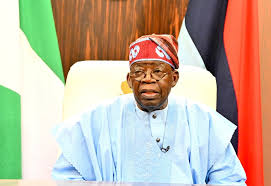
The Senate has begun legislative scrutiny of President Bola Tinubu’s request to borrow an additional $2.3 billion in external capital to finance the 2025 budget, amid mounting public outrage and expert warnings that Nigeria’s debt profile has reached an alarming threshold.
Senate President Godswill Akpabio, who read the president’s letter during plenary on Wednesday, referred the proposal to the Committee on Local and Foreign Debt for review and report within one week.
Tinubu, in his letter to the National Assembly, said the loan, approved by the Federal Executive Council, would be raised through Eurobond issuance, loan syndication, bridge financing, or direct borrowing from international financial institutions.
According to the President, the borrowing plan comprises new external financing under the 2025 Appropriation Act ($1.23 billion) and the refinancing of maturing Eurobonds ($1.12 billion).
“This is to ensure that critical infrastructure and social projects do not stall due to funding shortfalls,” Tinubu stated, adding that the facility aligns with the provisions of the Debt Management Office (Establishment) Act.
*Economists warn Nigeria sinking deeper into fiscal trap as debt servicing swallows national revenue
However, critics argue that the new loan represents a dangerous return to unsustainable borrowing, which could jeopardise the country’s future.
‘Nigeria is living on borrowed time’
Economist and former Director-General of the Lagos Chamber of Commerce and Industry, Dr Muda Yusuf, said the move “shows a clear lack of fiscal creativity and discipline.”
“We are living on borrowed time,” Yusuf warned. “When over 90 per cent of revenue is already consumed by debt servicing, taking another $2.3 billion means the government is merely postponing a fiscal crisis. Nigeria needs structural reforms, not more borrowing.”
Similarly, development economist Dr Malik Adeniran described the borrowing spree as “reckless,” noting that the government appears trapped in a cycle of debt dependency.
“It’s becoming clear that we are borrowing to service previous loans rather than to fund productive ventures,” he said. “This is the definition of a fiscal trap, and it’s dangerous for a developing economy with weak revenue generation capacity.”
Data from the Debt Management Office (DMO) show that Nigeria’s total public debt surged to ₦144.7 trillion ($94.2 billion) as of December 2024, comprising ₦74.4 trillion in domestic debt and ₦70.3 trillion in external obligations.
Even more troubling is the spiralling cost of debt servicing. The federal government spent ₦7.8 trillion on debt repayment in 2023, a 121% increase from 2022, and a staggering ₦13.12 trillion in 2024, representing a 68% year-on-year increase.
Public finance analyst Prof. Uche Nwogwugwu noted that such figures suggest that “Nigeria is now in a debt-service crisis.”
“Debt servicing is crowding out spending on essential sectors like education, health, and infrastructure,” Nwogwugwu said. “This means less investment in the people and more in interest payments. It’s an unsustainable trajectory that could trigger another recession if unchecked.”
However, the Tinubu administration has continued to justify its reliance on foreign loans, insisting that the funds are targeted at productive, capital-intensive projects aimed at stimulating growth and job creation.
A senior presidency source said, “The president is not borrowing for consumption. These are strategic interventions that will unlock revenue from the power, transport, and digital sectors.”
But opposition lawmakers are not convinced. A senator from the North-East, who asked not to be named, said, “We are borrowing in dollars while earning in naira. That mismatch will destroy us eventually if we don’t stop.”
Fiscal experts say Nigeria must urgently shift focus to domestic revenue mobilisation, tax reform, and expenditure efficiency, or risk plunging into a debt crisis similar to that of the early 2000s before the Paris Club debt relief.