By Nathaniel Zaccheaus in Abuja
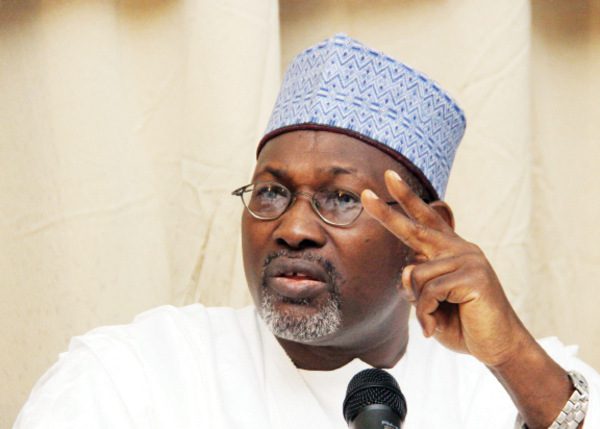
A former chairman of the Independent National Electoral Commission (INEC), Prof Attahiru Jega, has said Nigeria will continue to grapple with underdevelopment and democratic instability unless its leaders embrace value-driven and transformative governance rooted in integrity and public service.
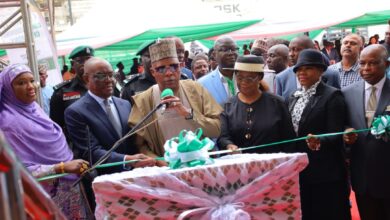
Jega made this assertion in Abuja during the public presentation of a new book titled Transformative Leadership in Practice: NILS under Professor Abubakar Suleiman.
The book chronicles the institutional reforms and achievements recorded by Professor Abubakar Suleiman, Director-General of the National Institute for Legislative and Democratic Studies (NILDS).
According to Jega, the book is a “compelling case study” that demonstrates how purposeful and ethical leadership can rebuild weak institutions, promote efficiency, and restore citizens’ confidence in governance.
“This book provides empirical evidence that transformative leadership is not theoretical; it works.
“Professor Suleiman’s work at the National Institute for Legislative and Democratic Studies shows that when vision meets courage, even a public institution can evolve into a centre of excellence.”
He noted that under Suleiman’s six-year tenure, NILDS expanded its staff strength by over 60 per cent, reviewed more than 1,300 bills, conducted over 700 training programmes for lawmakers and civil society groups, and completed its permanent headquarters project that had been stalled for more than a decade.
Jega said such achievements contrast sharply with the stagnation and inefficiency that plague many public institutions.
He urged Nigerian leaders to emulate the NILDS model by prioritising merit, accountability, and service delivery over political patronage.
He said, “We cannot continue to lament weak institutions while celebrating mediocrity. Leadership must be guided by service, not self-interest. Until our leaders internalise this principle, national transformation will remain elusive.”
Representing former President Goodluck Jonathan, former Attorney-General of the Federation, Mohammed Bello Adoke (SAN), described Suleiman as an “institution builder” who introduced professionalism and structure into public institutions.
“Although his appointment came towards the end of our administration, Professor Suleiman’s impact was immediate.
“He brought reform, discipline, and accountability, values our public sector urgently needs today.”
The Ooni of Ife, Oba Adeyeye Ogunwusi, also extolled Suleiman’s leadership qualities, noting that Nigeria’s problem was not a lack of intellect but of integrity.
The monarch said, “He is a man of simplicity, empathy, and discipline, a professor in leadership as much as in politics. Nigeria’s renewal depends on leaders who embody those same values.”
Former Senate President, Ahmad Lawan, who chaired the NILDS Governing Council during Suleiman’s tenure, hailed him as “a reformer who turned ideas into action.”
Lawan said, “We established new departments such as the Institute for Legislative Security Analysis and the Democracy Lab. His innovations redefined NILDS as a hub of knowledge and legislative excellence.”