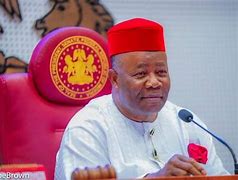
Finance Act: Banks FX gains tax not targeted at Nigerians, say FG, NASS
 Ogbeni Willy
Send an email
Ogbeni Willy
Send an email

The Federal Government and the National Assembly have clarified that the proposed Finance (Amendment) Bill, 2024 was not meant to impose a levy that would affect Nigerians because it squarely targeted a bank’s forex gains.
This Bill seeks to amend the Finance Act of 2023 to provide for the imposition of windfall tax, assessment and review of profits declarations, and for deferred payment agreements for financial institutions by the Federal Inland Revenue Service.
The National Assembly and the Federal Government insisted that the move was a pivotal step in the nation’s economic transformation journey.
These were the explanations of the Chairman of the Senate Committee on Finance, Senator Sani Musa, (APC, Niger East); his House of Representatives counterpart, James Faleke; the Minister of Finance and the Coordinating Minister of the Economy, Wale Edun and the Chairman, Federal Inland Revenue Service, FIRS, Zack Adedeji yesterday.
The executive arm and the legislature said that the bill sought to impose a 50% levy on the realized profits from all foreign exchange transactions of banks within the 2023 financial year to December 2024.
They spoke at an Interactive session with the relevant Stakeholders on the Finance Act (Amendment) Bill, 2024.
*N’ Assembly joint panel summons Cardoso
Meanwhile, both the Senate and the House of Representatives have summoned the Governor of Central of Nigeria (CBN), Yemi Cardoso, and his team and bankers Committee to appear before it today (Tuesday) at 11am to make their inputs on the proposed bill.
In his remarks, the Minister of Finance, Edun explained that the monies to be taken from the banks should not be considered as tax but levies, dismissing the view that the levies would be passed on implicitly to customers.
Edun said, “This is an important opportunity given to all stakeholders. All over the world, it is common for society to take a share of such profit
“This is an important contribution to the finances of the government at this time, however, it is important to say that has been robust without raising taxes, there is a minimization of taxes,
“Government revenue has increased substantially. Broadly speaking a levy on 2024 realized gains on foreign exchange within the banking sector. It is a pity that the banking system is not here and even the central bank is not here to participate in this discussion.
On his part, the FIRS boss, Adedeji disclosed that surcharging the banks for the sole aim of redistributing wealth has become imperative to balance the shortage recorded by other sectors owing to the policies.
According to him, the manufacturing sector has made 1.7 trillion naira loss as a result of the forex and based on that the agency cannot tax them.
He said, “It’s not that we are going after the profit but recovering the losses incurred by the activities as a result of their ineptitude in bringing a policy to correct the policy decision. Everybody realized that it is not their money, money earned in the normal course of your business.”
Chairman of the joint committee, Musa, noted that the amendment of the Finance Act, 2024 was to impose and charge windfall tax on Banks and provide for the administration of the Tax.
He said that the intent behind the levy is to ensure that banks contribute their fair share to national revenue, especially in light of the substantial gains made from foreign exchange.
Musa said, “The proposed Finance (Amendment) Bill, 2024, is a pivotal step in our nation’s economic transformation journey.
“This bill seeks to impose a 50% levy on the realized profits from all foreign exchange transactions of banks within the 2023 financial year to December 2024.
“The intent behind this levy is to ensure that banks contribute their fair share to national revenue, especially in light of the substantial gains made from foreign exchange activities. The levy does not affect Nigerians, it is not on Nigerians, but the huge profits on forex that the banks made.
“His Excellency President Bola Ahmed Tinubu GCFR’s administration has initiated numerous economic reforms aimed at propelling Nigeria towards a future of advancement and prosperity.
“This bill is one of the bold decisions undertaken to provide the government with the necessary funding to address our country’s multifaceted infrastructure deficit. The success of these reforms hinges on our collective support and active participation.”
Ogbeni Willy
Send an email