By Nathaniel Zaccheaus, Abuja
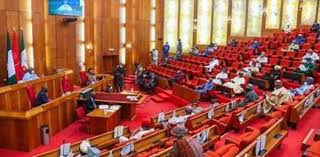
Nigeria took a major step toward adopting state policing on Wednesday after the Senate approved the State Police Bill, 2026, ending decades of resistance to one of the country’s most contentious constitutional reforms and setting the stage for a fresh political battle in the 36 state Houses of Assembly.
The landmark legislation, transmitted to the National Assembly by President Bola Tinubu as part of his administration’s security reform agenda, seeks to amend the 1999 Constitution to permit states to establish and operate their own police services alongside the Federal Police Service.
If eventually endorsed by the House of Representatives and ratified by at least two-thirds of state legislatures, the bill will fundamentally alter Nigeria’s policing architecture, ending the Federal Government’s exclusive control of policing that has existed since independence.
The Senate’s approval comes against the backdrop of worsening insecurity across the country, including terrorism, banditry, kidnapping, communal clashes, armed robbery and attacks on farming communities, which have heightened calls for a more localised and responsive security framework.
For years, governors, traditional rulers, security experts and regional groups have argued that the centralised policing structure is overstretched and ill-equipped to tackle emerging security threats in a country of over 230 million people.
The proposed law creates a dual policing structure in which states may establish police services through laws enacted by their Houses of Assembly, while the Federal Police Service retains responsibility for national security matters, including terrorism, cybercrime, organised crime, arms trafficking, border protection, and other transnational offences.
The bill was passed after senators conducted an extensive clause-by-clause consideration of its 26 provisions during a marathon plenary session.
The importance attached to the legislation was evident in the calibre of dignitaries who witnessed the proceedings.
Among those present were the Chief of Staff to the President, Femi Gbajabiamila; Attorney-General of the Federation and Minister of Justice, Lateef Fagbemi (SAN); Governors Uba Sani of Kaduna, Dapo Abiodun of Ogun and Lucky Aiyedatiwa of Ondo States, as well as several state attorneys-general.
Their presence sparked debate on the Senate floor over whether non-members should be allowed into the chamber during deliberations on a constitutional amendment.
Following consultations among Senate leaders, a compromise was reached permitting the visitors to observe proceedings from designated areas within the chamber.
Leading debate on the bill, Senate Leader Opeyemi Bamidele described the proposal as a historic response to Nigeria’s growing security challenges and one of the most consequential constitutional reforms since the return to democracy in 1999.
“This Bill represents one of the most significant constitutional reforms in our nation’s democratic evolution.
“It addresses a long-standing national conversation on the structure, effectiveness, responsiveness and sustainability of policing in the Federal Republic of Nigeria,” Bamidele said.
According to him, the country’s current policing arrangement has struggled to respond effectively to the complex and evolving threats confronting different parts of the federation.
He argued that the size, diversity and security realities of Nigeria now require a decentralised policing framework capable of responding rapidly to local threats while preserving national security coordination.
One of the most significant provisions of the bill empowers governors to appoint Commissioners of Police for their states based on recommendations by the National Police Council and subject to confirmation by their respective Houses of Assembly.
The commissioners would enjoy security of tenure and could be removed only after due process, including recommendations from the National Police Council and approval by a two-thirds majority of the state legislature.
To address fears that governors could weaponise state police against political opponents, the Senate inserted a range of constitutional safeguards to ensure professionalism and accountability.
“The Bill expressly prohibits the use of police powers for partisan, ethnic, religious, sectional or personal purposes,” Bamidele stated.
The legislation also bars state authorities from issuing directives that target opposition politicians, groups, associations, or individuals in violation of their constitutional rights.
Independent State Police Service Commissions are to be established in every participating state to oversee recruitment, discipline, promotions and administration of personnel.
The National Assembly will also retain powers to prescribe minimum standards on recruitment, training, firearms management, professional conduct, use of force and complaints procedures.
Perhaps the most contentious provision is the retention of federal intervention powers.
Under the bill, the Federal Government may intervene in cases of a breakdown of public order, threats to national security, electoral intimidation, serious abuse of police powers, or operational collapse of a state police service.
Such intervention, however, must be authorised in writing by the President and remain subject to Senate oversight and judicial review.
According to lawmakers, the provision was deliberately inserted to prevent abuse while maintaining national cohesion.
Supporting the bill, Senator Enyinnaya Abaribe admitted that he had previously opposed state police but changed his position due to the worsening security situation nationwide.
Former Sokoto State Governor, Senator Aminu Waziri Tambuwal, also backed the proposal, describing it as consistent with the principles of true federalism.
Chief Whip Tahir Monguno urged senators to support the legislation, arguing that the current security realities require bold and innovative solutions.
At the end of deliberations, Senate President Godswill Akpabio hailed the passage of the bill as a watershed moment in Nigeria’s democratic journey.
“This legislation will make security more inclusive by enabling communities, youths, villages, municipal authorities and local governments to participate in the nation’s security architecture,” Akpabio said.
“As I have always said, every community knows the bad eggs within it. Security agencies can act proactively rather than reactively. We must become proactive instead of reacting after incidents have occurred.”
Despite the Senate’s approval, the most difficult phase of the reform process may still lie ahead.
The bill must now secure passage in the House of Representatives before being transmitted to the 36 state Houses of Assembly, where at least 24 legislatures must endorse it for the constitutional amendment to take effect.
That requirement is expected to trigger intense political negotiations across the country, as state lawmakers weigh the benefits of localised policing against lingering fears of political interference and abuse by state executives.
For supporters, the Senate vote marks a historic breakthrough in the quest to bring policing closer to communities and improve intelligence gathering.
For critics, the battle has merely shifted from the National Assembly to the states, where the future of one of Nigeria’s most ambitious security reforms will ultimately be decided.
Should the legislation survive the ratification process, Nigeria would enter a new era of security governance in which states assume greater responsibility for internal security. At the same time, the Federal Government retains oversight of threats to national stability and constitutional order.