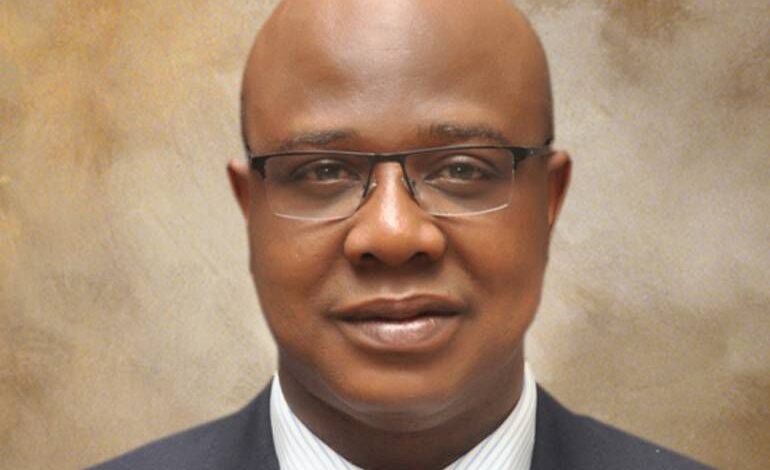
By Dr Yusuf Aliu
Nigeria is approaching a decisive moment in its long and exhausting battle against insecurity.
What was once a geographically isolated insurgency has metastasised into a nationwide calamity touching nearly every region and demographic.
The brutal expansion of banditry, mass abductions, rural massacres, extremist violence, cult-driven killings, criminal herder–farmer clashes, oil-region sabotage and urban kidnappings has hardened into a multi-front conflict that our security forces struggle to contain simultaneously.
Against this alarming backdrop, the recent engagement between Nigeria’s delegation and senior US officials has opened a window that Nigeria cannot afford to ignore.
At that meeting, American officials made clear their readiness to support Nigeria with advanced intelligence cooperation, specialised training, security technology and targeted operational assistance to help combat the violent non-state groups threatening national stability.
This gesture came on the heels of rising concern in Washington about the scale, frequency and religious undertones of some attacks in Nigeria, concerns that had, for months, cast a shadow over bilateral relations.
But beyond diplomatic undercurrents, one indisputable fact is that Nigeria is in the grip of a multifaceted security breakdown that grows more brazen by the week.
For this reason alone, the Federal Government should waste no further time in embracing structured, transparent and well-negotiated support from the United States.
The alternative, to maintain the status quo, is a luxury Nigeria can no longer afford.
Hardly a week passes without a fresh string of tragedies across the country. What used to be episodic incidents in rural communities now occur with troubling regularity.
In recent months, gunmen have stormed villages in the Middle Belt, torching homes and ambushing families who had fled into nearby farms to seek safety. Entire communities in parts of the North-West have been forced into internal displacement as roving gangs overpower local vigilantes and occasionally outgun police formations.
The story is equally grim in the education sector. Schoolchildren, once symbols of hope, have become the easiest targets for criminal networks looking for ransom.
Recent attacks saw classrooms invaded in broad daylight, with pupils herded away into forests at gunpoint.
In one particularly distressing episode, dozens of young girls from a boarding school in the North-West were taken captive, triggering nationwide anguish and frantic rescue attempts.
Parents who had quietly endured insecurity finally broke down publicly, begging authorities to save their children still trapped in remote enclaves.
Meanwhile, the security theatre in the Northeast continues to simmer.
Though significantly weakened, extremist factions still launch ambushes, plant improvised explosive devices and attack soft targets to maintain relevance. Add to this the rising curve of kidnappings along expressways in the South-West, armed cult clashes in the South-South, and maritime crimes along the coastal belts, and Nigeria’s security crisis reveals itself not as a single problem but as a sprawling ecosystem of instability.
The United States’ renewed offer is coming at one of the most precarious periods in Nigeria’s security history.
Here are compelling reasons Nigeria must accept it without delay:
One of the most apparent weaknesses in Nigeria’s current security structure is intelligence gathering and real-time data analysis.
Many attacks, especially mass abductions and village raids, occur after suspicious movements that could have been flagged earlier with better surveillance tools. Nigeria’s security agencies work hard, but their technology is often outdated, and their ability to track communications, monitor terrain and intercept planning networks remains limited.
US intelligence support, particularly satellite monitoring, signals interception and advanced analytics, would significantly narrow this gap.
With improved intelligence feeds, Nigerian forces can act before attacks occur rather than rush in after communities have been devastated.
Nigeria’s forces frequently face logistical disadvantages. Criminal gangs operate from forests and ungoverned spaces that are difficult to penetrate and even harder to monitor.
With better drones, thermal imagery, night-operation equipment, and rapid-response transport provided or supported by US expertise, Nigerian troops could rescue abductees faster, track fleeing attackers more effectively, and secure vulnerable communities with greater precision.
This is not about importing solutions but strengthening our existing capacity with tools we currently lack.
Global counterterrorism lessons show that equipment alone cannot fix systemic security problems.
What Nigeria urgently needs is a new generation of well-trained operatives skilled in intelligence fusion, hostage negotiation, cyber-tracking of criminal finances, community-based policing and the ethical conduct of operations.
US support would involve specialised training for Nigerian units, training that remains expensive, technical and rare to secure elsewhere. Such training accelerates professionalisation and reduces operational errors that sometimes widen distrust between citizens and security agencies.
Nigeria sits at the heart of West Africa. When Nigeria is unsafe, the entire region feels the tremors, from refugee movements to arms trafficking to weakened trade routes.
Accepting structured US support would send a strong signal to international partners that Nigeria is serious about restoring internal stability. It also helps prevent the diplomatic fallout that could come if Washington’s concerns about religious persecution or human-rights violations continue to dominate discussions instead of security cooperation. A collaborative framework rebalances the narrative and secures Nigeria’s seat as a decisive regional leader.
Every month of hesitation costs Nigeria lives, livelihoods, and public confidence.
Once-vibrant farming communities now operate under constant fear, affecting food supply lines. Schools have shut down in high-risk zones, eroding the country’s educational future. Businesses now factor kidnapping insurance into their operations, raising the cost of doing business.
Foreign investors have adopted a “wait-and-see” stance, and domestic tourism has suffered.
Immediate action is not just a security imperative; it is an economic necessity.
Nigeria must approach the US offer with clarity, not fear. External assistance does not equate to foreign control. What matters is negotiation, structure and accountability. The Nigerian government should insist on:
Clear partnership frameworks defining roles, limits, and Nigeria-led command.
Human-rights safeguards that protect citizens and prevent abuses during joint operations.
Capacity-transfer clauses that ensure Nigerian forces can sustain all capabilities acquired under the partnership after it ends.
Transparent monitoring so the public understands the nature and extent of the cooperation.
These principles ensure Nigeria remains firmly in charge while benefiting from advanced support.
Some critics argue that accepting US assistance could open the door to external pressure or conditions. Others raise long-running concerns about overreliance on foreign allies or geopolitical complications.
These fears, while understandable, do not outweigh the urgency of Nigeria’s current predicament.
The real loss of sovereignty is not accepting help; it is allowing insecurity to spread unchecked until the state loses control of significant territories.
Sovereignty is strengthened when citizens feel protected, not when governments make symbolic postures while villages are overrun and children are abducted.
Another concern is the potential for domestic political backlash. But leadership is the ability to make difficult decisions when national survival is at stake.
Nigerians, across ethnic, religious and regional lines, overwhelmingly crave safety. Any partnership that genuinely delivers improved security will enjoy broad public support.
A prosperous Nigeria–US security collaboration should be judged by tangible outcomes: A sharp decline in mass kidnappings, faster interception of criminal networks, and improved protection of schools and rural communities.
Others include increased rescue rates and reduced casualties, stronger intelligence coordination across agencies, and renewed investor confidence and safe economic corridors.
These are measurable results that Nigerians can feel in their daily lives.
Nigeria is standing at a crossroads. Our nation cannot continue burying citizens daily while hoping the security architecture magically transforms itself.
The United States has extended a willing hand, not to dictate Nigeria’s path, but to help reinforce it. Ignoring that offer would not project strength; it would signal hesitation in the face of a relentless, evolving threat.
If embraced strategically, this partnership could mark a turning point, the moment Nigeria began reclaiming communities, reopening schools, rebuilding trust in the state and restoring its position as West Africa’s stabilising anchor.
The time for delay is over. Nigeria must act with urgency, clarity and purpose. The safety of millions depends on it.
*Dr Yusuf Aliu is a France-based forensic & security consultant.