

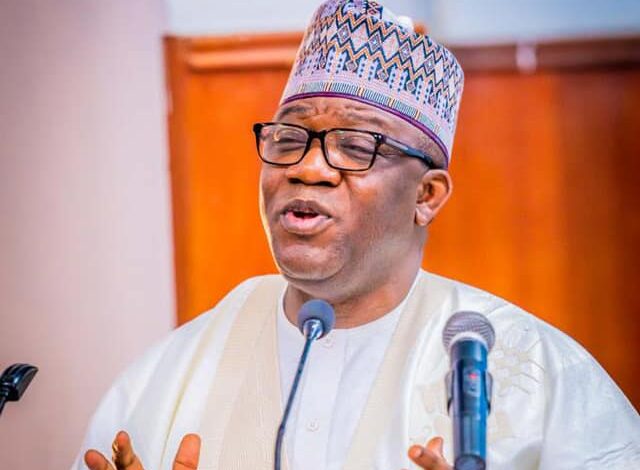
Ekiti State Governor, Dr. Kayode Fayemi, has expressed satisfaction that his administration has fulfilled its promises and is bequeathing a solid foundation for socio-economic development to the incoming administrations to build on.
Addressing the people of the state in a special broadcast on Saturday to mark the 26th anniversary of the creation of the state and the country’s 62nd independence anniversary, Dr. Fayemi said “Ekiti is now a state of pride for all of us, emerging steadily from her humble beginnings.”
He noted that Ekiti wouldn’t have reached this level of progress without what he called “outstanding dedication of past and present leaders who worked for and have continued to work to ensure that the State assumes its proper pride of place in the comity of States across the nation.”
The Governor explained that the people of the State have every reason to thank God for what He has done for them through successive administrations, while also appreciating the struggles and sacrifices of those that fought for the creation of the State, which came into being on October 1, 1996.
He also used the medium to appreciate the people of the State for their support, guidance, prayer, suggestions and criticisms, the combination of which he said formed the impetus for his administration’s visible and impactful achievements throughout his two terms as the Governor of Ekiti State.
Dr. Fayemi who would transfer the reins of power to the Governor-elect, Mr. Biodun Oyebanji, on October 16 said the seamless transition in which an outgoing governor would be handing over to a successor from the same party, for the first time in the history of the state, would allow for building on the foundation of development already laid by his government.
While noting that Mr. Oyebanji was part of the success story of his two tenures, the Governor said it was heart-warming that his successor would perfect whatever the outgoing administration could not perfect appreciating everyone that has contributed to the feats recorded by his administration.
Buhari to Nigerians: I’ve resolved to bequeath lasting, sustainable democratic culture
Dr. Fayemi said: “Today, I address you with a heart of fulfilment and gratitude. Despite the challenges we have faced in the past years, God helped us to surmoun the hurdles and fulfil most of our promises. The journey of my second term in office has been very interesting, challenging and rewarding.
“The journey we started on October 16, 2018, will end in the next few days. We made the best of the mandate given to us by Ekiti people and evidence abounds that a great future awaits us as a people and State. This government deliberately ensured that every sector of our social life and economy received attention.
“Despite the daunting challenges of the era, the government delivered on its projections for policies, programmes and projects execution, and achieved very tangible outcomes. I have no doubt that many of our visionary efforts would continue to deliver outcomes for generations to come.
“As you are all aware, I will be handing over the baton of leadership to our Governor-elect, Mr. Biodun Abayomi Oyebanji, in the next couple of days to take over from where we stop and start building on the foundation we already laid for the growth and stability of Ekiti State. This address, therefore, is my last Independence Day broadcast to you as your governor.
“The chapter of my second term that we started four years ago will end on October 16, 2022, thus heralding the new chapter of the incoming government. This administration came to office on the promise of restoring the values and dignity of Ekiti people, tackling infrastructure decay, and developing the economy.
“Against all odds, the administration fulfilled its promises and is bequeathing a solid foundation for fast economic development of Ekiti State for successive administrations to build on.
“As a government, we are conscious of the fact that there may be areas where expectations have not been met due to unforeseen circumstances and the realities of the period.
“Nevertheless, it is heart-warming, to inform you today, that whatever the outgoing government couldn’t perfect will be handled and perfected by the incoming administration. That is the beauty of our seamless transition and the continuity that you, Ekiti people, voted for.
“The task of keeping Ekiti working is our collective responsibility. We already have a strong start with the victory of our Governor-elect at the poll. His victory is significant not only for the All Progressives Congress (APC), but for Ekiti-kete as a whole. This is the first time a political party will be succeeding itself in our dear State.
“Luckily, our Governor-elect, Mr. Biodun Oyebanji, was an integral part of all the developmental feats recorded by this administration. What this holds for us as a State is that the path to an enduring socio-economic and political progress already mapped out by this administration will be followed through with renewed vigour and dedication.
“A tree, our people say, does not make a forest. I am, therefore, using this medium to appeal to all well-meaning sons and daughters of Ekiti, and all our development partners to rally round the incoming administration in the overall best interest of our people.
“With your prayers, support, suggestions, guidance and constructive criticism, the incoming government will make the best of the foundation we already laid and surpass our record of performance. I urge you all to join hands with the incoming administration to consolidate on the work we have done so far and keep Ekiti working in our collective best interest.


