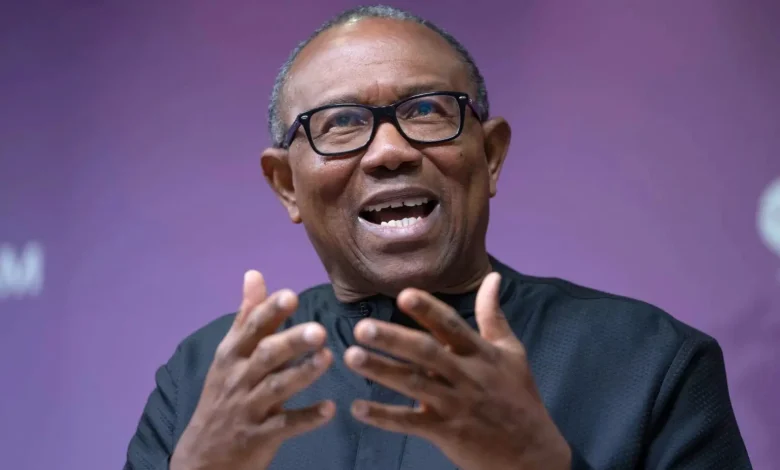
The presidential candidate of the National Democratic Coalition (NDC), Peter Obi, has criticised the borrowing policy of President Bola Tinubu’s administration, describing the country’s rising debt profile as further evidence of what he called imprudent governance and a lack of accountability.
In a statement issued on Tuesday, Obi expressed concern over Nigeria’s growing debt burden, claiming that the nation’s total debt had risen to about N200 trillion under the current administration. He argued that the pace of borrowing in the last three years had significantly outstripped that of previous administrations, raising questions about fiscal sustainability.
The former presidential candidate cited data from the Federation’s Budget Office, stating that the Federal Government borrowed N11.89 trillion between January and September 2025, exceeding its planned borrowing target of N10.34 trillion by about N1.54 trillion.
According to Obi, such an overshoot should ordinarily attract scrutiny and explanations from relevant government agencies, but lamented that no adequate justification had been provided.
He further noted that only N3.10 trillion of the borrowed funds was reportedly spent on capital projects during the same period, representing a small fraction of the N17.58 trillion budgeted for capital expenditure.
Obi said the situation had left a substantial gap in planned infrastructure and development spending, while raising concerns over the utilisation of the remaining borrowed funds.
“The most disturbing aspect of the financial management fiasco under Bola Tinubu is that there is no explanation or information regarding how the balance was utilised or deployed,” he said.
He added that Nigerians deserve a clear account of how public funds and borrowed resources are being managed, insisting that transparency and accountability remain critical to restoring confidence in the country’s economic management.
Obi maintained that despite the current challenges, a more productive Nigeria remains possible, expressing optimism that the country can overcome its economic difficulties through responsible leadership and prudent management of resources.